
The Key Account Management Playbook: A Leader's Guide to Empowering SAMs
Strategic Account Management (SAM) is a team sport, and leaders play a pivotal role in ensuring their teams thrive. Whether you're a CEO, GM, country manager, or head of key accounts, your job is to enable SAMs to achieve superior results for clients and the organization. This playbook outlines the mindsets, skills, and practices you need to master to empower your team, drive collaboration, and elevate business outcomes.
1. Cultivate a Culture of Customer Centricity
Great SAM leaders create an environment where SAMs feel confident to challenge organizational inertia and co-create value with customers. This starts with:
- Lead by example 👑: Regularly engage with key clients yourself. Show your team that customer relationships are a top priority.
- Remove barriers 🚫: Act as a shield against internal bureaucracy. If a SAM needs resources or approvals to deliver value, fast-track them.
- Celebrate wins 🏆: Publicly recognize instances where SAMs went above and beyond for clients. This reinforces the behavior you want to see.
Checklist for Leaders:
- [ ] Do I spend at least 20% of my time with key clients?
- [ ] Have I removed at least one internal obstacle for my SAMs this quarter?
- [ ] Do I regularly share customer success stories with the wider organization?
2. Build Trust and Navigate Cultural Sensitivities
SAMs operate in a global, multi-stakeholder environment. Your role is to equip them with the skills to build trust and manage relationships across cultures.
- Invest in soft skills training 🗣️: Negotiation, empathy, and active listening are non-negotiable. Provide workshops and coaching.
- Create a safe space for failure 🧪: Encourage SAMs to experiment with new approaches. When things go wrong, focus on learning, not blame.
- Foster cross-cultural awareness 🌍: If your team works with clients in different regions, provide cultural sensitivity training. Understanding local business etiquette can make or break a deal.
Practical Tip: Pair junior SAMs with senior mentors who have experience in specific regions or industries. This accelerates their learning curve.
3. Stay Curious About Customer Industries
To deliver value, SAMs must understand their clients' businesses inside out. As a leader, you need to model curiosity and provide tools for continuous learning.
- Encourage industry immersion 📚: Subscribe to industry reports, attend client trade shows, and invite guest speakers from key sectors.
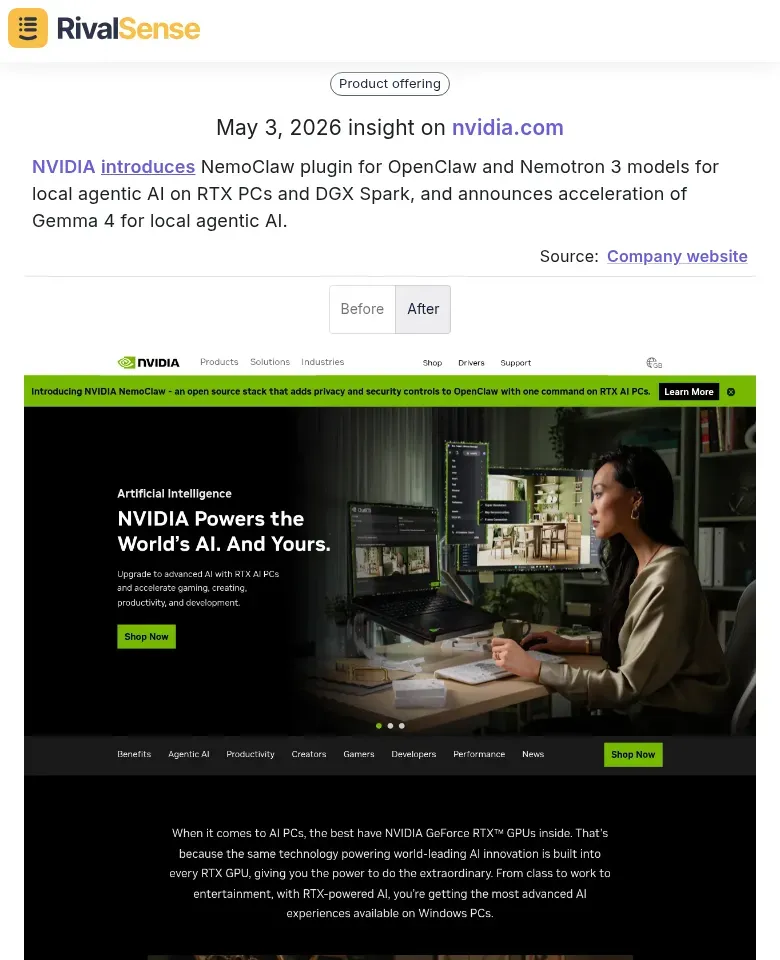
- Leverage competitive intelligence: Understanding what competitors are doing helps SAMs anticipate client needs and position your solutions effectively. For example, tracking competitor product launches can reveal new capabilities your clients might demand. A real-world insight: NVIDIA introduces NemoClaw plugin for OpenClaw and Nemotron 3 models for local agentic AI on RTX PCs and DGX Spark, and announces acceleration of Gemma 4 for local agentic AI. Knowing about such updates allows your team to proactively discuss implications with clients and adjust roadmaps.
- Ask probing questions 🤔: In team meetings, challenge SAMs with questions like, "What keeps our client's CEO up at night?" or "How is regulation changing their industry?"
Quick Win: Start each weekly team meeting with a 5-minute "industry pulse" update. Rotate who presents to keep everyone engaged.
4. Drive Multi-Functional Collaboration
SAMs can't succeed alone. They need support from product, marketing, finance, and delivery teams. Your job is to break down silos.
- Create cross-functional account teams 🤝: Assign dedicated points of contact from each department for your top accounts.
- Establish shared KPIs 🎯: Tie bonuses and performance reviews to account-level outcomes, not just departmental goals.
- Host regular alignment meetings 📅: Bring together all stakeholders for quarterly account reviews. Use these sessions to identify gaps and opportunities.
Template for Account Review Agenda:
- Account health score (NPS, revenue, churn risk)
- Key wins and challenges
- Competitor activity (use RivalSense reports to spot new threats)
- Action items for each department
5. Foster Outcome Accountability
Finally, hold your SAMs accountable for outcomes, not just activities. This shifts the focus from "number of meetings" to "value delivered."
- Define clear metrics 📊: Revenue growth, customer satisfaction, share of wallet, and net promoter score are good starting points.
- Use a CRM to track progress 🖥️: Ensure your team logs interactions and opportunities consistently.
- Conduct regular performance reviews 📝: Use a structured framework like Objectives and Key Results (OKRs) tied to account plans.
Leader's Self-Assessment:
- Are my SAMs clear on what success looks like for each account?
- Do I provide regular, constructive feedback?
- Am I celebrating outcome-driven wins as much as activity-driven ones?
6. Use Real-Time Intelligence to Protect and Grow Key Accounts
Staying ahead of competitor moves is critical for strategic account management. Two types of insights can directly impact your account plans:
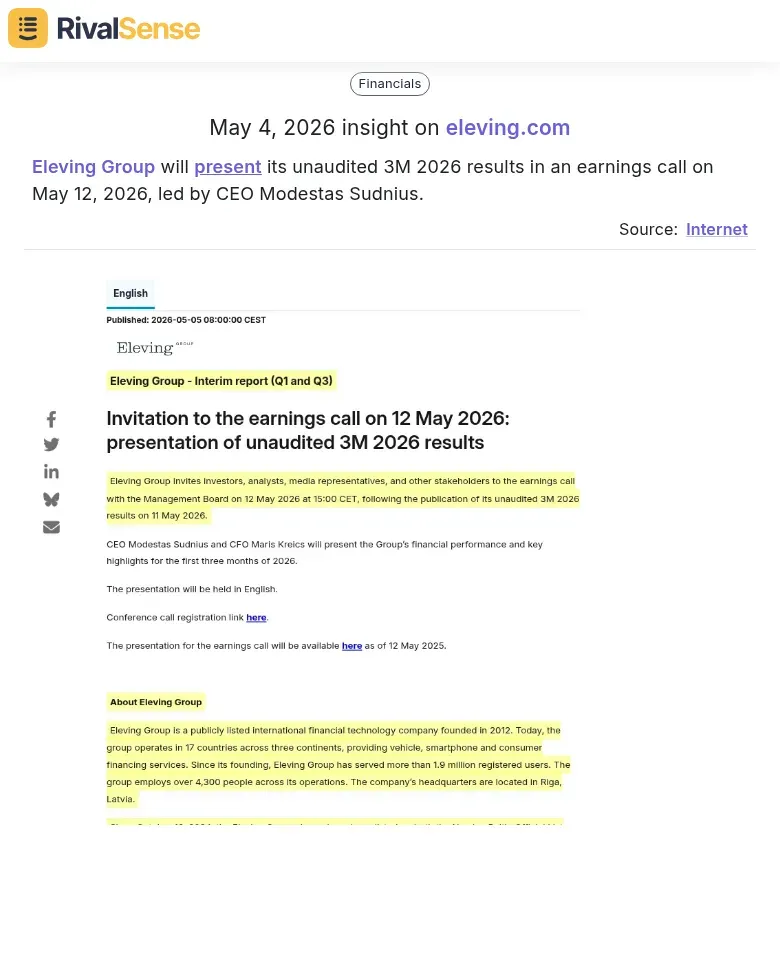
📍 Earnings Calls & Financial Disclosures – When a competitor announces results or guidance, it often signals strategic shifts. For example, Eleving Group will present its unaudited 3M 2026 results in an earnings call on May 12, 2026, led by CEO Modestas Sudnius. Monitoring such calls helps your team anticipate changes in competitor pricing, R&D investment, or market focus.
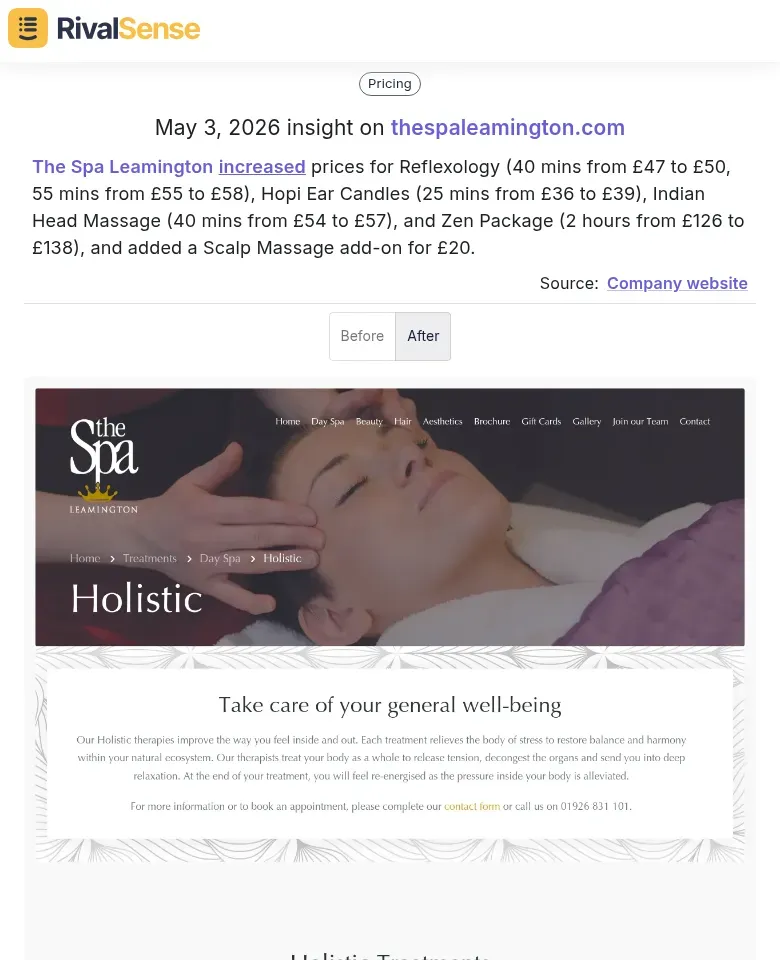
📍 Pricing Updates – Even small price changes can affect your value proposition. The Spa Leamington increased prices for Reflexology, Hopi Ear Candles, Indian Head Massage, and Zen Package, and added a new Scalp Massage add-on. Tracking pricing adjustments helps SAMs renegotiate contracts or highlight competitive advantages.
By incorporating these intelligence types into your regular account reviews, you enable your team to respond proactively rather than reactively.
Conclusion
SAM leadership is about enabling others to excel. By cultivating customer centricity, building trust, staying curious, fostering collaboration, and driving accountability, you can create a playbook that empowers your team to deliver exceptional results. Start small—pick one area from this guide and implement it this week. Your SAMs (and your clients) will thank you.
Need help tracking competitor moves that affect your key accounts? RivalSense monitors product launches, pricing changes, partnerships, earnings calls, and more across 80+ sources, then delivers a concise weekly email. Try RivalSense for free and get your first competitor report today.
📚 Read more
👉 How to Control Access to Competitor Intelligence in Your B2B Company
👉 How NVIDIA's Nemotron Launch Spurred a Rival's AI Agent Pivot
👉 How to Spot Competitor Partnerships via Website Changes
👉 Key Account KPIs in AI: Optimize NVIDIA-Style Growth
👉 Pricing Trends: Key Account Tracking Insights for Competitive Edge