
The Strategic Benefits of Mystery Shopping Your Competitors: A Guide for B2B Leaders
In the fast-paced world of B2B, staying ahead of competitors isn’t just a goal—it’s a necessity. One of the most effective ways to gain a competitive edge is through competitor mystery shopping: a structured approach to evaluating rival companies’ offerings, customer experience, and market positioning. This guide explores the benefits, techniques, and practical steps to implement a competitor mystery shopping program—and how tools like RivalSense can automate and enhance the process.
What is Competitor Mystery Shopping?
Competitor mystery shopping involves systematically assessing your rivals as if you were a potential customer. It goes beyond basic market research—it’s about experiencing their sales process, product demos, onboarding, customer support, and overall user experience firsthand. The goal is to uncover strengths, weaknesses, and gaps you can exploit to refine your own strategy.
Benefits of Mystery Shopping Your Competitors
- Benchmark Your Performance – Understand where you stand relative to competitors on service quality, product features, pricing, and customer experience.
- Identify Best Practices – Discover what competitors do well and adapt those practices to your own operations.
- Spot Market Gaps – Identify unmet customer needs or pain points that competitors overlook, giving you a chance to differentiate.
- Improve Customer Retention – By understanding what drives loyalty (or churn) at competitors, you can strengthen your own value proposition.
- Refine Sales and Marketing Tactics – Learn competitors’ pricing models, sales scripts, and promotional strategies to sharpen your approach.
- Stay Ahead of Industry Trends – Regular monitoring helps you anticipate shifts in product features, service models, and customer expectations.
Competitor Mystery Shopping Techniques
1. In-Person Discovery (Events & Trade Shows)
Attend competitor booths at conferences, ask detailed questions, and observe how they engage prospects. Note their messaging, demo flow, and objection handling.
2. Digital Mystery Shopping
Sign up for free trials, request demos, and navigate their website as a prospective customer. Evaluate user experience, content quality, and sales follow-up speed.
3. Social Media & Content Analysis
Monitor competitors’ social channels, blog posts, and thought leadership. Assess engagement levels, topics covered, and tone of voice.
4. Review & Testimonial Mining
Analyze reviews on G2, Capterra, Trustpilot, and social media to understand what customers love and hate about rival products.
5. Support & Service Audits
Contact competitor support via chat, email, or phone to evaluate response times, helpfulness, and problem resolution.
The Competitor Mystery Shopping Process
- Define Objectives – Set SMART goals—e.g., “Identify top three features competitors offer that we don’t” or “Benchmark our onboarding experience against Industry X.”
- Identify Key Competitors – Focus on direct competitors, emerging threats, and aspirational benchmarks.
- Develop Evaluation Criteria – Create a checklist covering product features, pricing, UX, sales process, content quality, and customer support.
- Select Evaluators – Use team members or third-party services that match your target buyer persona to ensure authentic feedback.
- Conduct the Assessments – Execute the mystery shopping activities—trials, calls, demos, visits—and document findings.
- Analyze Data & Generate Insights – Compile findings into a structured report highlighting strengths, weaknesses, and actionable recommendations.
- Implement Improvements – Prioritize quick wins and strategic moves based on insights, then track results over time.
Overcoming Common Challenges
- Time and Resource Constraints – Manual mystery shopping is labor-intensive. Automate data collection with competitive intelligence tools.
- Biased or Inconsistent Feedback – Use standardized checklists and train evaluators to ensure objectivity.
- Information Overload – Focus on key metrics aligned with your goals, and use dashboards to visualize trends.
- Keeping Up with Changes – Competitors evolve quickly. Set up continuous monitoring instead of one-off audits.
Simplify Mystery Shopping with RivalSense
Competitor intelligence tools like RivalSense can automate much of the manual data gathering, so your team can focus on strategic analysis. Here are a few real examples of competitive moves RivalSense has recently captured across web, social media, and registries:
-
Product repositioning: CrowdStrike replaced ‘User and Entity Behavioral Analytics’ with ‘FalconID Stop identity attacks at login with phishing-resistant MFA’ in its Falcon for XIoT platform offering.
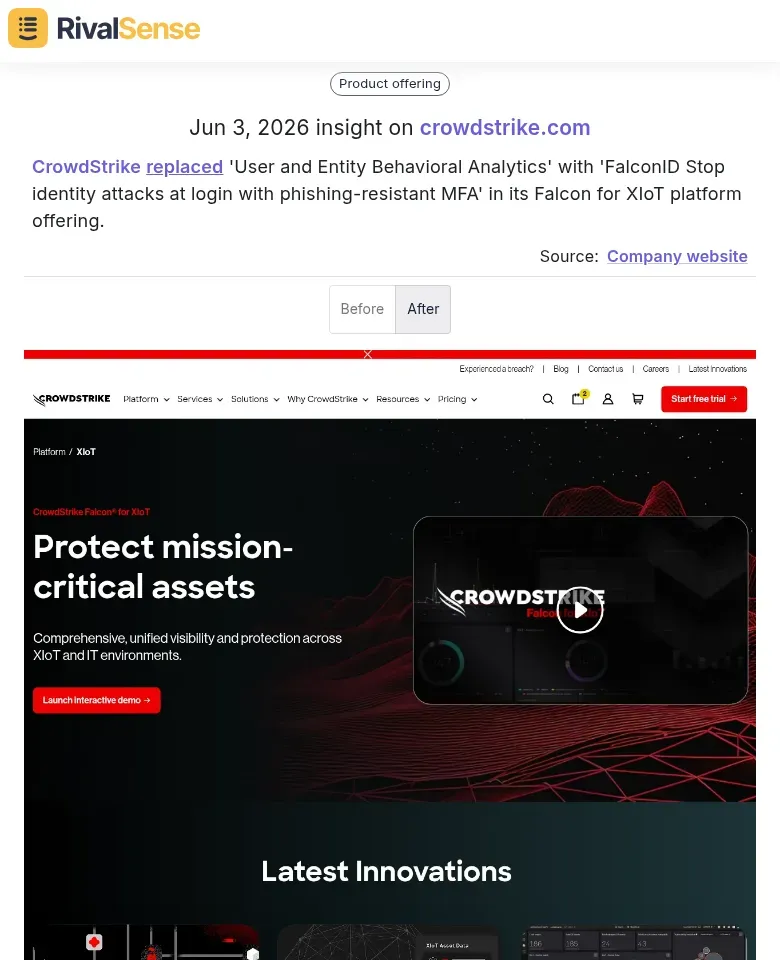
Strategic value: A competitor deprecating or adding a feature signals a shift in product emphasis. Spotting this early lets you adjust your own roadmap and messaging before the market reacts. -
New launch: Glean launched MCP Gateway, a secure platform for deploying enterprise MCP tools with better context, built-in security, and centralized rollout and visibility.
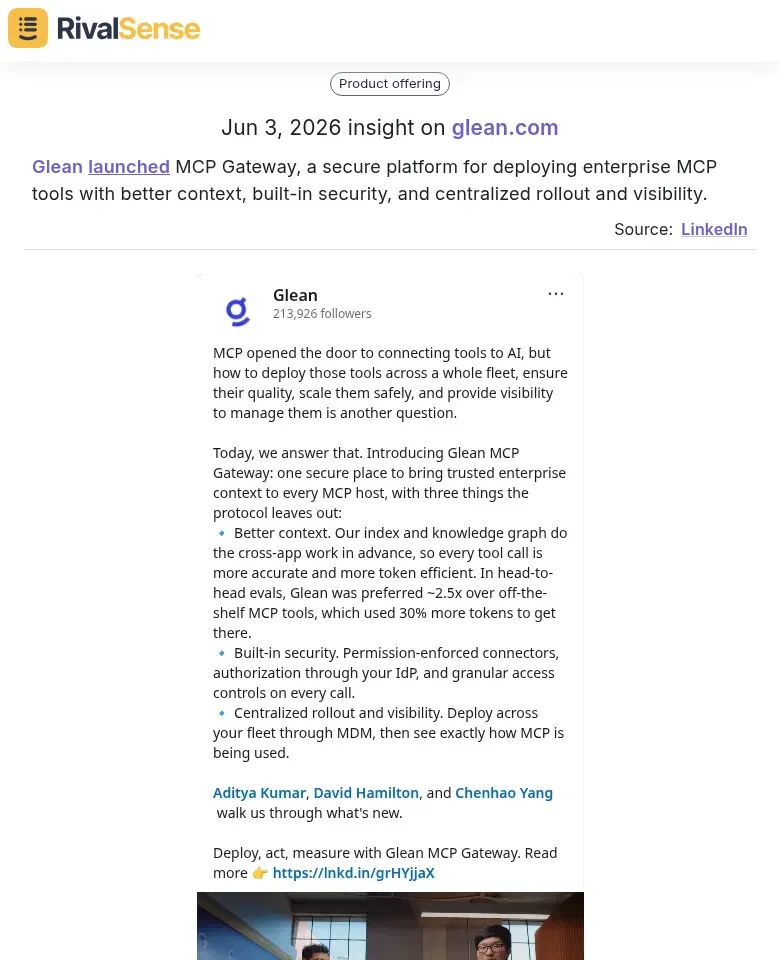
Strategic value: A new product launch indicates where a rival is expanding its footprint. You can anticipate upcoming market pressure, identify gaps in your own offering, or find targeting opportunities. -
Strategic partnership: n8n announced Accenture as an official strategic partner to help enterprises adopt and scale n8n.
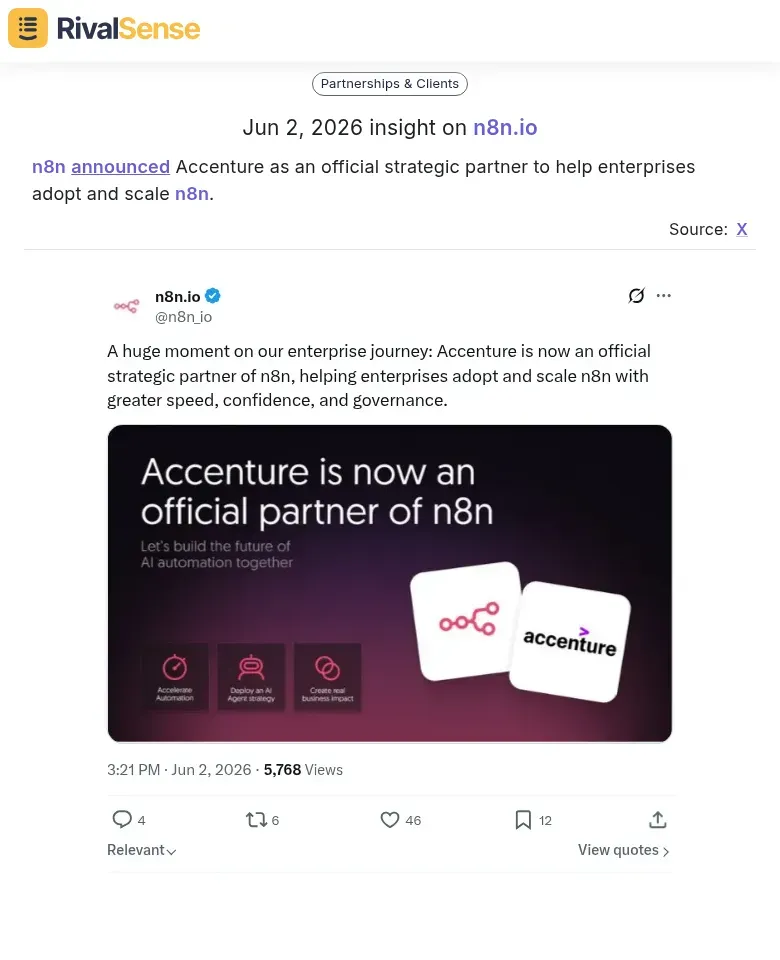
Strategic value: High-profile partnerships can dramatically accelerate a competitor’s go-to-market capabilities. Recognizing these alliances early helps you assess whether your own channel strategy needs reinforcement.
RivalSense monitors your selected competitors across 80+ sources and delivers these insights in a concise weekly report, saving you hours of manual research and keeping you ahead of every critical move.
Final Thoughts
Mystery shopping your competitors is a powerful way to sharpen your competitive edge. By systematically evaluating rivals, you uncover opportunities to improve your own offering, delight customers, and outperform the market. Combine your in-depth manual audits with automated monitoring from RivalSense to ensure you never miss a critical move.
Try RivalSense for free and get your first competitor report today.
📚 Read more
👉 Master Competitor Target Audience Analysis: Optimize Your Repair Business Strategy
👉 CFO Appointment Signals Funding Round: How to Pounce Before Your Rival
👉 LinkedIn Competitor Insights Cheat Sheet: Protect Your Key Accounts from Silent Poaching
👉 5 Key Account Management Mistakes IoT Firms Must Avoid
👉 How to Map Your Competitors’ Product Moves Before They Happen: Real-World Strategies