
Key Success Factors for Building a Best Practice Key Account Management Organization
Key Account Management (KAM) is more critical than ever in today's disruptive business environment. For B2B leaders, building a best-practice KAM organization can be a force multiplier—coordinating cross-functional engagement, deepening customer partnerships, and translating strategy into impact at the account level.
Based on recent research with senior KAM leaders across multiple industries, here are the essential success factors and actionable steps to elevate your KAM function.
🎯 1. Define a Clear Ideal Future State
Best-practice KAM organizations don't react to change—they anticipate it. Start by defining what success looks like for your team 12–24 months out.
Actionable steps:
- Conduct a current-state assessment of your KAM processes, tools, and talent.
- Identify gaps between current capabilities and your ideal future state.
- Create a roadmap with quarterly milestones to close those gaps.
🔗 2. Align KAM with Corporate Strategy
KAM cannot operate in a silo. It must be tightly integrated with overall business strategy, brand priorities, and customer insights. Real‑time awareness of competitor events helps you connect the dots.
For instance, when TAG Heuer launched its new Formula 1 collection in Miami with House Ambassadors Patrick Dempsey and Sydney Sweeney on May 2, 2026, your KAM team should have known instantly. This type of high‑profile event participation signals brand momentum and potential shifts in partner priority—valuable intelligence for account planning and cross‑sell outreach.

Checklist for alignment:
- [ ] KAM objectives are directly linked to corporate revenue and growth goals.
- [ ] Account plans are reviewed quarterly with cross‑functional stakeholders (marketing, product, sales).
- [ ] KAM leaders participate in strategic planning sessions.
🛠️ 3. Invest in the Right Tools and Data
Effective KAM requires real‑time visibility into account health, competitor moves, and market shifts. Yet many teams still rely on manual tracking and outdated spreadsheets.
Practical tip: Use a competitor tracking tool like RivalSense to automatically monitor competitor product launches, pricing updates, partnerships, and management changes across 80+ sources. RivalSense delivers a weekly email report so your KAM team can focus on strategy, not data gathering.
Here are two real examples of the kind of insights that matter:
| Insight Type | Example | Why It Matters for Your KAM Strategy |
|---|---|---|
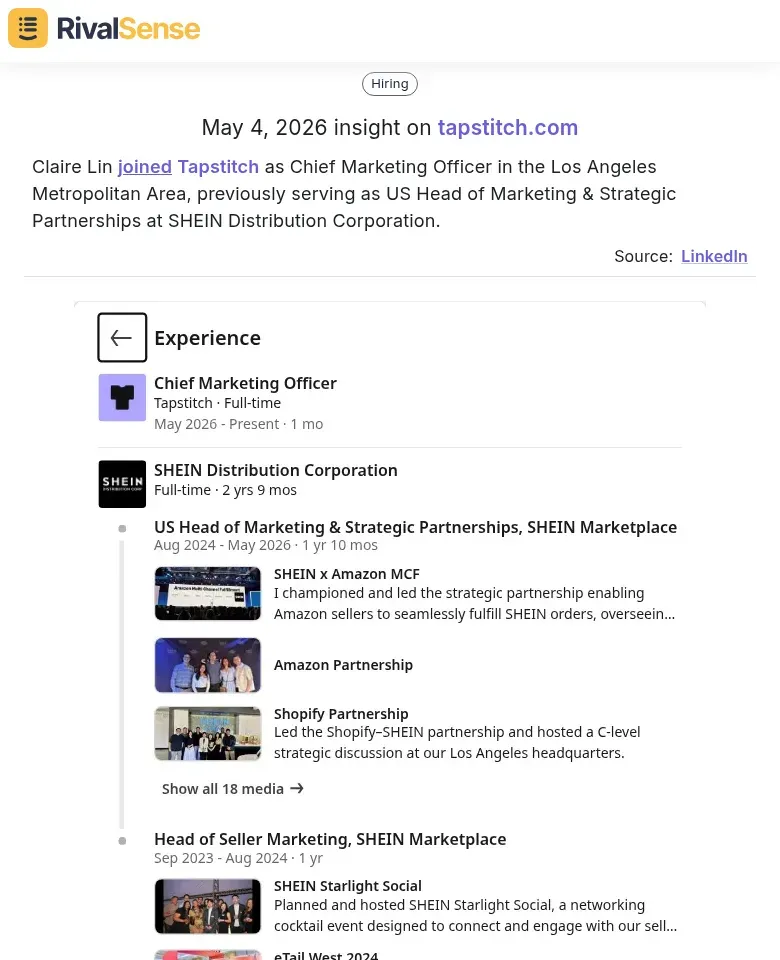
| Management Changes | Claire Lin joined Tapstitch as Chief Marketing Officer in the Los Angeles Metropolitan Area, previously serving as US Head of Marketing & Strategic Partnerships at SHEIN Distribution Corporation. | A new CMO often brings fresh partnerships, messaging shifts, or channel changes—key intel for account vulnerability and upselling opportunities. |
| Product Launches | NVIDIA released Asset Harvester, a tool that converts autonomous driving videos into structured 3D object assets for simulation and AI training. | A product launch can signal a new market focus or technology advantage, helping your KAM team proactively address competitive threats or identify co‑innovation angles. |

🤝 4. Build Cross‑Functional Engagement
KAM teams act as the quarterback for strategic accounts. They need strong relationships with marketing, product, legal, and customer success.
How to foster cross‑functional collaboration:
- Establish a formal account team structure with defined roles.
- Hold monthly account reviews with all stakeholders.
- Create shared KPIs that reward collective account outcomes.
📈 5. Develop KAM Talent and Career Paths
Top‑performing KAM organizations invest in their people. They provide training on strategic selling, negotiation, and data analysis.
Tips for talent development:
- Offer certification programs in key account management.
- Create a clear career ladder from KAM to senior leadership.
- Pair junior KAMs with experienced mentors.
📊 6. Measure What Matters
Don't just track revenue. Measure account penetration, customer satisfaction, net promoter score, and share of wallet.
Key metrics to track:
- Account revenue growth year‑over‑year
- Number of cross‑sell/upsell opportunities
- Customer retention rate
- Time‑to‑response for account issues
🔄 7. Embrace Continuous Improvement
Best‑practice KAM is never static. Regularly solicit feedback from customers and internal teams, and iterate on your approach.
Actionable step: Conduct a quarterly KAM maturity assessment using a simple 1–5 scale across strategy, process, tools, talent, and metrics. Identify three areas to improve each quarter.
Building a best‑practice KAM organization takes time, but the payoff is significant: deeper customer relationships, higher retention, and sustainable revenue growth. Start with a clear vision, align with strategy, equip your team with the right tools, and commit to continuous improvement.
Want to stay ahead of competitor moves that could impact your key accounts? RivalSense tracks product updates, pricing changes, partnerships, management moves, and more—delivered weekly to your inbox. Try RivalSense for free to get your first competitor report today.
📚 Read more
👉 Key Account Management FAQs: Advanced Tactics for SEO & Content Marketing
👉 How Databricks' Startup Pivot Revealed a $2B Opportunity for Competitors
👉 How to Predict Your Rivals' Next Moves Using Twitter (With Real Examples)
👉 Monitor Competitor SEC Filings: A Step-by-Step Guide for Business Leaders