
Key Account Management Best Practices for Influencer Platforms
Influencer platforms have become central to digital marketing, with brands pouring billions into creator partnerships. Yet as the ecosystem matures, platforms face a critical challenge: retaining top creators and brand partners. This is where Key Account Management (KAM) comes in. In the influencer platform context, key accounts are your highest-value creators (those driving engagement and revenue) and your biggest brand partners (those with recurring campaign budgets). Effective KAM is not just about relationship management—it's a strategic lever for retention, revenue growth, and competitive differentiation. A well-executed KAM program can reduce churn by 20–30% and increase account lifetime value by up to 40%. To get started: (1) Segment your accounts using a tiered framework (e.g., Platinum, Gold, Silver) based on revenue, engagement, and strategic fit. (2) Assign dedicated account managers to top-tier accounts. (3) Create personalized success plans for each key account, including quarterly business reviews, exclusive feature access, and co-marketing opportunities. (4) Track health scores using metrics like campaign performance, login frequency, and support ticket volume. Pro tip: Use a CRM to automate check-ins and flag at-risk accounts before they churn. In a competitive landscape, KAM is your moat.
Identifying and Segmenting Your Key Accounts
To effectively manage key accounts on influencer platforms, start by defining selection criteria. Prioritize accounts with high revenue potential (e.g., top-spending brands), strategic fit (alignment with your platform’s niche or long-term goals), and influence (reach, engagement, or market sway). Use a weighted scoring model to rank accounts objectively.
Next, segment accounts into tiers to tailor your approach:
| Tier | Characteristics | Strategy |
|---|---|---|
| 🏆 VIP Accounts | High revenue, strategic partners | Dedicated account managers, exclusive features, quarterly business reviews |
| 🚀 Growth Accounts | Strong potential but not yet top-tier | Upselling, personalized onboarding, monthly check-ins |
| 🌱 Emerging Accounts | New or smaller but promising | Automate nurture sequences, monitor for signs of expansion |
Leverage data analytics and CRM tools (e.g., Salesforce, HubSpot) to track account health. Set up dashboards for key metrics like campaign ROI, renewal likelihood, and engagement frequency. Use predictive scoring to flag at-risk accounts early. Pro tip: Create a quarterly account health scorecard with red/yellow/green statuses to quickly prioritize interventions. Regularly revisit segmentation as accounts evolve.
Building Strong Relationships with Top Creators and Brands
Building strong relationships with top creators and brands is the cornerstone of successful key account management on influencer platforms. Start by assigning dedicated account managers to each key account, ensuring a single point of contact who understands their goals and challenges. This fosters trust and enables personalized support.
Implement a structured cadence of regular check-ins (e.g., bi-weekly calls), quarterly performance reviews, and co-planning sessions to align on strategy. Use these meetings to review metrics like engagement rates, ROI, and campaign performance, then collaboratively set new targets.
Offer exclusive benefits to retain and motivate top accounts: early access to new features, custom campaign opportunities (e.g., co-branded content), and higher revenue shares or bonus structures. For example, invite top creators to beta-test a new analytics dashboard, or give brand partners first dibs on seasonal campaigns.
Checklist for success:
- [ ] Assign a dedicated account manager per key account
- [ ] Schedule bi-weekly check-ins and quarterly reviews
- [ ] Create co-planning templates for goal alignment
- [ ] Develop a tiered benefits program (early access, custom campaigns, revenue bumps)
- [ ] Gather feedback after each campaign to iterate
By combining personalized attention, structured communication, and tangible perks, you'll turn key accounts into loyal partners who drive platform growth.
Leveraging Data and Insights for Account Growth
To drive account growth, influencer platforms must equip key account managers with data that goes beyond vanity metrics. Start by delivering actionable analytics on campaign performance (e.g., engagement rates, conversion funnels), audience demographics (age, location, interests), and ROI (cost per acquisition, revenue attributed). Use these insights to recommend specific optimizations—like adjusting posting times or targeting lookalike audiences.
Competitive intelligence is a game-changer. Benchmark your client’s performance against competitors using tools like RivalSense. Identify gaps: Are competitors winning on TikTok while your client focuses on Instagram? Uncover content themes that resonate in your niche and propose data-backed pivots. For example, if a rival’s video series drives 3x higher shares, suggest a similar format.
Why competitor updates matter: Tracking competitor pricing changes, product launches, and financial health helps you anticipate market shifts and advise your key accounts proactively. For instance, a change in reward payout methods can signal a shift in creator incentives.
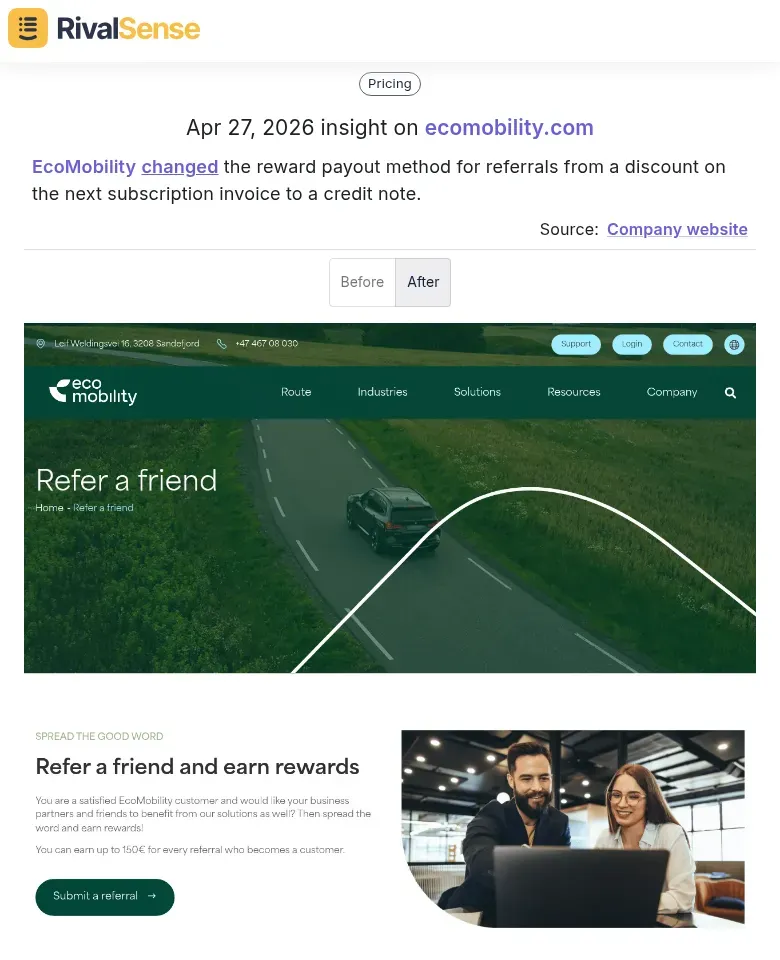
Seeing a competitor like EcoMobility alter its referral reward structure tells you that creator compensation models are evolving. You can discuss with your top creators whether they prefer discounts or credit notes, and adjust your own offerings accordingly to stay competitive.
Similarly, monitoring company downsizing can reveal instability in a competitor's business, giving you an opportunity to win over their key accounts.

When Digmatix downsized from 50 to 20 professionals and closed European offices, it may have lost trust with brand partners. You can use such intelligence to reassure your own accounts of your platform’s stability and growth trajectory.
And earnings announcements like this one help you understand overall industry health:
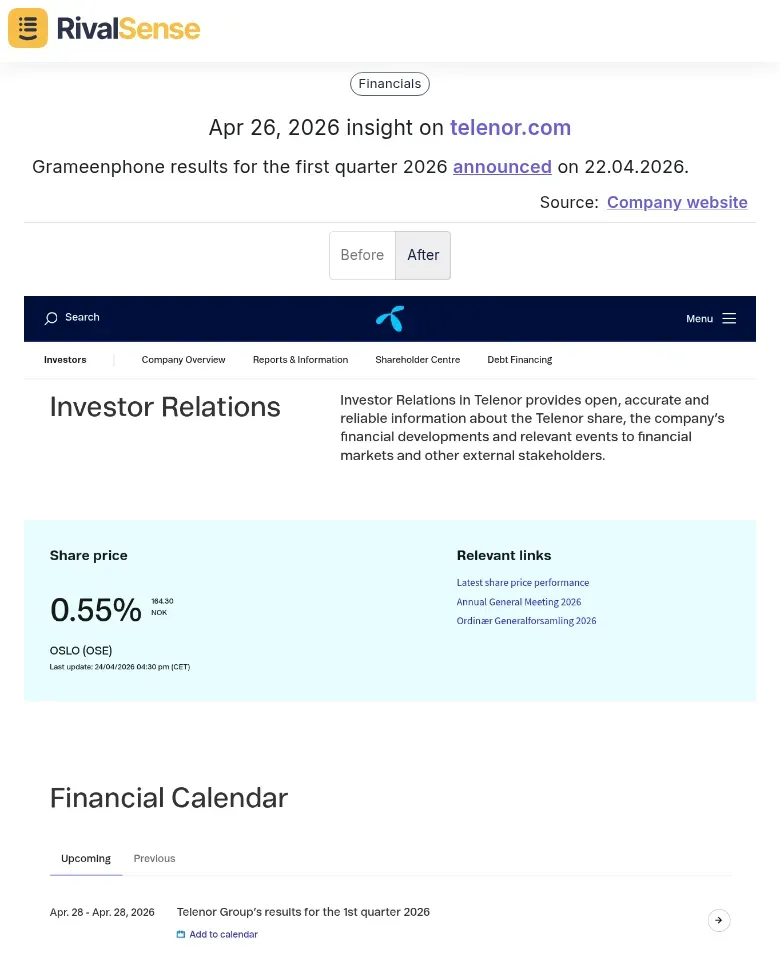
Quarterly results from major players (e.g., telecoms, tech firms) can impact advertising budgets. If a key brand partner's own earnings are strong, they may increase campaign spend; if weak, they might reduce it. Knowing these signals early helps you adjust your account strategy.
Automate reporting to keep key accounts informed without manual overhead. Build dashboards (in Google Data Studio, Tableau, or platform-native tools) that refresh daily, showing KPIs, trend lines, and competitive comparisons. Schedule weekly email summaries with highlights and one actionable recommendation. Include a checklist for monthly reviews: verify data accuracy, check competitor moves, update benchmarks, and align insights with client goals. This transforms raw data into a strategic growth engine.
Managing Risks and Preventing Churn
To prevent churn among key accounts, implement a proactive risk detection system. Monitor engagement metrics (login frequency, feature usage) and satisfaction scores (NPS, CSAT) weekly. Flag accounts dropping below 80% of baseline activity.
Retention Playbook:
- Personalized outreach: Within 24 hours of a red flag, assign an account manager to schedule a check-in call. Use insights from usage data to tailor the conversation.
- Conflict resolution: Follow a 3-step process: (1) Listen and empathize, (2) propose a concrete solution with timeline, (3) follow up within 48 hours to confirm resolution.
- Contract flexibility: Offer tiered downgrades or pause options rather than losing the account entirely.
Feedback Loops:
- Quarterly business reviews (QBRs) with key accounts to gather structured feedback.
- Implement a product suggestion board where key accounts can vote on features.
- Close the loop: Within 30 days of a feature request, update the account on status—even if it's "not planned."
Checklist for At-Risk Accounts:
- [ ] Engagement drop >20% week-over-week
- [ ] Support ticket volume increase >50%
- [ ] Negative NPS score
- [ ] No login in 14+ days
Proactively addressing these signals can reduce churn by up to 40%.
Measuring Success and Scaling Best Practices
To gauge KAM effectiveness, track three core KPIs: account retention rate, revenue growth (from existing accounts), and Net Promoter Score (NPS). For influencer platforms, retention above 90% and NPS >50 are strong benchmarks.
Scaling KAM Processes
- Create playbooks: Document step-by-step workflows for onboarding, quarterly reviews, and escalation. Example: A beauty influencer platform’s playbook includes a 30-day onboarding checklist with milestones for content briefs, payment setup, and first campaign.
- Invest in training: Run monthly workshops on negotiation, data analysis, and platform-specific tools. Use role-playing scenarios (e.g., handling a creator’s rate dispute).
- Leverage technology: Use CRM tools (e.g., Salesforce, HubSpot) to automate follow-ups and track engagement. For influencer platforms, integrate with analytics dashboards to monitor creator performance in real time.
Case Study: Scaling a Fitness Influencer Platform
A fitness platform with 200 key accounts grew revenue by 40% YoY by implementing a tiered KAM system. Top-tier accounts received dedicated managers; mid-tier used automated check-ins via email sequences. They reduced churn from 15% to 8% within six months.
Quick Tip: Start with a pilot of 10 accounts to refine your playbook before scaling.
Stay Ahead with Competitive Intelligence
Key account management isn't just about internal data—it's about knowing what your competitors are doing before your clients ask. By monitoring competitor product updates, pricing changes, management moves, and financial results, you can proactively help your top accounts navigate the market. Tools like RivalSense track all this across websites, social media, and registries, delivering a weekly email report so you never miss a signal.
Ready to give your key accounts a competitive edge? Try RivalSense for free and get your first competitor report today.
📚 Read more
👉 How a Rival's Feature Shift Revealed a Market Opportunity
👉 5 Twitter Tactics for Key Account Intelligence
👉 Beginner's Guide to Tracking Key Account Interactions in Fintech
👉 Tracking Emerging Competitors: Unlocking Partnership & Client Insights