
Advanced Tactics for Competitor Branding in Fleet Management
Introduction: The Competitive Edge in Fleet Branding
In fleet management, branding extends far beyond logos and taglines—it's the sum of every interaction, from vehicle appearance to driver behavior and digital touchpoints. A strong brand builds trust, differentiates you in a crowded market, and commands premium pricing. Competitor intelligence is the linchpin of a winning branding strategy. By systematically analyzing rivals' messaging, service promises, and customer feedback, you can identify gaps, avoid me-too positioning, and craft a unique value proposition. For example, if competitors emphasize speed, you might lead with reliability or sustainability. Modern fleet brand perception is increasingly shaped by two forces: AI and security. AI-powered telematics and predictive maintenance signal innovation and efficiency, while robust cybersecurity protocols (e.g., encrypted data, compliance with ISO 27001) reassure clients that their fleet data is safe.
Practical tip: Conduct a quarterly 'brand audit' of your top three competitors—review their website, social media, and review sites. Note recurring themes and unmet customer pain points. Use this intel to refine your own brand narrative.
Checklist:
- [ ] Identify competitor brand pillars
- [ ] Map customer sentiment gaps
- [ ] Align your AI/security features with brand messaging
- [ ] Test perceptions via A/B landing pages
Leveraging AI Security Features as a Brand Differentiator
In fleet management, security is a powerful brand lever. By integrating AI-driven features like real-time facial recognition and instant alerts, you can position your brand as proactive, reliable, and safety-first.
1. Real-Time Facial Recognition
This technology verifies driver identity before ignition, reducing unauthorized use and theft. It also monitors for signs of fatigue or distraction, sending alerts to managers. This builds a reputation for safety and trust—drivers feel protected, clients see reduced risk.
2. Instant Alerts for Proactive Branding
Configure alerts for harsh braking, speeding, or route deviations. When a driver receives an immediate notification, it demonstrates your commitment to preventing incidents, not just reporting them. This proactive stance differentiates your brand from reactive competitors.
3. Case Study: Motive’s New AI Features
Motive announced new AI features to prevent cargo theft, including real-time facial recognition to detect unauthorized drivers and instant alerts for high-risk situations.
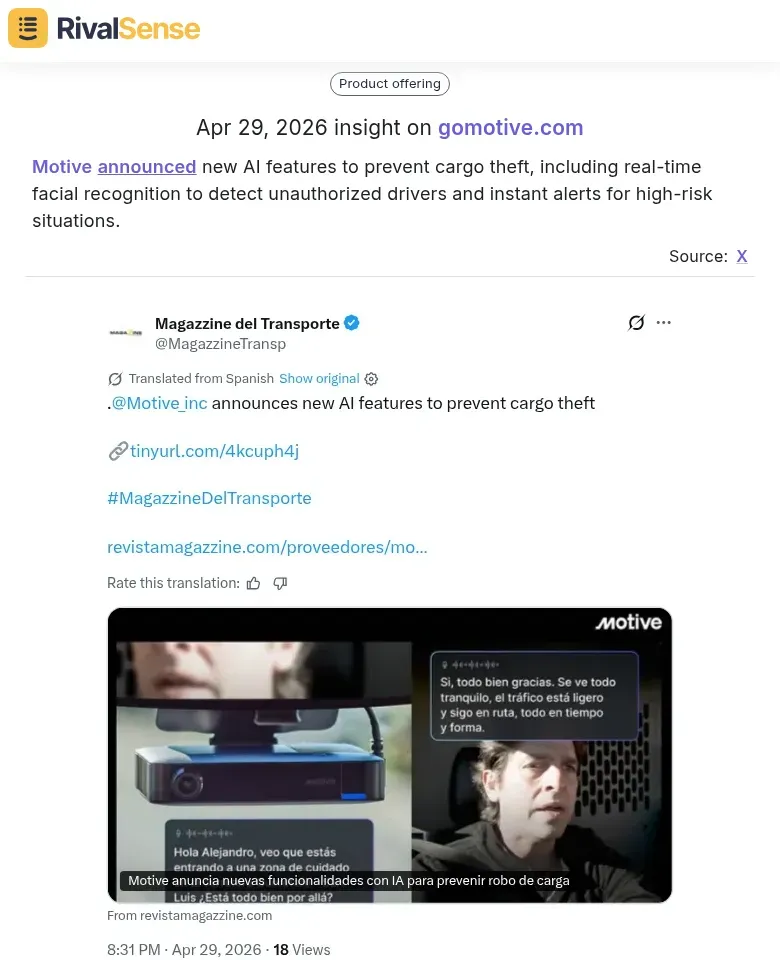
Why this insight is valuable for your strategy: Tracking product updates like this reveals how competitors are innovating and positioning themselves. You can benchmark your own AI roadmap, identify feature gaps, and craft messaging that highlights your unique security advantages. For instance, if Motive emphasizes facial recognition, you might double down on driver behavior analytics or compliance automation.
Actionable Steps:
- Audit your current security features for AI potential.
- Pilot facial recognition with a subset of fleet drivers.
- Create a dashboard showcasing alert response times and incident reduction.
- Train sales teams to lead with security metrics in pitches.
By weaving AI security into your brand story, you don't just protect assets—you build a reputation for foresight and care.
Expanding Brand Authority Through Geographic and Operational Reach
To build brand authority in fleet management, expand your geographic and operational footprint by addressing local pain points. For instance, cargo theft in Mexico costs billions annually. By tailoring security features—like real-time GPS tracking and geofencing—to this specific threat, you signal deep local expertise and commitment to customer safety.
Practical Steps:
- Identify regional challenges: Research theft hotspots, regulatory hurdles, or infrastructure gaps in target markets.
- Adapt features: Add panic buttons, driver verification, or route optimization that avoids high-risk zones.
- Communicate proactively: Publish case studies showing how your solution reduced theft incidents in Mexico.
Insight from the field: Motive expands its AI-powered security suite to prevent cargo theft in Mexico.
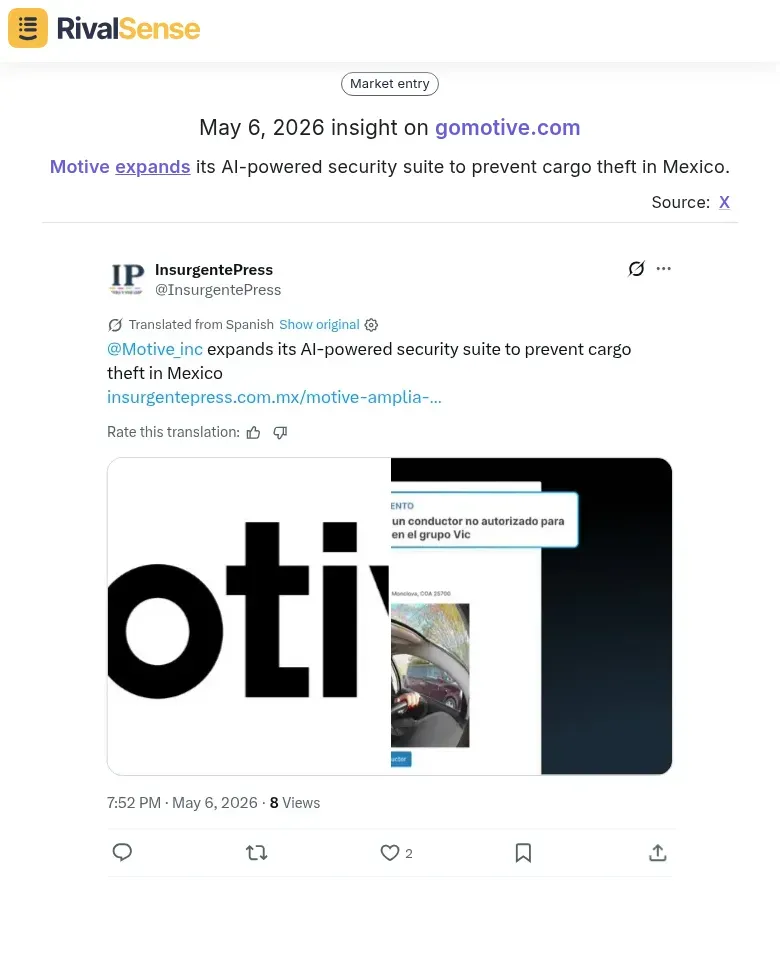
Why this insight matters for business strategy: Competitor geographic moves signal market opportunities and threats. When Motive enters a new region, it indicates high demand for security there. You can either counter with your own localized offering or differentiate by focusing on adjacent problems (e.g., fuel theft in the same region). Use such expansion insights to prioritize your own regional R&D and marketing budgets.
Checklist for Expansion:
- [ ] Map regional pain points (e.g., cargo theft, fuel fraud)
- [ ] Develop region-specific feature upgrades
- [ ] Highlight these in marketing materials
- [ ] Partner with local logistics associations
By solving hyper-local problems, you transform from a generic tool into an indispensable partner, expanding authority one region at a time.
Building Thought Leadership via Strategic Partnerships and Media
To build thought leadership through strategic partnerships and media, start by identifying podcasts and publications your target audience follows. Pitch executive appearances not as sales pitches, but as insights on industry trends—e.g., fleet electrification or driver shortages. Humanize your brand by sharing real stories: a CEO discussing a failed pilot project builds more trust than a polished success story.
Partner with industry associations like NSTA (National School Transportation Association) or NAFA. Co-author whitepapers, sponsor research, or speak at their events. This third-party endorsement signals credibility. For example, presenting at NSTA’s annual conference positions your brand as a fleet safety expert.
Example to emulate: Motive's Director of Strategic Accounts Tanner Kotch joined NSTA Executive Director Curt Macysyn on the NSTA podcast on April 22, 2026.
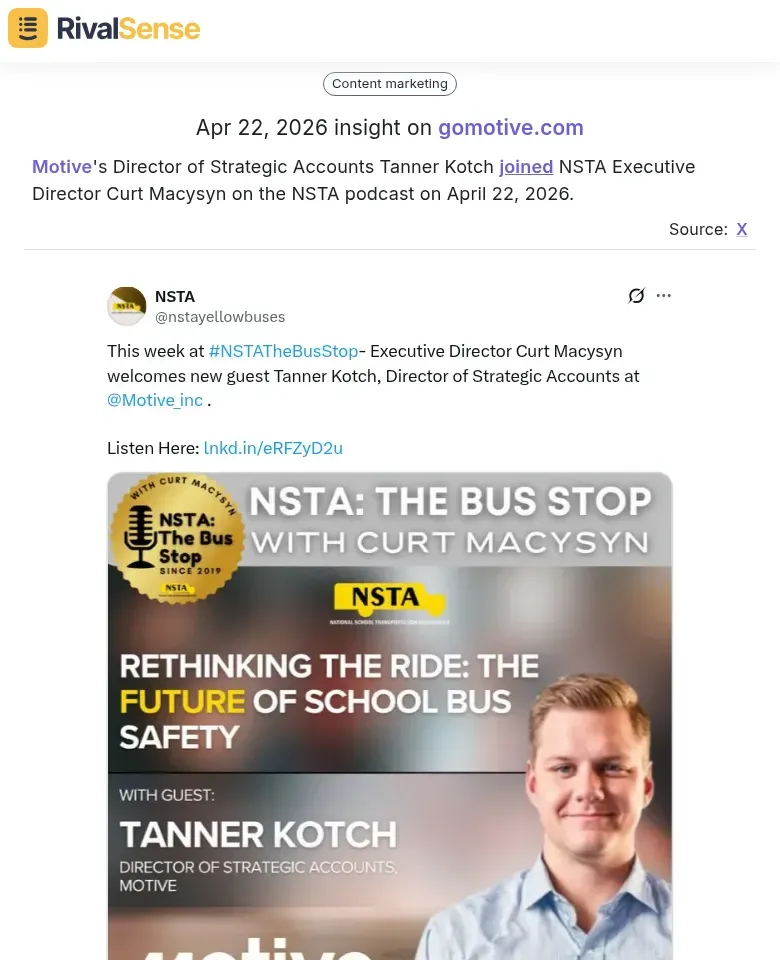
Why tracking media appearances is valuable: Monitoring which podcasts, panels, or bylines your competitors secure reveals their thought leadership strategy and the outlets your prospects trust. You can then target the same podcasts or similar shows with a distinct angle—for instance, if Motive covers cargo theft prevention, you could pitch a segment on driver wellness or sustainability. This kind of intelligence helps you allocate PR resources efficiently.
Reverse-engineer competitor media presence. Track which podcasts, bylines, or association panels your competitors appear on. Use tools like RivalSense to monitor their mentions. Then create a template:
- List top 5 competitor media appearances.
- Note the topics covered and audience engagement.
- Identify gaps they missed (e.g., sustainability in last-mile delivery).
- Pitch those angles to the same outlets.
Actionable checklist:
- Set up Google Alerts for competitor names + "podcast" or "panel"
- Reach out to 3 industry associations for membership or speaking slots
- Draft a 1-page thought leadership calendar with quarterly themes
- Record a 30-second video pitch for podcast hosts
By systematically leveraging partnerships and media, you transform competitor intelligence into a repeatable thought leadership engine.
Translating Competitor Moves into Your Branding Roadmap
To translate competitor moves into your branding roadmap, start by systematically monitoring their announcements. Set up alerts for press releases, product launches, and marketing campaigns using tools like RivalSense. Categorize themes you spot—e.g., AI-powered route optimization, cybersecurity features, or sustainability claims. For each theme, ask: "How can we adapt this to our unique voice?" If a competitor touts "AI-driven fleet safety," don't copy their phrasing. Instead, reframe it around your differentiator—perhaps "predictive maintenance that reduces downtime."
Practical steps:
- Create a competitor brand matrix. List competitors vs. emerging themes (AI, security, green tech). Note their messaging angles.
- Identify gaps. Where are they silent? That's your opportunity.
- Adapt, don't adopt. For each theme, write three alternative angles that align with your brand personality (e.g., playful, authoritative, customer-centric).
- Test internally. Run copy by customer-facing teams to ensure it feels authentic.
Avoid copycat branding by focusing on your core value proposition. If everyone says "secure," you might say "hassle-free compliance." Use industry trends as inspiration, not templates.
Checklist:
- [ ] Distinct language?
- [ ] Aligns with brand pillars?
- [ ] Differentiates from top 3 competitors?
This ensures you capitalize on trends without losing identity.
Conclusion: Staying Ahead in Fleet Branding with Continuous Intelligence
In fleet management, branding is not a one-time effort—it's a continuous evolution shaped by competitive dynamics. To stay ahead, you need ongoing competitor intelligence that feeds into your brand strategy. Here are the key takeaways:
1. Security as a Brand Pillar
With rising cyber threats in connected fleets, position security as a core differentiator. Track how competitors communicate their safety protocols and certifications, then amplify your own with concrete case studies and third-party audits.
2. Thought Leadership via Data
Publish original research on fleet efficiency, sustainability, or regulatory trends. Monitor competitors' content gaps and fill them with deeper analysis. For example, if a rival covers telematics basics, produce a whitepaper on predictive maintenance ROI.
3. Geographic Expansion Tactics
When entering new markets, analyze local competitors' branding—language, imagery, and partnerships—to tailor your messaging. Use tools like RivalSense to track their regional campaigns and adjust your positioning accordingly.
Actionable Checklist:
- [ ] Set up weekly competitor brand alerts (social, ads, press releases)
- [ ] Conduct quarterly brand perception audits vs. top 3 rivals
- [ ] Map competitor content themes to identify white spaces
- [ ] Assign a team member to maintain a live competitive brand dashboard
Implement a systematic competitor intelligence process today—your brand's future relevance depends on it. Start small: pick one competitor, track their brand moves for a month, and apply one insight to your next campaign.
Ready to put this into action? Try RivalSense for free to get weekly competitor reports covering product launches, pricing updates, partnerships, media mentions, and more. Your first competitor report is just a click away.
📚 Read more
👉 Master Pricing Insights: Key Account Models for Competitive Edge
👉 Why Tracking Leadership Changes Is a Competitive Intelligence Must-Have
👉 How to Track Competitor Glassdoor Reviews: A Practical Guide for Competitive Intelligence
👉 CRM Workflow for Key Account Tracking in Marine Port Services
👉 How Databricks’ EHR Deal Reveals a Gap in Your Competitive Strategy