
Advanced Key Account Management Tactics for Data Processing Outsourcing
In the realm of data processing outsourcing, key account management (KAM) is not just a client service function—it's a strategic imperative. Handling sensitive information requires an approach that prioritizes security, compliance, and scalability from the outset. Unlike generic outsourcing, data processing involves unique challenges like adhering to GDPR, HIPAA, and other regulations, making trust and reliability non-negotiable. Advanced KAM transforms transactional agreements into strategic partnerships by embedding account managers into client operations, ensuring alignment with business goals and proactive problem-solving. This shift enables outsourcers to become integral partners, driving innovation and long-term value.
To implement this effectively, consider these practical steps:
- 🔍 Conduct regular security audits and compliance reviews to mitigate risks.
- ⚙️ Implement scalable infrastructure plans with clear Service Level Agreements (SLAs).
- 👥 Assign dedicated KAM teams with expertise in data processing and security.
- 💬 Foster transparent communication through quarterly strategy sessions.
By focusing on these tactics, companies can enhance client retention, unlock growth opportunities, and navigate the competitive data processing landscape with confidence.
Strategic Account Segmentation and Prioritization Framework
Effective key account management begins with intelligent segmentation and prioritization. By categorizing accounts based on their value and needs, you can allocate resources efficiently and maximize ROI. A multi-dimensional scoring model tailored to data processing outsourcing is essential for this process.
Score accounts across three core dimensions: revenue contribution (current and potential), strategic value (industry influence, reference potential, innovation partnership), and processing complexity (data volume, security requirements, integration needs). Use a weighted scoring system—for example, 40% revenue, 35% strategic value, 25% complexity—to create an objective prioritization framework.
Identify high-potential accounts by analyzing the evolution of data processing needs. Look for accounts with increasing data volumes, expanding processing requirements, or emerging compliance needs. Create a retention-expansion matrix to visualize priorities.
Implement tiered service models aligned with account value:
| Tier | Accounts | Services |
|---|---|---|
| Platinum | Top 10% | Dedicated account managers, custom SLAs, proactive innovation workshops, priority support |
| Gold | Next 20% | Quarterly business reviews, enhanced reporting, faster escalation paths |
| Silver | Remaining 70% | Standardized services with efficient self-service options |
Each tier should have clear SLAs, response times, and value-added services proportional to account scoring results.
Data-Driven Relationship Management and Communication Strategies
Building strong client relationships requires a data-driven approach that goes beyond periodic check-ins. By leveraging insights from performance metrics and industry activities, you can foster deeper partnerships and identify new opportunities. For instance, tracking competitor events can reveal market trends and engagement strategies that inform your own approach.
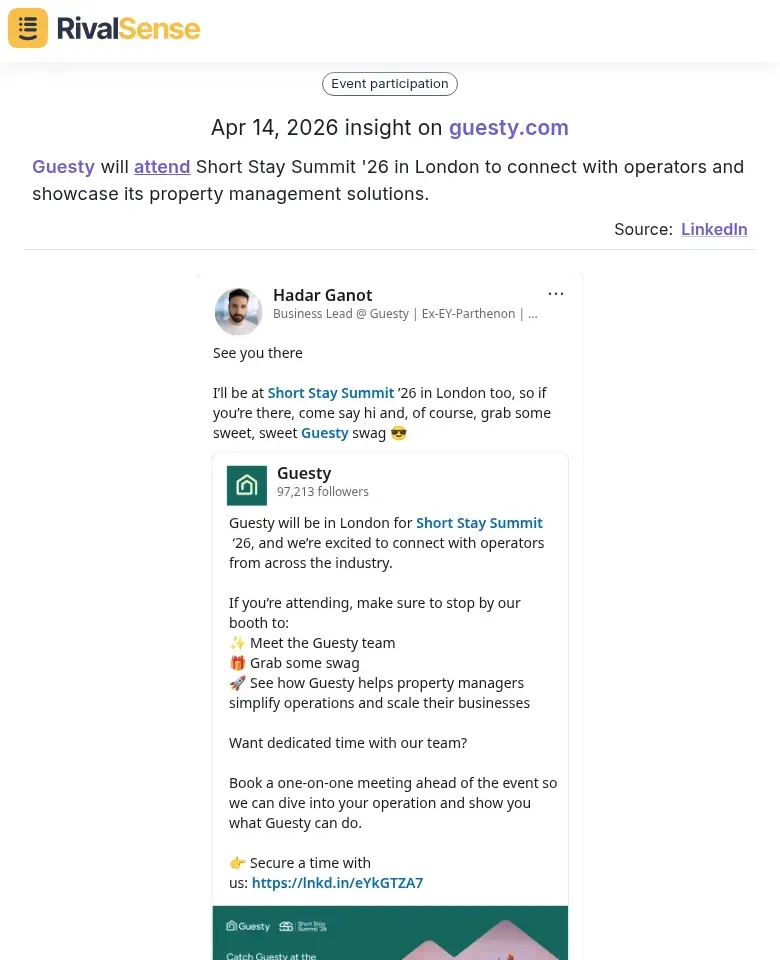
Take Guesty, for example: they will attend Short Stay Summit '26 in London to connect with operators and showcase its property management solutions. This type of insight is valuable because it highlights how competitors are engaging with their audience through events, which can inspire your own networking and partnership initiatives.
To implement effective communication strategies, start with structured cadences:
- 📅 Schedule quarterly business reviews (QBRs) featuring key metrics like processing accuracy (99.9%+), turnaround time improvements, and cost-per-transaction analysis.
- 🏢 Build executive sponsorship through multi-level stakeholder engagement. Create stakeholder maps for each key account.
- 📊 Leverage data processing metrics to demonstrate value and uncover expansion opportunities.
Practical checklist for data-driven relationship management:
✅ Establish monthly operational reviews and quarterly strategic QBRs
✅ Create stakeholder maps identifying decision-makers, influencers, and end-users
✅ Develop metric dashboards tailored to different stakeholder levels
✅ Track 5+ key performance indicators specific to client objectives
✅ Schedule biannual executive alignment sessions
✅ Document all expansion recommendations with supporting data
Performance Management and SLA Optimization
Managing performance in data processing outsourcing requires a robust framework that ensures reliability and continuous improvement. SLAs must be tailored to operational realities, focusing on metrics that matter most to clients. By proactively monitoring and optimizing these agreements, you can build trust and drive efficiency.
Define metrics beyond basic uptime, such as data accuracy (99.95%+), processing turnaround times (e.g., 4-hour windows for batch jobs), and security compliance (ISO 27001 adherence). Implement tiered SLAs with clear escalation paths for critical versus standard operations.
Use proactive monitoring tools to track real-time data flow anomalies and predictive analytics. Set up automated alerts for deviation patterns, like processing latency spikes, and conduct weekly performance reviews with dashboards showing SLA adherence trends.
Establish joint governance committees with monthly meetings involving both your team and the client's leadership. Use these sessions to review performance data, identify improvement opportunities, and co-create innovation initiatives like process automation pilots.
Value Creation and Strategic Partnership Development
Transitioning from a service provider to a strategic partner involves creating value that directly impacts your client's business outcomes. This requires a deep understanding of their challenges and a proactive approach to innovation. Industry events and conferences are excellent platforms for showcasing expertise and forging new partnerships.
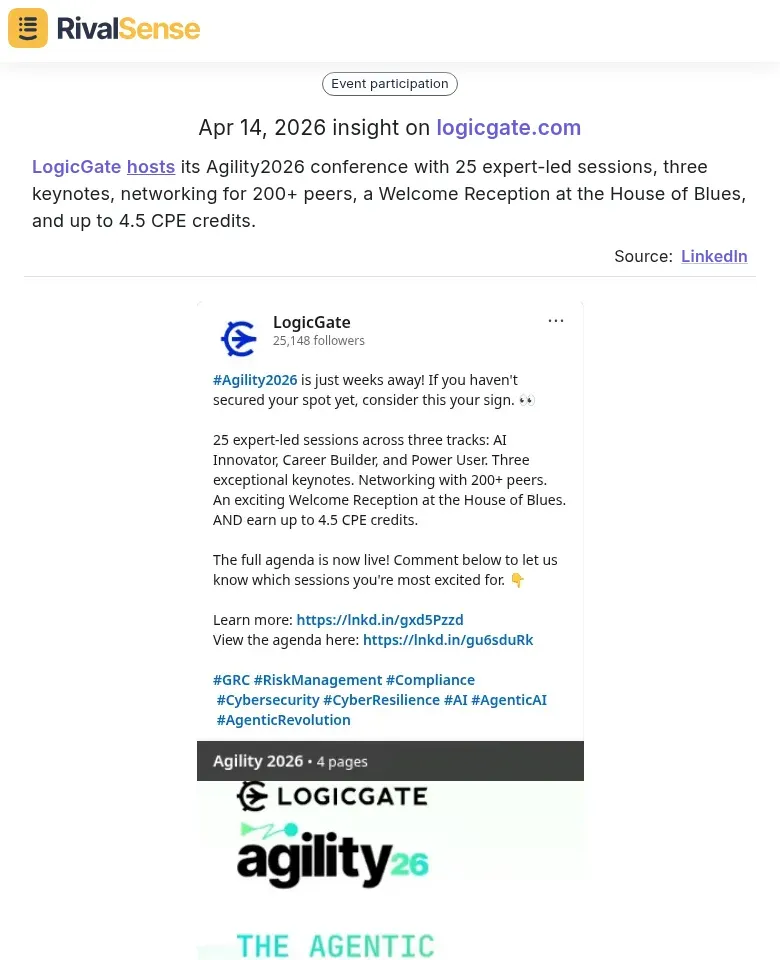
For example, LogicGate hosts its Agility2026 conference with 25 expert-led sessions, three keynotes, networking for 200+ peers, and up to 4.5 CPE credits. Insights into such events are valuable because they demonstrate how companies position themselves as thought leaders and create opportunities for collaboration and learning.
To foster value creation, follow these practical steps:
- 🗺️ Map the client's data journey to identify bottlenecks and inefficiencies.
- 📈 Benchmark current performance against industry standards.
- 💡 Propose specific improvements with clear ROI projections.
- 🚀 Implement pilot programs to demonstrate value before full rollout.
For innovation co-creation, establish joint working groups with client stakeholders to develop technology roadmaps. Focus on emerging areas like AI-powered data classification or real-time processing capabilities. Always tie data processing improvements to specific client business outcomes—revenue growth, cost reduction, compliance enhancement, or competitive advantage.
Risk Management and Contingency Planning
In data processing outsourcing, risk management is critical due to the sensitive nature of the information involved. Proactively identifying and mitigating risks can prevent costly breaches and ensure business continuity. Insights into industry security practices can inform your defensive strategies.
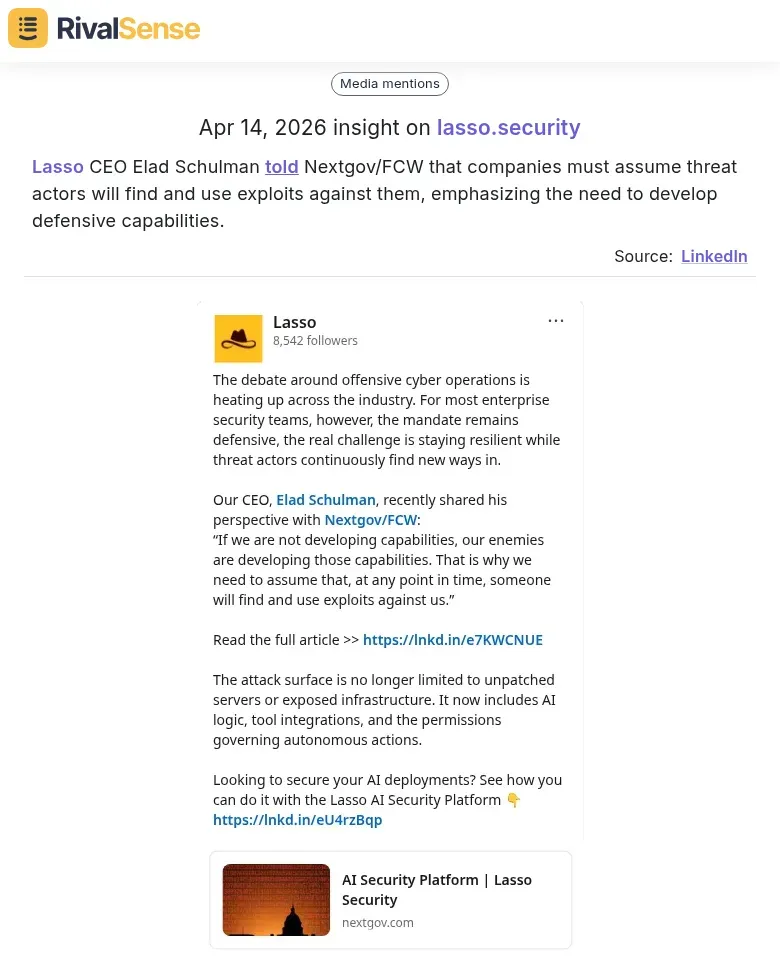
Consider the insight from Lasso CEO Elad Schulman, who emphasized that companies must assume threat actors will find and use exploits, highlighting the need for robust defensive capabilities. This type of insight is valuable because it reinforces the importance of staying ahead of security threats and integrating best practices into your risk management framework.
Start with a comprehensive risk assessment framework that evaluates data security vulnerabilities, compliance gaps (GDPR, CCPA, HIPAA), and operational dependencies. Use a risk matrix to prioritize threats by likelihood and impact.
For business continuity, develop tiered recovery plans:
- Tier 1: Critical data processing with Recovery Time Objective (RTO) < 2 hours.
- Tier 2: Essential functions with RTO < 24 hours.
- Tier 3: Non-critical operations with longer RTOs.
Implement redundant infrastructure across geographically dispersed data centers and conduct quarterly disaster recovery drills with key account stakeholders. Establish clear escalation protocols for issues, and maintain regular risk review cadences with clients.
Unlock Competitive Insights with RivalSense
Managing key accounts in data processing outsourcing requires constant awareness of market dynamics, competitor movements, and industry trends. By leveraging tools that provide real-time insights, you can stay ahead of the curve and make informed strategic decisions.
RivalSense tracks competitor activities such as product launches, pricing updates, event participations, partnerships, regulatory changes, and media mentions. These insights are delivered in a weekly email report, helping you monitor the competitive landscape effortlessly.
For example, the insights shared above—from security warnings to event participations—demonstrate how competitor intelligence can enhance your risk management, partnership development, and communication strategies. By understanding what others in your space are doing, you can refine your own approaches and identify new opportunities.
Ready to take your key account management to the next level? Try RivalSense for free at https://rivalsense.co/ and get your first competitor report today to start gaining actionable insights for your business.
📚 Read more
👉 From Data to Dominance: Using Copilot Insights to Win Microsoft Teams Users
👉 Twitter Competitor Tracking: Ultimate Checklist for Key Account Models
👉 Best Practices for Apparel Key Account Performance Dashboards in 2026
👉 Market Entry Competitor Insights: 7 Critical Mistakes Key Account Managers Must Avoid