
Transforming Executive Intelligence into Competitive Advantage: Lessons from Netflix and Future Secure AI
In the dynamic landscape of AI security, executive movements often serve as early indicators of strategic realignments and emerging competitive threats. Tracking these changes proactively can uncover vulnerabilities and opportunities before they impact the market.
For example, consider this real-world insight tracked by RivalSense: TJ Mead, Global Lead, Enterprise Continuity & Resilience at Netflix in the United States, left to become Chief Information Security Officer at Future Secure AI.
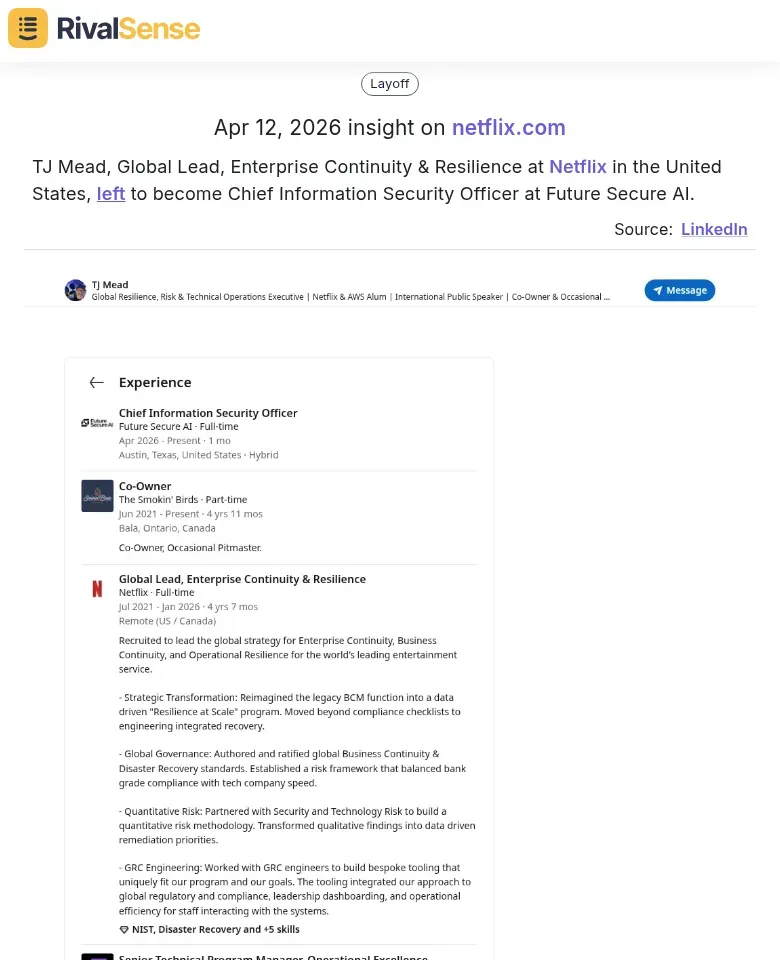
This type of insight is invaluable for business strategy because it reveals where top talent is migrating, highlighting which companies are aggressively acquiring expertise and potentially accelerating innovation in critical areas like AI security. By monitoring such movements, founders and CEOs can anticipate market shifts and adjust their competitive positioning accordingly.
🔍 The Competitive Intelligence Challenge: Tracking Executive Movements in AI Security
Executive departures between industry giants and startups are more than just personnel changes—they are rich sources of competitive intelligence. When security leaders move from established firms like Netflix to emerging players like Future Secure AI, it signals strategic pivots and potential technology transfers that can redefine market edges. Understanding these patterns allows businesses to identify where the next competitive threats might arise and how to respond effectively.
Practical Steps for Tracking Executive Movements:
- Identify High-Value Talent Pools: Monitor security executives at major platforms (e.g., Netflix, Amazon Prime, Disney+) and AI security startups. These professionals often have skills in large-scale, real-time data protection that are transferable to enterprise AI security.
- Analyze Departure Patterns: Look for clusters of talent moving between specific companies. Multiple transitions from streaming to AI security firms suggest market consolidation and emerging threats.
- Connect Transitions to Competitive Threats: Each move represents potential knowledge transfer. For instance, Future Secure AI gaining Netflix's security architecture expertise could give them an edge in scalable AI solutions.
Quick Checklist for Early Detection:
- [ ] Set up alerts for executive title changes on LinkedIn
- [ ] Use Google Alerts for key personnel moves at competitors
- [ ] Track patent filings following executive transitions
- [ ] Analyze hiring patterns in AI security firms for skill gaps
📊 Key Findings: How Talent Strategy Reveals Market Dominance
Future Secure AI's recruitment of Netflix's security executive exemplifies a talent strategy that signals market ambition. By targeting leaders from subscriber-based platforms, they acquire expertise in protecting massive-scale systems, which is crucial for enterprise AI security. This move indicates a focus on B2C AI security solutions and expansion into media and entertainment sectors.
Our analysis reveals three strategic patterns:
- Targeting Streaming Executives: Indicates a move toward B2C AI security solutions.
- Expertise in Content Protection: Suggests expansion into media/entertainment AI security.
- Experience with Large-Scale Platforms: Reveals ambitions for enterprise-level deployments.
Actionable Intelligence Steps:
- Monitor executive departures from entertainment tech companies.
- Track patent applications from new hires to gauge technology direction.
- Analyze how streaming security challenges translate to AI security needs.
- Map career trajectories to predict market expansion areas.
🚀 Strategic Implications: Leveraging Executive Intelligence for Competitive Advantage
Executive movement intelligence transforms raw data into strategic foresight, enabling businesses to anticipate competitors' moves. When top talent migrates to startups, it often precedes innovation surges and market leadership shifts. This intelligence helps in refining talent acquisition, product roadmaps, and competitive positioning.
Actionable Framework for Executive Intelligence:
- Monitor Key Departure Patterns: Use automated tools to track C-suite movements across top competitors via LinkedIn, press releases, and regulatory filings.
- Analyze Destination Clusters: Map where executives migrate—concentrations at one startup signal emerging market leadership.
- Time Your Response: Establish 48-hour protocols for high-value departures to approach talent before competitors act.
- Cross-Reference Signals: Correlate executive moves with funding rounds, product launches, and patent filings.
- Build Talent Flow Maps: Visualize migration patterns to predict competitor expansion and skill gaps.
Practical Checklist for Competitive Teams:
- [ ] Configure real-time alerts for competitor leadership page changes
- [ ] Maintain a database of potential candidates from competitor exits
- [ ] Schedule weekly briefings on executive movements
- [ ] Benchmark hiring timelines against industry averages
- [ ] Develop outreach templates for transition periods
Pro Tip: Track the roles executives take—promotions indicate growth areas, lateral moves signal stability, and demotions reveal organizational stress. This insight informs your competitive strategy and timing.
✅ Conclusion: Transforming Intelligence into Action
Executive intelligence is not just about reacting to news; it's about predicting market shifts and capitalizing on competitors' vulnerabilities. The case of Netflix's security executive moving to Future Secure AI shows how talent flows precede market dominance, offering a blueprint for proactive strategy. By leveraging these insights, businesses can strengthen their position and innovate ahead of trends.
Strategic Takeaways:
- Create dashboards to track key executives across competitors.
- Monitor LinkedIn and job postings for emerging skill gaps.
- Analyze departure patterns to identify organizational stress points.
- Benchmark talent acquisition against competitor hiring velocity.
- Use executive movement data to forecast strategic pivots early.
Final Checklist for Implementation:
- [ ] Set up alerts for C-suite departures at key competitors
- [ ] Track where departing executives land (competitors, startups, etc.)
- [ ] Analyze time-to-fill for critical positions
- [ ] Monitor employee reviews during leadership transitions
- [ ] Correlate executive changes with product roadmap shifts
To effectively track executive movements and other competitor activities like product launches, pricing updates, and partnerships, consider using a dedicated tool. Try RivalSense for free at https://rivalsense.co/ to automate your competitive intelligence and get your first competitor report today. RivalSense delivers weekly insights across company websites, social media, and registries, helping you stay ahead in the AI security landscape and beyond.
📚 Read more
👉 Real-World Competitor Loyalty Program Analysis: Leveraging Internet Insights
👉 2026 Print-on-Demand Benchmarking: Uncover Competitor Innovation Advantages
👉 SaaS Product Offering Analysis Framework: Turn Competitor Insights into Strategy
👉 Decodo's Residential Proxy Pricing Update: Competitive Insights and Actionable Tips
👉 Track Key Account Team Members: The Complete Guide to Competitive Intelligence for B2B Leaders