
Telemedicine Competitor Tracking Cheat Sheet
The telemedicine industry is exploding, projected to reach $460 billion by 2030. With giants like Teladoc, Amwell, and MDLive competing alongside nimble startups, staying ahead requires more than just a great product—it demands sharp competitive intelligence. Tracking competitors helps you spot emerging trends (e.g., AI-driven diagnostics, asynchronous care models), identify gaps in the market, and refine your go-to-market strategy. This cheat sheet gives you a practical framework for monitoring key players, analyzing their moves, and turning insights into action. We'll cover: (1) how to set up a competitor tracking system, (2) what metrics to monitor (pricing, partnerships, tech stack, user reviews), (3) tools to automate the process, and (4) a weekly checklist to stay updated. Let's turn competitor noise into strategic advantage.
Key Competitors to Watch in Telemedicine
To stay ahead in telemedicine, track these key competitors by category. Major players like Teladoc, Amwell, MDLive, and Doctor on Demand dominate with broad B2B and hybrid models, serving enterprise clients and insurers. Regional leaders (e.g., Babylon Health in Europe, Ping An Good Doctor in Asia) offer localized insights. Emerging disruptors include AI-driven platforms (e.g., K Health, Buoy Health) using chatbots for triage, niche specialists (e.g., Ro for men's health, Maven for women's health), and direct-to-consumer apps (e.g., Lemonaid, 98point6) that bypass traditional insurance.
Categorize competitors by business model: B2B (sell to employers/insurers), B2C (direct to patients), or hybrid (both). Tip: Create a matrix with columns for model, target audience (primary care, mental health, chronic care), pricing, and key features. Update monthly via press releases, app store reviews, and clinical trial registries.
Checklist:
- List top 10 competitors by revenue.
- Note their funding rounds.
- Track regulatory approvals (e.g., FDA clearances).
- Monitor partnership announcements.
This framework helps you spot shifts early and adjust your strategy.
Metrics for Tracking Competitor Performance
To outmaneuver telemedicine rivals, track these performance indicators systematically.
1. Growth & Engagement
- User Growth: Monitor monthly active users (MAU) and new sign-ups via App Store/Google Play download estimates or press releases.
- Retention Rates: Calculate cohort retention from public data (e.g., repeat visit frequency). Tip: Use tools like Sensor Tower to estimate retention curves.
- Average Visit Volume per Month: Divide reported annual visits by 12. Check earnings calls for hints.
2. Revenue & Pricing
- Revenue per Visit: Estimate by dividing total revenue by visit volume. Benchmark against industry averages ($50–$150).
- Subscription Pricing: Track tiered plans (e.g., $9.99/month for unlimited messaging). Check pricing pages weekly.
- Insurance Reimbursement Models: Note which insurers partner with competitors (e.g., Cigna, Blue Cross). Look for 10-K filings listing payer mix.
3. Clinical Quality
- Patient Satisfaction Scores: Scrape review sites (e.g., Google Reviews, Trustpilot) for average ratings. Target >4.0 stars.
- Provider Network Size: Count listed specialists on competitor directories. Aim for >500 providers.
- Wait Times: Conduct mystery shopping—book a same-day appointment and measure response time. Best-in-class: <5 minutes.
Checklist: Set up a dashboard with these metrics; update monthly. Use competitive intelligence tools (e.g., RivalSense) to automate data collection.
Monitoring Competitor Product & Feature Changes
To stay ahead in telemedicine, monitor competitor product changes systematically. New service offerings like mental health, chronic care, or prescription delivery can signal market shifts. Set Google Alerts for keywords like "telemedicine mental health launch" and track competitor blogs. Technology advancements—AI diagnostics, remote monitoring integrations, UX improvements—require hands-on testing. Create a monthly cadence to trial competitor apps, noting new features. Use tools like RivalSense to aggregate changelogs.
Regulatory compliance (HIPAA, state licensure, telehealth parity laws) is critical. Follow CMS and state health department updates; subscribe to industry newsletters like Telehealth Policy Report. Build a compliance tracker spreadsheet: column A for competitor, B for regulation, C for status (e.g., "updated consent forms").
Quick checklist:
- Set up alerts for competitor press releases.
- Schedule monthly app audits.
- Review regulatory changes quarterly.
- Share insights in a competitive intelligence meeting.
This structured approach ensures you never miss a critical move.
Analyzing Competitor Marketing & Positioning
To decode competitor marketing, start by auditing their messaging themes. Most telemedicine players emphasize convenience, cost savings, specialist access, and 24/7 availability—but the mix varies. Create a simple table: list each competitor and rate their emphasis on each theme (1-5). For example, Teladoc leans heavily on specialist access, while Amwell highlights 24/7 availability.
Next, map their channel strategy. Check if they dominate social media (e.g., Hims & Hers on Instagram), run a content hub (e.g., Ro’s blog on men’s health), or partner with employers/insurers (e.g., MDLive’s B2B focus). Use tools like BuzzSumo to see which content formats (videos, infographics) drive engagement.
Finally, assess brand perception and differentiation tactics. Look for celebrity endorsements (e.g., Khloé Kardashian for Hims & Hers), clinical partnerships with major health systems (e.g., Amwell with Cleveland Clinic), or unique trust signals like accreditations. Create a positioning map with axes of ‘price vs. premium’ and ‘generalist vs. specialist’ to spot gaps. Pro tip: set up Google Alerts for competitor brand names + “partnership” to catch new deals early.
Beyond Telemedicine: Unexpected Signals That Matter
Competitor intelligence isn't limited to direct rivals or product features. Sometimes the most valuable signals come from adjacent industries or operational changes. For example, a transportation authority adding a new bus stop might seem irrelevant, but it could indicate a shift in population density that affects your patient acquisition strategy. Similarly, executive moves at B2B SaaS companies can signal new partnership opportunities or competitive threats.
Here are three real examples of insights that could reshape your strategic thinking:
Infrastructure changes: Autotransporta direkcija added a new bus stop 'Strauti' in Jēkabpils region to two regional bus routes starting June 1. Why this matters: A new bus stop improves access to healthcare facilities in underserved areas. If your telemedicine platform targets rural patients, this could be a distribution channel alignment opportunity.

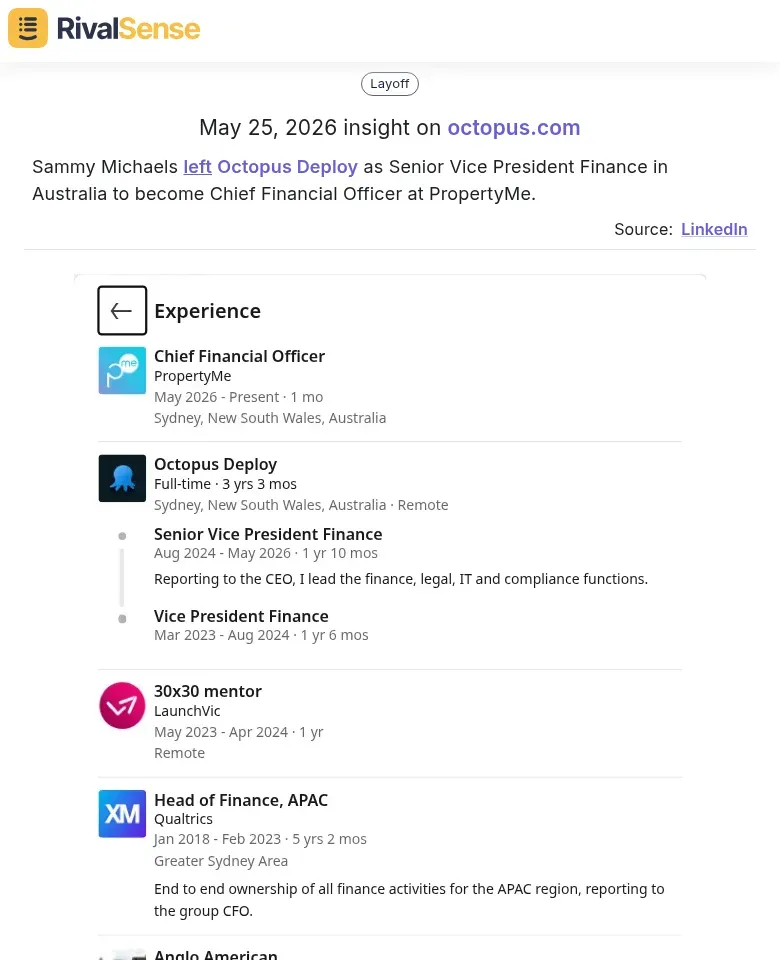
Key executive moves: Sammy Michaels left Octopus Deploy as Senior Vice President Finance in Australia to become Chief Financial Officer at PropertyMe. Why this matters: Leadership changes often precede strategic pivots—new CFOs may shift pricing models, acquisition targets, or investor relations. Track such moves to anticipate market disruptions.
Sales leadership hires: Jack Campbell joined Harness as AVP, Global AppSec Sales Leader in the United States. Why this matters: A specialized sales hire from a competitor (Harness is a DevOps platform) signals an expansion into new verticals or increased competition for enterprise accounts. If you serve similar B2B buyers, this could affect your deal win rates.
Actionable takeaway: Broaden your monitoring scope beyond direct telemedicine competitors. Use a tool like RivalSense that scans company websites, social media, and registries for product launches, pricing updates, partnerships, management changes, and more—delivered in a weekly email. You'll catch signals your competitors miss.
Building Your Telemedicine Competitive Intelligence Workflow
Building an effective telemedicine competitive intelligence workflow ensures you stay ahead of market shifts. Start by setting up automated alerts for competitor news, funding rounds, and regulatory changes. Use Google Alerts for broad coverage and Crunchbase for funding updates; for regulatory shifts, follow FDA and CMS feeds.
Next, consolidate data using a competitive tracking tool like RivalSense. It aggregates alerts, tracks competitor product launches, pricing changes, and partnership announcements, and allows you to share insights with your team via Slack or email.
Finally, establish a regular cadence: schedule a weekly 30-minute review of the latest intel, and a monthly deep-dive to update your competitive landscape. Integrate findings into strategic planning by linking insights to specific initiatives—e.g., if a competitor launches a new telehealth feature, prioritize a similar capability in your roadmap.
Pro tip: Create a shared dashboard with key metrics (e.g., competitor funding, feature releases) to keep everyone aligned. This workflow turns raw data into actionable strategy.
Ready to Streamline Your Competitor Tracking?
Manually monitoring all these signals is time-consuming. RivalSense helps you automatically track competitor product launches, pricing updates, event participations, partnerships, regulatory changes, management moves, and media mentions across company websites, social media, and registries—all delivered in a single weekly email report.
Stop sifting through noise. Try RivalSense for free and get your first competitor report today.
📚 Read more
👉 How a Rival Caught Amazon's Shift from Retail to Space
👉 Advanced Tactics: Mining Internet Data for Competitor & Key Account Insights
👉 Boost Client Loyalty: Track Key Account Satisfaction
👉 Competitor Financial & M&A Intelligence Cheat Sheet
👉 Best Practices for Competitor Product Update Analysis for B2B Companies