
SaaS Productivity: Track Competitor Content Performance Effectively
In the competitive SaaS landscape, content is a key driver of lead generation and brand authority. To maintain a competitive edge, you must systematically track how your rivals are performing with their content efforts. Tracking competitor content performance isn’t just about monitoring—it’s about strategic positioning. First, analyze how competitors position themselves through content themes, messaging, and audience targeting. Are they focusing on enterprise pain points or SMB efficiency? This reveals market gaps you can exploit. Second, conduct quarterly content gap analysis: identify topics competitors rank for but you don’t, and assess engagement metrics on their top-performing pieces. Third, benchmark against industry leaders using tools like SEMrush or Ahrefs to track share of voice, backlink profiles, and content velocity.
Practical tip: Create a competitor content dashboard tracking their top 5 performing pieces monthly, noting format (guides vs. case studies), engagement rates, and keyword rankings. This data-driven approach helps you refine your content strategy, identify underserved topics, and allocate resources effectively to outperform competitors.
Essential Metrics for Competitor Content Analysis
To effectively track competitor content performance, you need to focus on metrics that truly matter. Without the right data points, your analysis will lack depth and actionable insights. Focus on three essential metric categories:
SEO Performance Metrics:
• Keyword Rankings: Monitor which keywords drive their organic traffic using tools like Ahrefs or SEMrush. Track position changes monthly.
• Organic Traffic: Estimate traffic via SimilarWeb or built-in analytics (if visible). Look for spikes correlating with content launches.
• Backlink Profile: Analyze referring domains and authority scores. High-quality backlinks indicate content that resonates with influencers.
Engagement Metrics:
• Views/Pageviews: Use social listening tools to gauge content reach. Compare relative performance across platforms.
• Bounce Rates & Time on Page: High bounce rates may signal irrelevant content; longer time suggests deeper engagement. Check via competitor site plugins or heatmap tools.
Conversion Metrics:
• Lead Generation: Track gated content downloads, newsletter sign-ups, or demo requests. Monitor their landing page conversion elements.
• Conversion Rates: Estimate from traffic-to-lead ratios. Tools like BuiltWith can reveal their marketing tech stack.
• ROI Indicators: Assess content-driven pipeline value by analyzing case studies, customer testimonials, or pricing page updates.
Practical Checklist:
✅ Set up automated tracking for top 10 competitor keywords
✅ Monthly review of backlink growth patterns
✅ Benchmark engagement rates against industry averages
✅ Document conversion funnel optimizations they implement
✅ Calculate estimated content ROI using traffic × conversion rate × average deal size
Tools and Methods for Effective Competitor Tracking
For SaaS leaders, effective competitor tracking requires specialized tools that go beyond basic monitoring. Manual checks are time-consuming and often miss critical updates, so leveraging the right technology is essential. Start with dedicated competitor intelligence platforms like RivalSense that track content performance, feature updates, and pricing changes across your competitive landscape. These platforms provide structured insights into what content resonates with your shared audience.
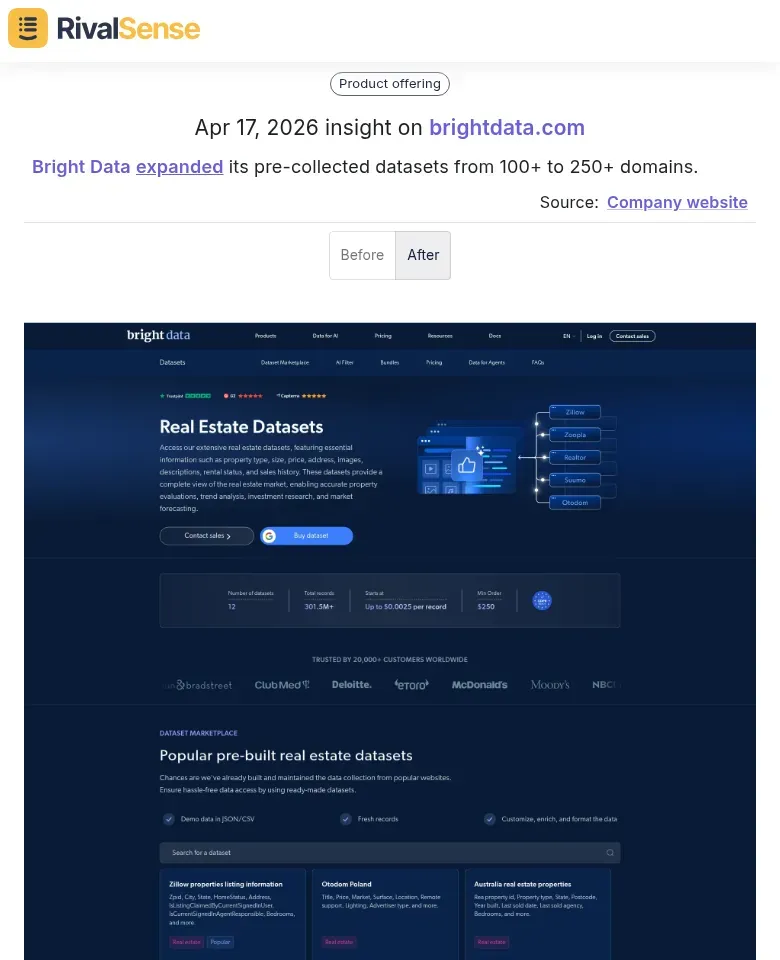
For example, RivalSense might alert you to a competitor's product expansion, such as when Bright Data expanded its pre-collected datasets from 100+ to 250+ domains. This type of insight is valuable because it signals a shift in their product strategy, which can influence their content themes and market positioning. By tracking such updates, you can anticipate new content topics they might cover and adjust your strategy accordingly.
Complement this with SEO and content analysis tools like Ahrefs or SEMrush to analyze competitor keyword strategies, backlink profiles, and content gaps. Create a checklist:
- Identify top-performing competitor content,
- Analyze engagement metrics,
- Track content publication frequency,
- Monitor social amplification.
Implement automated monitoring systems for real-time intelligence. Set up alerts for competitor announcements, pricing changes, and content launches. Practical tip: Use RSS feeds, Google Alerts, and social listening tools to stay current. Establish a weekly review process to analyze collected data and identify patterns in competitor content strategy.
Key steps:
- First, map your competitive landscape.
- Second, select tools that integrate data sources.
- Third, establish tracking metrics aligned with business goals.
- Fourth, automate data collection.
- Fifth, schedule regular analysis sessions.
This systematic approach transforms raw data into actionable competitive intelligence for strategic content decisions.
Analyzing Competitor Content Strategy and Performance
To analyze competitor content strategy effectively, you need a structured approach that goes beyond surface-level metrics. Deep analysis reveals not just what they publish, but how it drives engagement and market influence. Start by mapping their content ecosystem. Track which formats (webinars, case studies, whitepapers) generate the most engagement on platforms like LinkedIn and industry forums. Use tools like RivalSense to monitor topic clusters—notice if they’re shifting from feature-focused content to ROI-driven narratives. Create a competitive content matrix comparing their top-performing topics against yours to identify gaps.
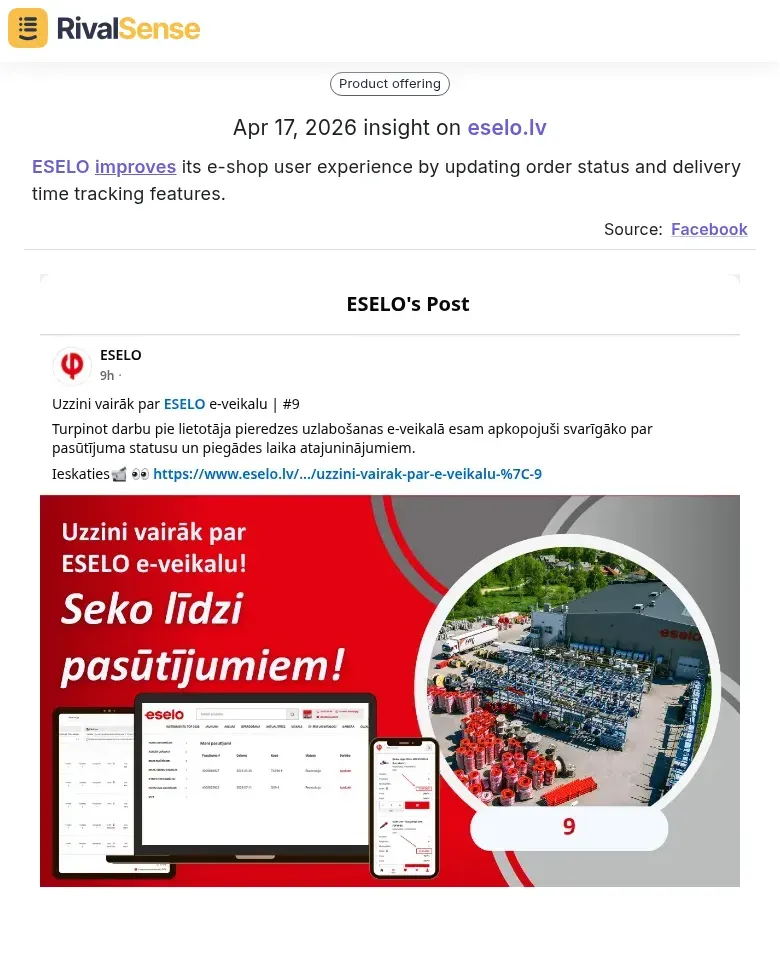
For instance, when ESELO improves its e-shop user experience by updating order status and delivery time tracking features, it’s a sign they are focusing on customer-centric content. Tracking such feature updates helps you understand their priorities and can inform your own content around user experience and product enhancements.
Next, assess distribution channels systematically. Monitor where competitors amplify content: Are they leveraging email newsletters, paid social ads, or guest posts on high-authority sites? Track promotion tactics like influencer collaborations or webinar series. Build a channel effectiveness scorecard based on engagement metrics (shares, comments, downloads) to prioritize your own distribution.
Finally, measure content’s impact on market position. Analyze share-of-voice trends using social listening tools to see if competitors are gaining mindshare in key discussions. Correlate their content launches with changes in website traffic (via SimilarWeb) or keyword rankings. Practical tip: Set up quarterly competitive content audits with a checklist:
- Catalog top 10 competitor pieces by engagement,
- Map their promotion funnel,
- Track branded search volume shifts.
This reveals not just what they publish, but how it drives tangible market influence.
Turning Competitor Insights into Actionable Strategy
Turning competitor insights into actionable strategy requires a systematic approach that bridges analysis and execution. Without a clear process, insights remain unused and opportunities missed. First, identify content opportunities by analyzing competitor weaknesses: look for topics they cover superficially, outdated content, or engagement gaps in their social media posts. Create a checklist:
(1) Audit 3-5 key competitors’ top-performing content,
(2) Note topics with high search volume but low-quality competitor coverage,
(3) Identify audience questions they’re not answering.
Optimize your content calendar with data-driven decisions by mapping competitor publishing patterns against your analytics. If competitors see high engagement on case studies every Tuesday, schedule your superior versions then. Use a simple framework: Analyze → Prioritize → Schedule → Execute.
Develop competitive content that outperforms rivals by focusing on depth, freshness, and format innovation. When a competitor has a basic guide, create an interactive tool or comprehensive playbook. Practical tip: For every piece of competitor content you analyze, aim to produce something 30% more valuable—whether through better research, clearer examples, or more actionable steps.
Actionable steps:
- Weekly competitor content audit,
- Gap analysis spreadsheet,
- Quarterly content refresh based on competitor updates,
- A/B test headlines against competitor top-performers.
📚 Read more
👉 How ComplyAdvantage's AI Rebranding Prompted Rivals' Strategic Pivot
👉 Twitter vs. Website: Competitive Intelligence Analysis for Strategic Advantage
👉 Agentic AI Key Account Management Certification: Your Ultimate Cheat Sheet
👉 Competitor Product Offering Analysis: A Step-by-Step Workflow for B2B Leaders
👉 Turning Personnel Changes into Competitive Insights: A Real-World Example