
The Strategic Guide to Tracking Key Account Milestones: A B2B Leader's Playbook
As a B2B founder or business leader, you know that your key accounts aren't just customers—they're strategic partners that drive disproportionate revenue, provide valuable referrals, and offer insights that shape your product roadmap. Yet, according to industry data, companies that don't systematically track their key account milestones experience 30-40% higher churn rates and miss 60% of potential expansion opportunities.
In this comprehensive guide, I'll show you how to build a systematic approach to tracking key account milestones that reduces churn, maximizes expansion revenue, and turns your most important customers into your biggest competitive advantage.
Why Tracking Key Account Milestones Matters More Than Ever
In today's competitive B2B landscape, tracking key account milestones isn't just a nice-to-have—it's a strategic imperative. When you systematically monitor and respond to account milestones, you can proactively address issues and seize opportunities. Here's what you gain:
- Prevent churn before it happens by identifying at-risk accounts early
- Maximize expansion revenue by spotting upsell opportunities at the right time
- Strengthen competitive positioning by understanding how your solution stacks up against alternatives
- Improve product-market fit by leveraging insights from your most valuable customers
- Build stronger relationships through proactive, data-driven engagement
The 5 Critical Stages of Key Account Milestones
Understanding the key account lifecycle stages is fundamental to effective milestone tracking. Unlike individual customer journeys, key accounts involve multiple stakeholders, longer sales cycles, and more complex relationship dynamics. Each stage has distinct milestones that signal progress or risk.
1. Acquisition & Onboarding Milestones
This is where the relationship begins. Key accounts typically have longer sales cycles with multiple decision-makers involved. Critical milestones to track include:
- Initial contact and discovery calls completed
- Proof of concept (POC) progress and success metrics
- Contract negotiation stages completed
- Onboarding completion and time-to-value achieved
Practical Checklist for Acquisition Tracking:
- [ ] Map all stakeholders and decision-makers
- [ ] Set clear POC success criteria
- [ ] Track onboarding completion against timeline
- [ ] Document initial value realization
2. Adoption & Value Realization Milestones
Once onboarded, the focus shifts to ensuring the account realizes promised value. This stage is critical for retention and future expansion. Key milestones involve usage and satisfaction metrics.
- Feature adoption rates across user groups
- Usage patterns and engagement metrics
- Value realization against business objectives
- Stakeholder satisfaction and feedback
Adoption Tracking Checklist:
- [ ] Track first 30-day usage patterns
- [ ] Monitor key feature adoption weekly
- [ ] Schedule regular value realization check-ins
- [ ] Document success stories and ROI evidence
3. Growth & Expansion Milestones
This is where you maximize revenue from existing accounts. Expansion can come from additional users, new departments, or upgraded plans. Look for signals that indicate readiness for growth.
- Usage growth trends and patterns
- Departmental expansion signals
- Budget allocation and renewal timing
- Competitive threats and retention risks
4. Maturity & Advocacy Milestones
Mature accounts become strategic partners and advocates. They provide referrals, case studies, and influence your product roadmap. Tracking advocacy activities strengthens long-term bonds.
- Advocacy activities (references, testimonials)
- Product feedback and feature requests
- Executive relationship strength
- Competitive insulation level
5. Risk & Renewal Milestones
Every account eventually faces renewal decisions. Proactive tracking helps you identify and address risks before they impact renewal. Monitor patterns that could signal churn.
- Usage decline patterns identified
- Support ticket trends analyzed
- Competitive activity affecting the account
- Relationship health indicators monitored
How to Build Your Key Account Milestone Tracking Strategy
Building an effective tracking strategy requires moving beyond basic CRM data to create a holistic view of each key account. Here's my proven framework for developing a systematic approach that scales with your business. Follow these steps to implement a robust system.
Step 1: Map Your Account Touchpoints and Milestones
Create a comprehensive map of all interactions and milestones for each key account. This ensures no critical moment is overlooked. Include:
- Sales conversations and meeting notes
- Customer success check-ins and QBRs
- Support tickets and resolution times
- Product usage data and feature adoption
- Executive business reviews
- Social media and public interactions
Practical Advice: Use a centralized system (like a CRM with custom fields) to track all milestones and assign ownership for follow-up.
Step 2: Define Key Metrics and Milestone Signals
Identify the specific metrics that indicate account health at each lifecycle stage. Clear metrics provide actionable insights. For example:
Acquisition Stage Metrics:
- Time to close
- Number of stakeholders involved
- POC success rate
- Onboarding completion time
Adoption Stage Signals:
- Daily/Weekly Active Users (DAU/WAU)
- Core feature adoption rate
- Time to first value
- Support ticket frequency
Expansion Opportunities:
- Usage growth trends
- Department expansion
- Budget allocation signals
- Competitive mentions
Step 3: Implement Structured Tracking Processes
Establish regular routines to review and act on milestone data. Consistency is key to maintaining account health. Implement these processes:
- Weekly Account Reviews: Brief check-ins on high-priority accounts
- Monthly Health Scoring: Quantitative scoring based on usage, engagement, and relationship metrics
- Quarterly Business Reviews (QBRs): Strategic reviews with key stakeholders
- Annual Relationship Assessments: Comprehensive evaluation of the entire relationship
✅ Implementation Checklist:
- [ ] Define clear ownership for each tracking activity
- [ ] Establish regular reporting cadence
- [ ] Create standardized templates for reviews
- [ ] Set up automated alerts for risk indicators
- [ ] Document insights and action items systematically
Integrating Competitive Intelligence into Account Milestone Tracking
Tracking key account milestones becomes exponentially more powerful when combined with competitive intelligence. While you're monitoring your accounts' health and engagement, it's equally critical to understand what's happening in your competitive landscape. This external context helps you anticipate threats and seize opportunities before they impact your key relationships.
This is where RivalSense provides strategic advantage: Our platform tracks competitor movements across 80+ sources—including product launches, pricing updates, event participation, partnerships, regulatory changes, management updates, and media mentions—delivering comprehensive weekly reports directly to your inbox.
Why Competitive Intelligence Matters for Account Milestone Tracking:
- Identify Competitive Threats Early: When key accounts mention competitors or evaluate alternatives, you need context. RivalSense helps you understand what those competitors are actually doing.
- Benchmark Your Performance: Track how competitor product updates compare to your roadmap. Are they launching features your accounts are requesting?
- Spot Market Trends: Competitor activities often signal broader market shifts that could affect your key accounts' priorities and needs.
- Make Data-Driven Decisions: Combine account feedback with competitor intelligence to prioritize product investments and positioning.
Real-World Examples from RivalSense Tracking:
Product Launches and Expansion:

Aurora Labs' Calyx will launch two new products in January 2026 and expand into major ecosystems. Tracking such product launches helps you anticipate competitor innovation and market expansion, allowing you to adjust your value proposition for key accounts who might be evaluating new solutions. This insight is valuable for proactive strategy adjustments.
Regulatory and Market Entry Moves:
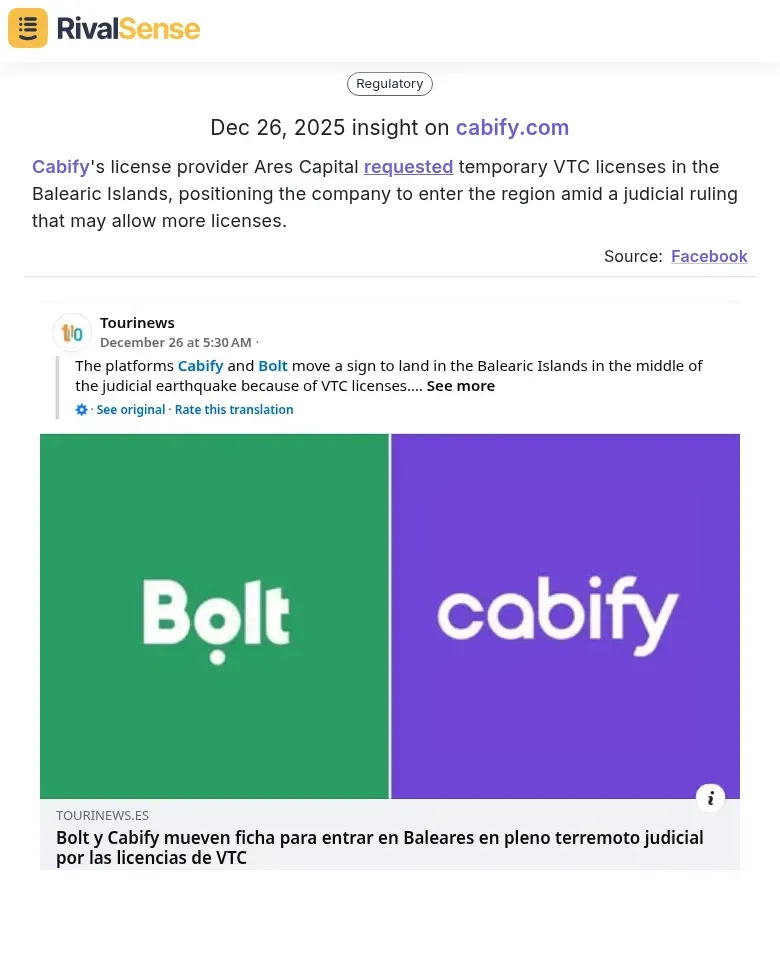
Cabify's license provider Ares Capital requested temporary VTC licenses in the Balearic Islands, positioning the company to enter the region amid a judicial ruling that may allow more licenses. Monitoring regulatory changes and market entry strategies helps you understand competitive positioning and prepare for new threats or opportunities in your key accounts' regions. This type of insight is crucial for geographic expansion planning.
Regulatory Sanctions and Incentives:

Ola Electric Technologies received a sanction order from the Ministry of Heavy Industries for incentives worth Rs 366.78 crore under the Production Linked Incentive Scheme for Automobile and Auto Components for FY25. Keeping track of regulatory sanctions and incentives provides insights into competitor financial health and compliance, which can affect their competitive edge and your strategy with key accounts. This insight helps in assessing competitive stability.
Practical Integration Tip: Create a monthly review process where you analyze key account milestone data alongside RivalSense competitor intelligence reports. Look for patterns like:
- Competitor mentions in account conversations
- Feature requests that align with competitor launches
- Pricing pressures from competitor updates
- Partnership opportunities revealed through competitor activities
Best Tools for Key Account Milestone Management
Selecting the right tools is crucial for efficiently tracking and managing key account milestones. The market offers various solutions tailored to different aspects of account management. Investing in the right stack saves time and improves accuracy.
Core Tracking Tools:
CRM Systems: Salesforce, HubSpot, Pipedrive
- Centralize account data and milestone tracking
- Track deal stages and renewal dates
- Manage stakeholder relationships
Customer Success Platforms: Gainsight, Totango, ChurnZero
- Monitor health scores and risk indicators
- Automate QBRs and check-ins
- Track adoption and expansion metrics
Product Analytics: Mixpanel, Amplitude, Pendo
- Monitor feature adoption and usage patterns
- Identify engagement trends
- Track user behavior across segments
Competitive Intelligence Integration:
RivalSense: Comprehensive competitor tracking across 80+ sources
- Weekly competitor intelligence reports
- Product launch and update monitoring
- Pricing change alerts
- Partnership and event tracking
- Management change notifications
- Media mention analysis
Why RivalSense Fits Your Stack: While traditional tools help you track what's happening inside your accounts, RivalSense helps you understand the external competitive forces affecting them. This dual perspective is essential for proactive account management and strategic decision-making.
Actionable Tips and Implementation Guide
Implementing a key account milestone tracking strategy can seem daunting, but breaking it down into manageable steps ensures success. Start with quick wins and gradually build a comprehensive system that evolves with your business.
🚀 Quick Wins to Implement This Week:
- Set Up Basic Health Scoring: Create a simple spreadsheet with 5-10 key metrics for your top 10 accounts
- Establish Weekly Review Cadence: Block 30 minutes each week to review high-priority accounts
- Track Competitor Mentions: Start documenting when accounts mention competitors in conversations
- Create Account Dashboards: Build simple dashboards in your CRM for each key account
✅ Comprehensive Implementation Checklist:
Phase 1: Foundation (Weeks 1-2)
- [ ] Identify your 20% of accounts that drive 80% of revenue
- [ ] Map current touchpoints and data sources
- [ ] Define key metrics for each lifecycle stage
- [ ] Assign account ownership clearly
Phase 2: Process Implementation (Weeks 3-4)
- [ ] Set up weekly account review meetings
- [ ] Create standardized milestone tracking templates
- [ ] Implement automated alert systems
- [ ] Train team on new processes
Phase 3: Advanced Integration (Weeks 5-8)
- [ ] Integrate competitive intelligence (like RivalSense) into reviews
- [ ] Build comprehensive account dashboards
- [ ] Establish escalation protocols for at-risk accounts
- [ ] Create playbooks for common milestone scenarios
Key Account Milestone Tracking Templates and Resources
Effective milestone tracking requires structured documentation. To help you get started immediately, here are practical templates and resources that you can adapt for your needs.
1. Account Health Scorecard Template
Metrics to Include:
- Usage/Adoption Score (0-10)
- Relationship Health (0-10)
- Expansion Potential (0-10)
- Risk Level (0-10)
- Overall Health Score (Average)
2. Quarterly Business Review (QBR) Template
Sections to Cover:
- Executive Summary
- Value Delivered (ROI)
- Usage and Adoption Metrics
- Expansion Opportunities
- Risk Assessment
- Action Plan
3. Competitive Threat Assessment Template
Areas to Monitor:
- Competitor product updates
- Pricing changes
- Partnership announcements
- Management changes
- Media coverage
Common Pitfalls to Avoid
Even with a solid strategy, it's easy to fall into traps that undermine your tracking efforts. By being aware of these common pitfalls, you can proactively address them and ensure your milestone tracking remains effective and actionable.
- Tracking Too Many Metrics: Focus on the 5-10 most critical metrics per account stage
- Lack of Ownership: Ensure every milestone has a clear owner
- Ignoring Competitive Context: Don't track accounts in a vacuum
- Inconsistent Reviews: Stick to your established cadence
- Not Acting on Insights: Tracking without action is wasted effort
Measuring Success: Key Performance Indicators
To ensure your tracking strategy delivers results, you need to measure its impact. Track these KPIs to gauge the effectiveness of your milestone tracking strategy and make data-driven improvements.
- Account Retention Rate: Percentage of key accounts retained
- Expansion Revenue: Additional revenue from existing accounts
- Time to Value: How quickly accounts realize promised value
- Health Score Trends: Improvement in account health scores over time
- Competitive Win Rate: Success in competitive situations
The Strategic Advantage of Integrated Tracking
When you combine internal account milestone tracking with external competitive intelligence from tools like RivalSense, you create a powerful strategic advantage. You're not just reacting to what's happening—you're anticipating market shifts, understanding competitive pressures, and positioning your solution as the clear choice for your key accounts.
Remember: Your key accounts are your most valuable assets. By systematically tracking their milestones and understanding the competitive landscape, you're not just managing accounts—you're building strategic partnerships that drive sustainable growth.
Ready to elevate your key account strategy? Start by implementing the quick wins this week. To gain a competitive edge, try RivalSense for free at https://rivalsense.co/ and get your first competitor report today to assist with the challenges described in this post.
📚 Read more
👉 Case Study: How Project Governance Unlocks Competitor Pricing Advantages
👉 How Import.io's Managed Web Scraping Service Enables Competitor Innovation
👉 Uncover Competitor Innovation Advantages Through Twitter Intelligence
👉 VPN Key Account Management: A Process Optimization Guide for Cybersecurity Leaders
👉 Competitor Product Insights: A Strategic Guide for Key Account Management