
Renewable Energy SEO Benchmarking: Outperform Competitors Strategically
The renewable energy sector is experiencing unprecedented competition as solar, wind, and other clean technologies mature. With dozens of companies vying for the same customers, SEO has become a critical differentiator—not just for visibility, but for establishing authority in a complex, technical field. Strategic SEO benchmarking transforms this effort from tactical keyword chasing into a sustainable competitive advantage.
Renewable energy SEO presents unique challenges: technical complexity requires explaining intricate concepts like net metering or battery storage, while balancing local installation targeting with national brand building. Educational content is essential to guide customers through lengthy decision cycles.
Practical steps to begin:
- Identify 3-5 key competitors and analyze their top-ranking pages for technical terms vs. local service keywords
- Benchmark your domain authority against competitors using tools like Ahrefs or SEMrush
- Map content gaps: Where do competitors excel at educational guides that you lack?
- Track local search performance in your service areas versus regional players
- Monitor featured snippet opportunities for complex technical questions
By systematically benchmarking against competitors, you can identify underserved content niches, optimize for both technical and local search intent, and build an SEO strategy that drives qualified leads while establishing thought leadership.
🔍 Identifying Your True SEO Competitors in Renewable Energy
Identifying your true SEO competitors in renewable energy requires looking beyond direct business rivals. In the dynamic renewable energy market, understanding who you're competing against in search results is crucial for allocating resources effectively. Start by distinguishing three competitor types: 1) Content competitors (industry publications, research institutes), 2) SERP dominators (sites ranking for your target keywords), and 3) Business competitors. Segment them by market position: National leaders (NextEra, Ørsted), regional specialists (local solar installers), and niche innovators (emerging tech startups).
Practical methodology: Use SEMrush or Ahrefs to analyze keyword overlap. Create a competitor matrix tracking their content gaps, backlink profiles, and SERP performance. Pro tip: Monitor "best solar panels" or "renewable energy tax credits" searches to identify content competitors dominating informational queries.
Checklist:
- Identify 10-15 keyword competitors
- Analyze their content strategy
- Map their backlink sources
- Track SERP feature usage
- Benchmark monthly performance
This comprehensive approach reveals opportunities to outrank both business and content competitors strategically.
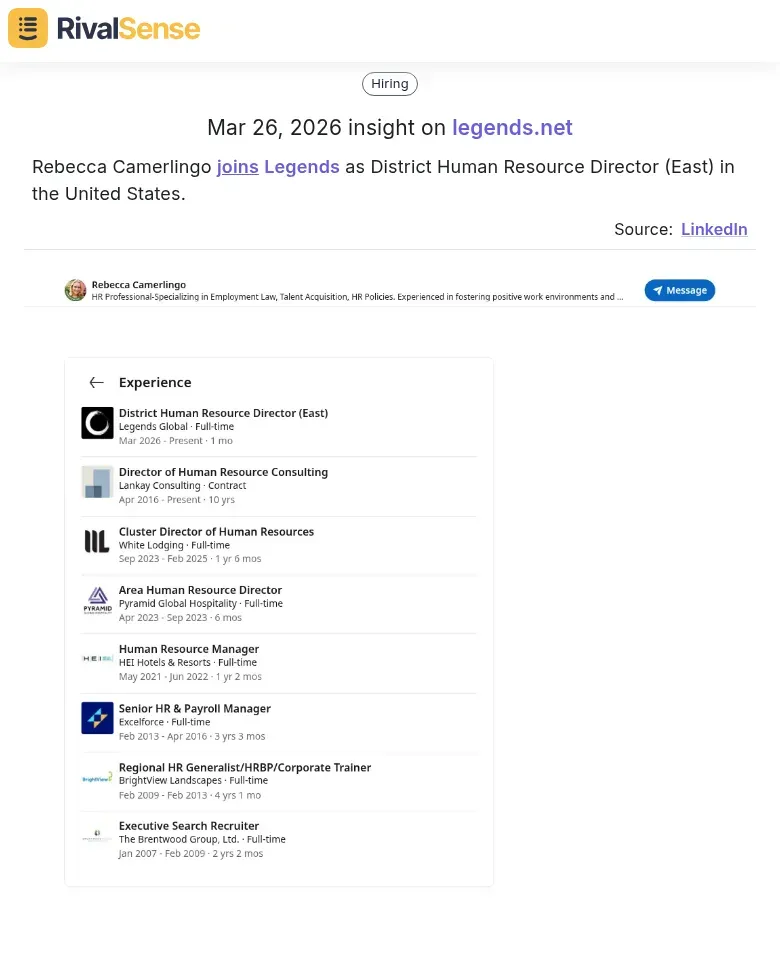
Leveraging Management Change Insights: Tracking personnel shifts can provide early signals of strategic direction. For example, when Rebecca Camerlingo joined Legends as District Human Resource Director (East), it indicated a focus on regional HR leadership. In renewable energy, similar insights—like key hires at solar companies—can reveal expansion plans or new service offerings, helping you anticipate competitive moves.
📊 Key Performance Indicators for Renewable Energy SEO Benchmarking
To effectively benchmark your renewable energy SEO against competitors, track these three categories of KPIs. By focusing on the right metrics, you can measure progress and identify areas for improvement against your competitors.
Core SEO Metrics:
- Organic Visibility: Measure your share of voice in search results using tools like SEMrush or Ahrefs. Track monthly changes in visibility scores.
- Keyword Rankings: Monitor positions for high-intent terms like "solar panel installation cost" and commercial keywords like "commercial solar financing." Create a weekly ranking report.
- Backlink Authority: Analyze competitor backlink profiles for quality (DA/DR scores) and quantity. Target authoritative .edu, .gov, and industry publications.
Renewable-Specific Metrics:
- Technical Content Performance: Track engagement metrics for guides on topics like "battery storage ROI" or "net metering policies." Use heatmaps to optimize complex explanations.
- Local Search Dominance: Monitor Google Business Profile rankings for service areas and local keyword clusters (e.g., "solar installers near me").
- Educational Engagement: Measure time-on-page for educational content and PDF/download rates for whitepapers on renewable incentives.
Business Impact Metrics:
- Lead Generation: Track form submissions and phone calls from organic search using UTM parameters.
- Conversion Rates: Calculate conversion rates for key pages like solar calculator tools or consultation request forms.
- Customer Acquisition Cost (CAC): Compare organic vs. paid CAC to demonstrate SEO ROI.
Actionable Checklist:
- Set up Google Search Console and competitor tracking tools
- Create a dashboard with weekly visibility scores
- Identify 5-10 key commercial keywords to track
- Analyze top 3 competitors' backlink sources quarterly
- Implement local schema markup for service areas
- Add lead tracking parameters to all CTAs
- Calculate monthly organic conversion rates
- Report SEO-driven CAC reductions to stakeholders
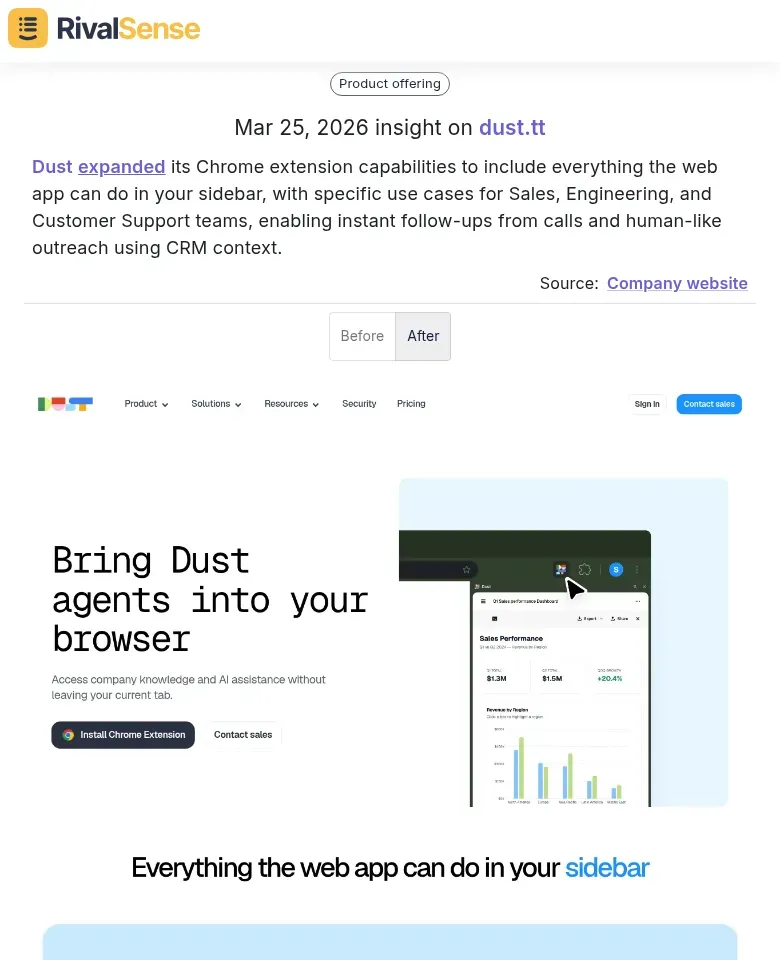
Product Update Insights: Monitoring product launches can uncover competitive advantages. For instance, when Dust expanded its Chrome extension capabilities, it highlighted a push for integrated workflow tools. In renewable energy, tracking such updates—like new solar monitoring software—can inform your content strategy around product features and customer education.
🛠️ Conducting a Comprehensive SEO Gap Analysis
A comprehensive SEO gap analysis reveals where competitors are outperforming you and where you can gain strategic advantages. This process involves comparing your SEO elements with those of your top competitors to uncover weaknesses and opportunities. Start with content gap analysis using tools like Ahrefs or SEMrush to identify underserved topics your competitors rank for but you don't. Look beyond keywords to content formats—if competitors dominate with video tutorials but you only have text guides, that's a format gap. Create a content matrix mapping topics against formats to visualize opportunities.
For technical SEO, benchmark against top 3 competitors using Google PageSpeed Insights and Core Web Vitals. Check mobile optimization scores, structured data implementation (schema.org markup), and site architecture.
Checklist for Technical SEO:
- Page load times under 3 seconds
- Mobile-friendly design
- Proper heading hierarchy
- XML sitemap implementation
Link profile comparison requires analyzing competitor backlink strategies. Identify their top referring domains, anchor text distribution, and authority-building tactics.
Practical steps for link analysis:
- Export competitor backlinks
- Filter for high-authority domains you're missing
- Analyze link acquisition patterns (guest posting, resource pages, partnerships)
- Create a prioritized outreach list targeting similar opportunities
Key tip: Focus on gaps where you can realistically compete. If a competitor has 10,000 backlinks from major publications, target their secondary link sources first. Document findings in a competitive intelligence dashboard for ongoing tracking.
🚀 Developing Your Strategic SEO Action Plan
To develop your strategic SEO action plan, start by prioritizing opportunities using a competitive gap analysis matrix. With clear priorities and a structured approach, you can execute SEO initiatives that deliver tangible results. Identify where competitors rank for high-value keywords where you're absent, and calculate the business impact potential (search volume × conversion rate × customer lifetime value). Focus first on keywords with the largest competitive gaps and highest revenue potential.
For resource allocation, adopt a 70/20/10 framework: 70% on quick wins (technical fixes, meta tag optimization), 20% on medium-term initiatives (content gap filling), and 10% on long-term competitive positioning (authority building, E-E-A-T enhancement). This ensures immediate ROI while building sustainable advantages.
Create a 90-day implementation roadmap with clear milestones:
- Weeks 1-4: Technical audit and quick-win implementation
- Weeks 5-8: Content gap analysis and creation
- Weeks 9-12: Link building and authority signals
Track performance using a dashboard that monitors: keyword rankings (top 3 vs. competitors), organic traffic growth, conversion rates, and share of voice. Set monthly review cycles to adjust tactics based on competitor movements and algorithm updates.
🔄 Continuous Monitoring and Competitive Intelligence Integration
Establishing ongoing competitor tracking is essential for renewable energy SEO success. Staying ahead requires not just initial analysis but ongoing vigilance and adaptation to market changes. Implement automated systems using tools like Ahrefs or SEMrush to monitor keyword rankings, backlink profiles, and content strategies of solar, wind, and storage competitors. Set up weekly alerts for competitor website changes, new content launches, and pricing updates.
Practical Checklist:
- Create competitor dashboards tracking 5-10 key metrics
- Set up Google Alerts for competitor names + "renewable energy"
- Monitor SERP positions for high-value terms like "solar installation" or "wind farm consulting"
- Track competitor backlink growth monthly
- Review competitor content calendars quarterly
Adapt strategies based on competitor moves: When a rival launches a new solar financing guide, analyze its structure and keywords, then create a superior version. If competitors shift focus to residential storage, adjust your content mix accordingly. Market shifts like new government incentives require immediate SEO response—create targeted content within 48 hours.
Integration Tips:
- Present SEO intelligence in monthly leadership meetings
- Connect keyword opportunities with sales pipeline data
- Align content strategy with business development goals
- Use competitor pricing insights to inform service packages
- Map competitor geographic expansion to your market entry plans
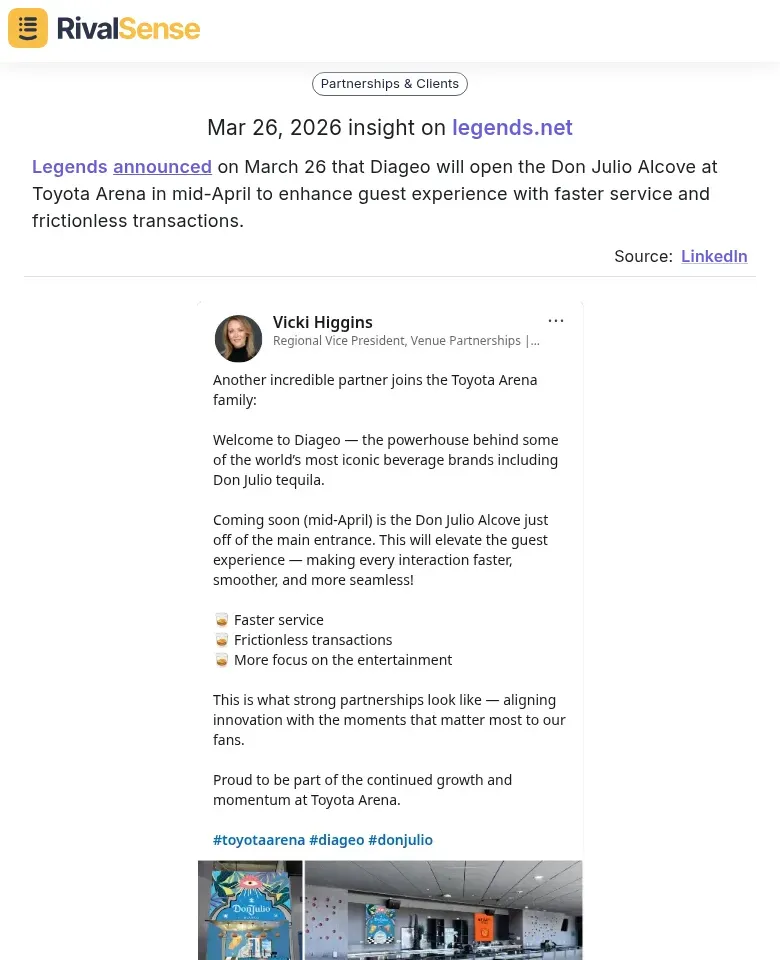
Event Participation Insights: Tracking partnerships and events can reveal marketing strategies. For example, when Legends announced the Don Julio Alcove at Toyota Arena, it highlighted efforts to enhance guest experience. In renewable energy, similar events—like participation in industry conferences or local community projects—can signal content opportunities and local SEO tactics.
Effective integration transforms SEO data into strategic decisions, ensuring your renewable energy company stays ahead in a rapidly evolving market.
🎯 Conclusion and Next Steps
By implementing these SEO benchmarking strategies, you can systematically outperform competitors in the renewable energy sector. Remember, continuous monitoring and adaptive planning are key to maintaining a competitive edge.
Ready to streamline your competitor tracking? Try RivalSense for free at https://rivalsense.co/ to get your first competitor report today and gain actionable insights into product launches, pricing updates, event participations, partnerships, regulatory changes, management shifts, and media mentions—all delivered in a weekly email report. Stay informed and ahead of the competition!
📚 Read more
👉 How Genspark's Voice Launch Prompted a Rival's AI Workspace Acceleration
👉 How to Turn Competitor Insights into Key Account Wins
👉 Streamline Education Stakeholder Management with Key Account Dashboards
👉 Competitor Financial Analysis Templates: Fundraising & M&A Insights Framework
👉 Decoding Competitor Pricing Moves: A Real-World Analysis from Credifiel México