
Key Account Management Podcasts: Productivity Tips for Medical Equipment Distribution
In today's fast-paced medical equipment distribution landscape, podcasts have emerged as indispensable learning tools for key account managers. Unlike traditional training, podcasts offer on-demand access to expert insights during commutes, between hospital visits, or while managing complex regulatory documentation. For medical equipment professionals, this format is particularly valuable given the industry's unique challenges: 18-24 month sales cycles, stringent FDA/CE compliance requirements, and multi-stakeholder decision committees at major healthcare institutions.
Medical equipment key account management differs fundamentally from other sectors. While B2B software sales might focus on feature adoption, medical equipment KAMs must navigate complex clinical workflows, demonstrate ROI through patient outcomes, and maintain relationships across procurement, clinical staff, and C-suite executives. The stakes are higher too—equipment failures can impact patient safety, making trust and reliability paramount.
Productivity challenges in this space are multifaceted. Practical podcast listening strategies include:
- ✅ Create a 'clinical workflow optimization' playlist for hospital downtime
- ✅ Use 1.5x speed for regulatory update episodes
- ✅ Take timestamped notes on competitor pricing strategies
- ✅ Schedule weekly 'podcast learning' blocks during administrative tasks
Top podcasts like The KAM Club and Medical Device Success provide actionable frameworks for managing long sales cycles while maintaining account momentum.
Top Podcasts for Medical Equipment Key Account Management Excellence
For medical equipment distributors seeking key account management excellence, podcasts deliver actionable insights that can transform your approach. Starting with the right resources ensures you stay ahead in a competitive market. Here are essential podcasts to integrate into your learning routine:
- Healthcare Supply Chain Podcast: Focuses on industry-specific logistics and regulatory compliance tips. Each episode includes practical checklists for navigating hospital procurement cycles and managing medical device inventory.
- Medical Device Sales Podcast: Offers proven techniques for building relationships with hospital administrators and navigating complex buying committees. Listen for their 5-step framework for value-based selling in healthcare.
- The Account Management Podcast: Provides universal principles with specific applications for pharma and medical equipment accounts—their episode on quarterly business reviews includes templates you can adapt.
- Business Strategy Podcast: Covers competitive positioning in healthcare markets, with episodes on pricing strategies for capital equipment.
Action Step: Create a listening schedule allocating 30 minutes weekly to each category. Implement one new technique per month, such as the 'stakeholder mapping' exercise from Medical Device Sales Podcast or the 'value proposition refinement' framework from Business Strategy Podcast. Track results in your CRM to measure impact on account retention and growth.
Productivity Strategies from Podcast Insights: Workflow Optimization
Podcast insights reveal that top-performing medical equipment distributors leverage automation and digital tools to streamline operations. By optimizing workflows, you can reduce administrative burdens and focus on strategic relationships. Implementing these strategies can significantly enhance efficiency and account satisfaction.
Practical Steps:
- Audit current workflows to identify repetitive tasks suitable for automation.
- Implement digital account planning tools with automated reminders for follow-ups and contract renewals.
- Use relationship tracking software to document all stakeholder interactions and preferences.
- Establish regular cadence for inventory reviews with key accounts using shared digital dashboards.
- Create a centralized knowledge base for product specifications, pricing, and compliance documentation.
Key Productivity Tip: Leverage mobile-friendly platforms that allow field reps to update account information in real-time during facility visits. This eliminates duplicate data entry and ensures all team members access current account status. Successful distributors report that implementing these digital tools reduces administrative time by 40%, allowing more focus on strategic relationship building and identifying upsell opportunities within existing accounts.
Leveraging Podcast Insights for Strategic Account Planning
Transforming podcast insights into actionable strategic account plans requires a systematic approach. By customizing strategies based on podcast learnings, you can align your efforts with client needs and market dynamics. Here’s how to apply these insights effectively.
-
Customized Value Propositions by Facility Type: Listen for pain points specific to different healthcare settings. For academic medical centers, focus on research collaboration and training capabilities. For community hospitals, emphasize operational efficiency and cost savings. Create a value matrix matching your solutions to each facility's unique needs.
-
Data-Driven Growth Strategies: Use podcast methodologies to build your account intelligence framework. Track mentions of budget cycles, expansion plans, and technology adoption timelines. Create a quarterly account review template that incorporates podcast-derived insights alongside traditional data sources.
-
Multi-Level Relationship Building: Identify key stakeholders mentioned across episodes—from C-suite executives to clinical department heads. Develop a relationship mapping template that tracks decision influencers, budget holders, and clinical champions. Implement a quarterly touchpoint plan with tailored content for each level.
Quick Checklist:
- ✅ Listen to 3-5 industry podcasts monthly
- ✅ Document 2-3 actionable insights per episode
- ✅ Update account profiles with podcast-derived intelligence
- ✅ Schedule quarterly relationship review meetings
- ✅ Create facility-specific value proposition templates
Pro Tip: Use podcast transcripts to search for specific keywords related to your accounts and create targeted listening playlists for each key account team.
Technology Integration: Podcast-Inspired Tools for Enhanced Productivity
For medical equipment distributors, technology integration is the linchpin of effective key account management. Podcasts often highlight tools that streamline processes and improve decision-making. Adopting these technologies can drive significant productivity gains and better serve your clients.
Start by implementing specialized CRM platforms like Salesforce Health Cloud or Zoho CRM with medical equipment modules that track complex sales cycles, regulatory compliance, and service histories. These systems should integrate with your ERP for seamless order processing.
Automate inventory and supply chain management with tools like Fishbowl or NetSuite that offer real-time tracking of medical devices, expiration dates, and recall management. Set up automated reorder triggers based on usage patterns and account-specific needs.
Leverage analytics platforms like Tableau or Power BI to create account performance dashboards. Track metrics like equipment utilization rates, service response times, and revenue per account. Use predictive analytics to identify upsell opportunities—when an account's MRI usage increases 20%, automatically flag CT scanner upgrade discussions.
Practical Checklist:
- ✅ Integrate CRM with inventory systems for real-time availability
- ✅ Automate compliance documentation for each transaction
- ✅ Set up predictive maintenance alerts based on equipment usage data
- ✅ Create account-specific dashboards showing profitability metrics
- ✅ Implement automated reporting for key decision-makers at client organizations
Pro Tip: Use podcast-inspired workflow automation tools like Zapier to connect your CRM with communication platforms, automatically sending personalized updates when inventory levels change or service milestones are reached.
Implementation Framework: Turning Podcast Insights into Actionable Results
To transform podcast insights into tangible results, implement this structured framework. Consistency in application and measurement is key to driving real business outcomes from your listening efforts.
1. Structured Listening Schedule:
- Assign 2-3 key podcasts to each team member based on their account portfolio.
- Schedule 30-minute weekly "learning sessions" during team meetings.
- Create shared note-taking templates in your CRM for consistent documentation.
- Rotate podcast assignments quarterly to cross-pollinate insights.
2. Action Plan Development:
After each episode, complete this checklist:
✓ Identify 1-2 actionable strategies relevant to your accounts
✓ Map insights to specific account challenges or opportunities
✓ Assign implementation owners and 30-day deadlines
✓ Define success metrics for each action
Example: If a podcast discusses consultative selling in orthopedics, create a plan to implement discovery questions with your top 5 orthopedic accounts.
3. Impact Measurement:
Track these KPIs monthly:
- Account engagement scores (calls, meetings, touchpoints)
- Deal velocity for accounts using podcast strategies
- Customer satisfaction scores post-implementation
- Revenue growth in targeted account segments
Conduct quarterly reviews comparing performance of accounts using podcast-inspired strategies versus control groups. Adjust your listening focus based on what drives the highest ROI.
Pro Tip: Start with one podcast strategy per quarter, measure results, then scale what works. Consistency beats intensity in knowledge application.
Competitive Intelligence: Enhancing Your Strategy with Real-Time Insights
While podcasts provide valuable industry knowledge, supplementing them with real-time competitor intelligence can give you a strategic edge. Tracking competitor moves helps you anticipate market shifts and refine your account management strategies. Tools like RivalSense deliver insights such as product launches, pricing updates, and management changes directly to your inbox.
Here are examples of competitor insights that can inform your business strategy:
-
Market Expansion Insights: Tracking when competitors enter new markets can alert you to emerging opportunities or threats. For instance, RivalSense reported: "Iute Group is entering Ukraine to build a fully digital bank after winning a state-organised tender by Ukraine’s Deposit Guarantee Fund, with CEO Tarmo Sild citing confidence in the country's future and growth potential."
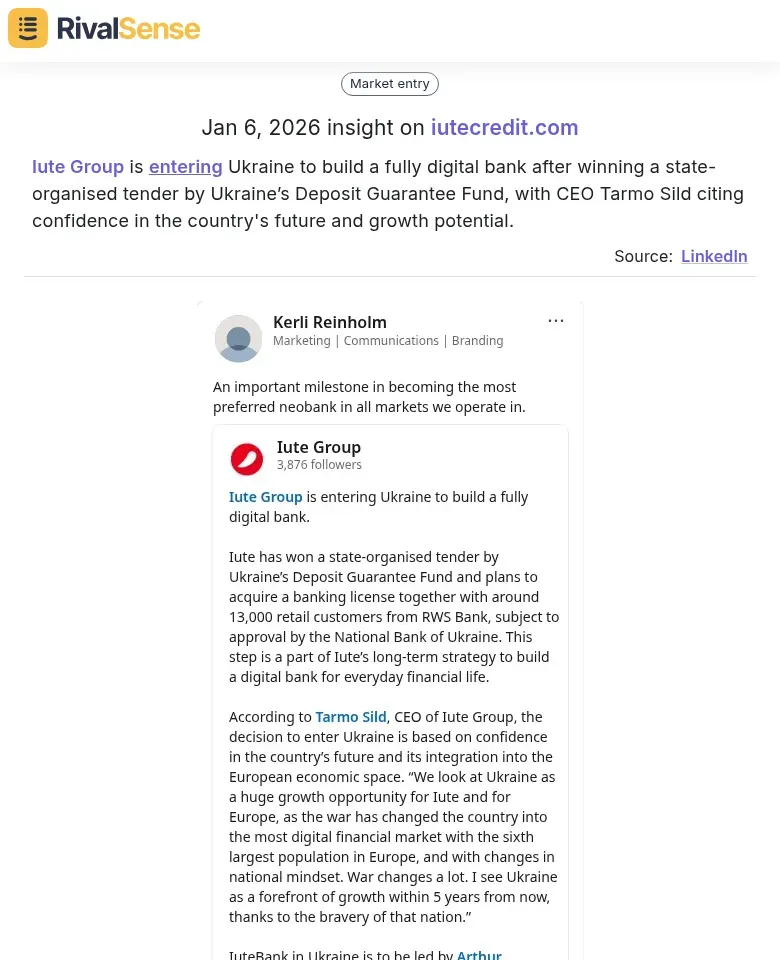
This type of insight is valuable for understanding competitor growth strategies and adjusting your own market approach accordingly. -
Innovation in Training: Learning about competitor internal practices can inspire your own team development. For example: "Hasbro CEO Chris Cocks uses a board game called Toy Tycoon to train rising leaders, calling it a crash course MBA."
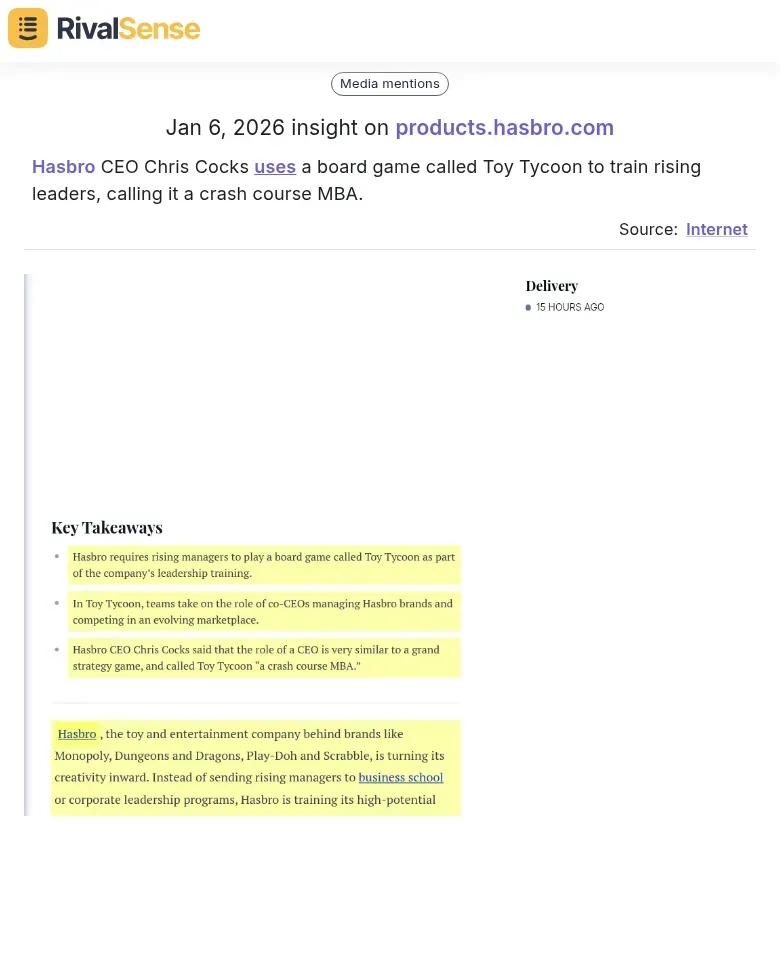
Such insights highlight creative training methods that you might adapt to enhance your key account managers' skills. -
Management Changes: Monitoring competitor organizational shifts can signal strategic directions. RivalSense captured: "Melissa Mauk joined Hostaway as Director of Remote Operations in Switzerland, previously serving as Pallon Management Team, Finance & Business Operations at Pallon."
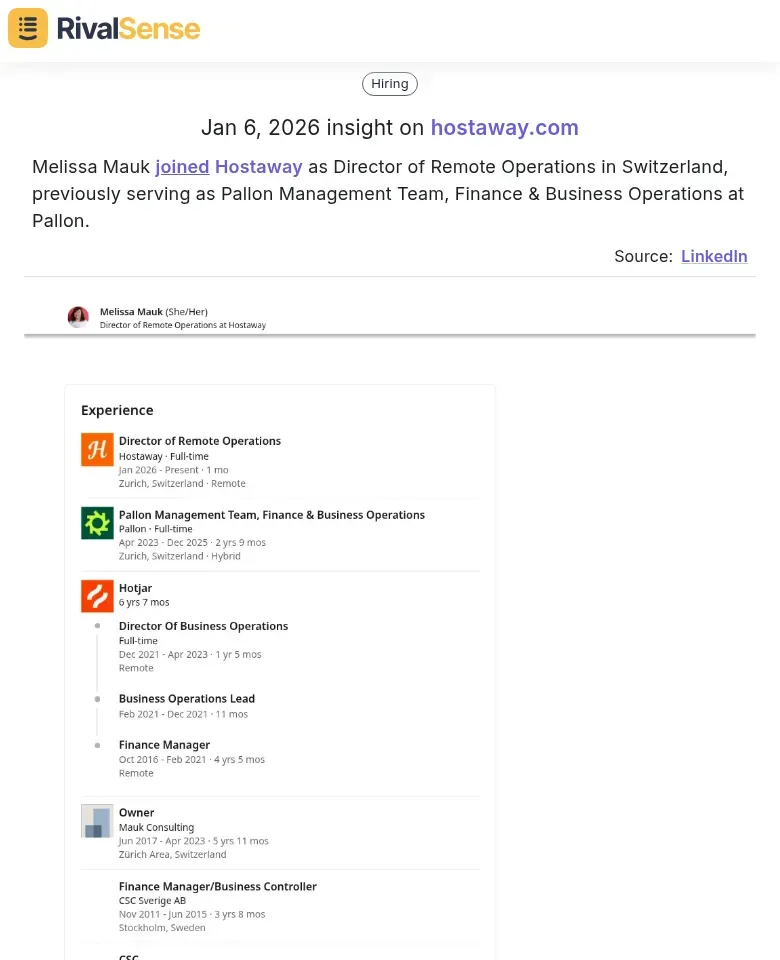
This kind of insight helps you track competitor leadership trends and potential strategy pivots, allowing you to stay proactive in your account planning.
Integrating these insights with podcast learnings creates a comprehensive view of the competitive landscape, enabling more informed decision-making.
Conclusion: Put Insights into Action with RivalSense
Podcasts are powerful tools for enhancing key account management in medical equipment distribution, but combining them with real-time competitor intelligence can take your strategy to the next level. By implementing the productivity tips, technology integrations, and frameworks discussed, you can drive better account outcomes and stay ahead in a competitive market.
To assist with the challenges of tracking competitor moves, try out RivalSense for free at https://rivalsense.co/. RivalSense tracks competitor product launches, pricing updates, event participations, partnerships, regulatory aspects, management changes, and media mentions across various sources, delivering all in a weekly email report. Get your first competitor report today and start making more informed strategic decisions!
📚 Read more
👉 How Sensor Integration Exposed Competitors' Verification Gaps in Carbon Markets
👉 Twitter Competitor Insights Cheat Sheet for Key Account Tracking
👉 Advanced Semiconductor Competitor Pricing Intelligence Tactics for Strategic Edge
👉 5 Quick Hacks to Track Competitor Media Mentions for Smarter SWOT Analysis
👉 Actionable Competitor Analysis: Learning from Iute Moldova's Credit Limit Increase