
How to Track Key Account Lifecycle: A Strategic Guide for B2B Leaders
Most B2B companies focus intensely on acquiring new logos—those shiny new customers that make for impressive board slides. But the real growth engine doesn't stop at "closed-won"; it starts there. Your key accounts represent your most valuable revenue streams, yet many businesses struggle to systematically track and optimize their entire lifecycle.
In this comprehensive guide, I'll show you how to build a key account lifecycle tracking strategy that reduces churn, maximizes expansion revenue, and turns your most important customers into your biggest competitive advantage.
CONTENTS
- Why Tracking Key Account Lifecycle Matters
- The 5 Stages of Key Account Lifecycle
- How to Build Your Key Account Lifecycle Tracking Strategy
- Practical Steps and Checklists
- Integrating Competitive Intelligence into Account Tracking
- Best Tools for Key Account Lifecycle Management
- Actionable Tips and Implementation Guide
- FAQ
WHY TRACKING KEY ACCOUNT LIFECYCLE MATTERS
In the competitive B2B landscape, retaining and growing key accounts is crucial for sustainable growth. Key accounts aren't just customers—they're strategic partners that drive disproportionate revenue, provide valuable referrals, and offer insights that shape your product roadmap. Yet, according to industry data, companies that don't systematically track their key account lifecycle experience 30-40% higher churn rates and miss 60% of potential expansion opportunities.
When you track key account lifecycle effectively, you can:
- Prevent churn before it happens by identifying at-risk accounts early
- Maximize expansion revenue by spotting upsell opportunities at the right time
- Strengthen competitive positioning by understanding how your solution stacks up against alternatives
- Improve product-market fit by leveraging insights from your most valuable customers
- Build stronger relationships through proactive, data-driven engagement
THE 5 STAGES OF KEY ACCOUNT LIFECYCLE
Understanding the key account lifecycle stages is fundamental to effective tracking. Unlike individual customer journeys, key accounts involve multiple stakeholders, longer sales cycles, and more complex relationship dynamics. By mapping these stages, you can anticipate needs and intervene proactively.
1. ACQUISITION & ONBOARDING
This is where the relationship begins. Key accounts typically have longer sales cycles with multiple decision-makers involved. Tracking here involves monitoring:
- Initial contact and discovery calls
- Proof of concept (POC) progress
- Contract negotiation stages
- Onboarding completion and time-to-value
Practical tip: Create a standardized onboarding checklist with clear milestones and assign ownership for each step.
2. ADOPTION & VALUE REALIZATION
Once onboarded, the focus shifts to ensuring the account realizes promised value. This stage is critical for retention and future expansion.
- Feature adoption rates across user groups
- Usage patterns and engagement metrics
- Value realization against business objectives
- Stakeholder satisfaction and feedback
Checklist for adoption tracking:
- Track first 30-day usage patterns
- Monitor key feature adoption
- Schedule regular value realization check-ins
- Document success stories and ROI evidence
3. GROWTH & EXPANSION
This is where you maximize revenue from existing accounts. Expansion can come from additional users, new departments, or upgraded plans.
- Usage growth trends
- Departmental expansion signals
- Budget allocation and renewal timing
- Competitive threats and retention risks
4. MATURITY & ADVOCACY
Mature accounts become strategic partners and advocates. They provide referrals, case studies, and influence your product roadmap.
- Advocacy activities (references, testimonials)
- Product feedback and feature requests
- Executive relationship strength
- Competitive insulation level
5. RISK & RENEWAL
Every account eventually faces renewal decisions. Proactive tracking helps you identify and address risks before they impact renewal.
- Usage decline patterns
- Support ticket trends
- Competitive activity affecting the account
- Relationship health indicators
HOW TO BUILD YOUR KEY ACCOUNT LIFECYCLE TRACKING STRATEGY
Building an effective tracking strategy requires moving beyond basic CRM data to create a holistic view of each key account. Here's my proven framework for developing a systematic approach that scales with your business.
STEP 1: MAP YOUR ACCOUNT TOUCHPOINTS
Create a comprehensive map of all interactions with each key account:
- Sales conversations and meeting notes
- Customer success check-ins and QBRs
- Support tickets and resolution times
- Product usage data and feature adoption
- Executive business reviews
- Social media and public interactions
Practical advice: Use a centralized system (like a CRM with custom fields) to track all touchpoints and assign ownership for follow-up.
STEP 2: DEFINE KEY METRICS AND SIGNALS
Identify the specific metrics that indicate account health at each lifecycle stage:
Acquisition Stage Metrics:
- Time to close
- Number of stakeholders involved
- POC success rate
- Onboarding completion time
Adoption Stage Signals:
- Daily/Weekly Active Users (DAU/WAU)
- Core feature adoption rate
- Time to first value
- Support ticket frequency
Expansion Opportunities:
- Usage growth trends
- Department expansion
- Budget allocation signals
- Competitive mentions
STEP 3: IMPLEMENT STRUCTURED TRACKING PROCESSES
- Weekly Account Reviews: Brief check-ins on high-priority accounts
- Monthly Health Scoring: Quantitative scoring based on usage, engagement, and relationship metrics
- Quarterly Business Reviews (QBRs): Strategic reviews with key stakeholders
- Annual Relationship Assessments: Comprehensive evaluation of the entire relationship
✅ Implementation Checklist:
- Define clear ownership for each tracking activity
- Establish regular reporting cadence
- Create standardized templates for reviews
- Set up automated alerts for risk indicators
- Document insights and action items systematically
INTEGRATING COMPETITIVE INTELLIGENCE INTO ACCOUNT TRACKING
Tracking key account lifecycle becomes exponentially more powerful when combined with competitive intelligence. While you're monitoring your accounts' health and engagement, it's equally critical to understand what's happening in your competitive landscape. This external context helps you anticipate threats and seize opportunities.
This is where RivalSense provides strategic advantage: Our platform tracks competitor movements across 80+ sources—including product launches, pricing updates, event participation, partnerships, regulatory changes, management updates, and media mentions—delivering comprehensive weekly reports directly to your inbox.
Why Competitive Intelligence Matters for Account Tracking:
- Identify Competitive Threats Early: When key accounts mention competitors or evaluate alternatives, you need context. RivalSense helps you understand what those competitors are actually doing.
- Benchmark Your Performance: Track how competitor product updates compare to your roadmap. Are they launching features your accounts are requesting?
- Spot Market Trends: Competitor activities often signal broader market shifts that could affect your key accounts' priorities and needs.
- Make Data-Driven Decisions: Combine account feedback with competitor intelligence to prioritize product investments and positioning.
Real-World Examples from RivalSense Tracking:
Management Changes: When Maria Angelidou-Smith joined Reddit as Chief Product Officer, it signaled a strategic focus on product innovation. Tracking such executive appointments helps you anticipate competitor priorities and adjust your account strategies accordingly. 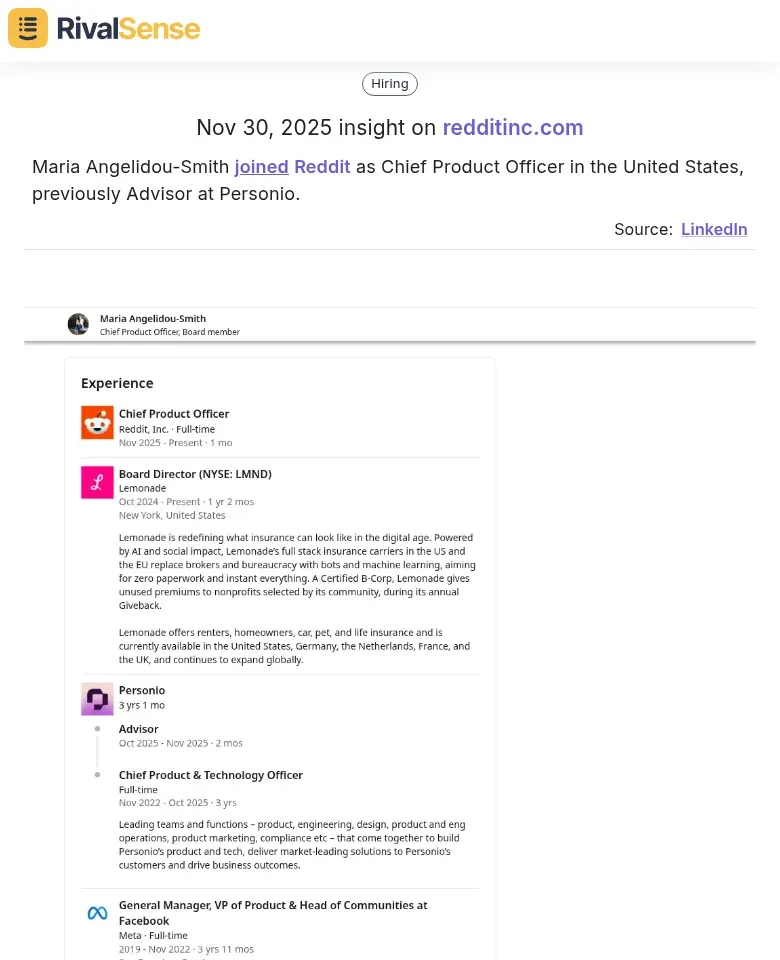
Product Launches: ZENITH's launch of the Chronomaster Sport "Rainbow" edition showcases how competitors innovate to capture market attention. Monitoring product updates allows you to benchmark your offerings and address potential competitive threats in key accounts. 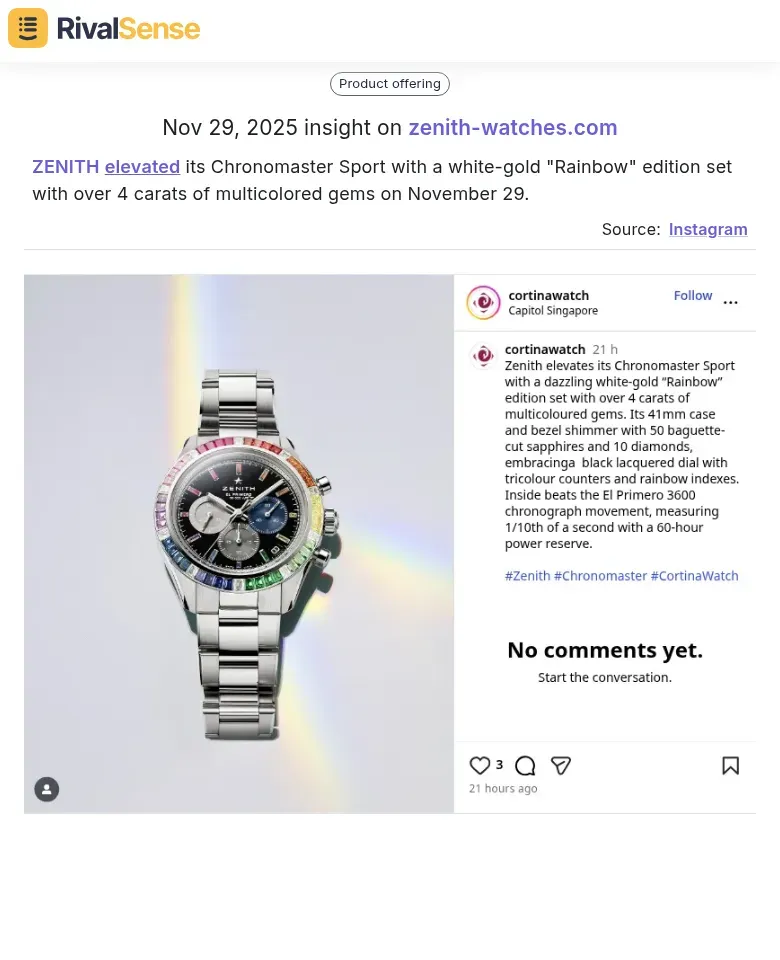
New Propositions: Scottish Widows announcing a new retirement proposition for Q1 2026 indicates shifting market demands. Insights into competitor propositions help you validate account needs and refine your value proposition. 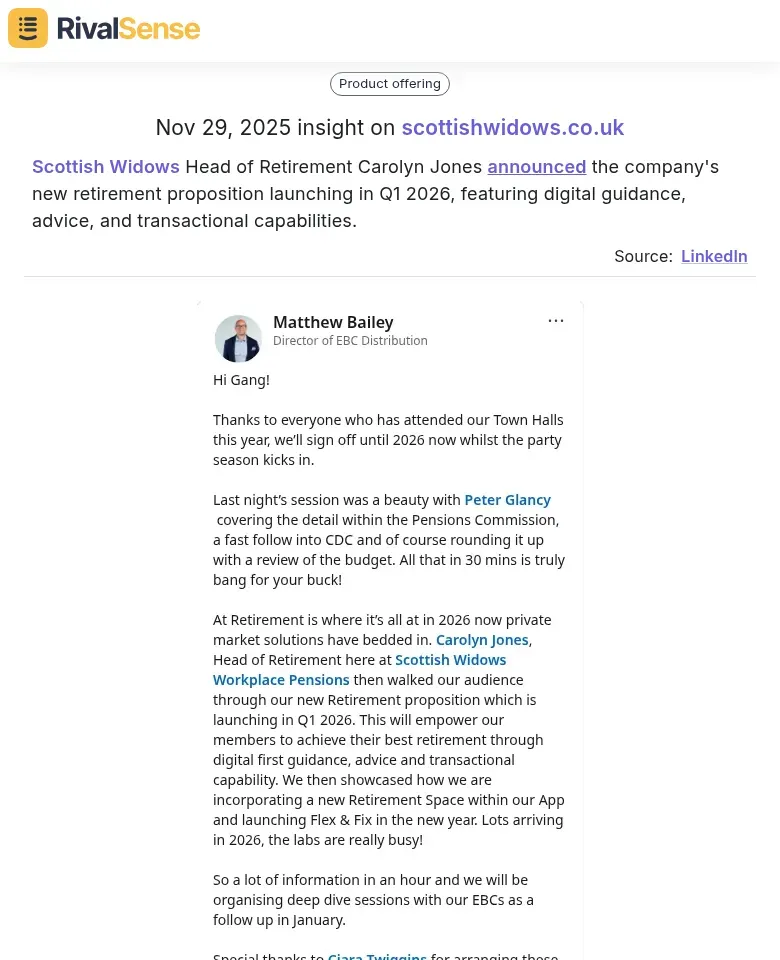
Practical Integration Tip: Create a monthly review process where you analyze key account health data alongside RivalSense competitor intelligence reports. Look for patterns like:
- Competitor mentions in account conversations
- Feature requests that align with competitor launches
- Pricing pressures from competitor updates
- Partnership opportunities revealed through competitor activities
BEST TOOLS FOR KEY ACCOUNT LIFECYCLE MANAGEMENT
Selecting the right tools is crucial for efficiently tracking and managing key account lifecycles. The market offers various solutions tailored to different aspects of account management, from CRM to customer success platforms.
Core Tracking Tools:
CRM Systems: Salesforce, HubSpot, Pipedrive
- Centralize account data and interactions
- Track deal stages and renewal dates
- Manage stakeholder relationships
Customer Success Platforms: Gainsight, Totango, ChurnZero
- Monitor health scores and risk indicators
- Automate QBRs and check-ins
- Track adoption and expansion metrics
Product Analytics: Mixpanel, Amplitude, Pendo
- Monitor feature adoption and usage patterns
- Identify engagement trends
- Track user behavior across segments
Competitive Intelligence Integration:
RivalSense: Comprehensive competitor tracking across 80+ sources
- Weekly competitor intelligence reports
- Product launch and update monitoring
- Pricing change alerts
- Partnership and event tracking
- Management change notifications
- Media mention analysis
Why RivalSense Fits Your Stack: While traditional tools help you track what's happening inside your accounts, RivalSense helps you understand the external competitive forces affecting them. This dual perspective is essential for proactive account management and strategic decision-making.
ACTIONABLE TIPS AND IMPLEMENTATION GUIDE
Implementing a key account lifecycle tracking strategy can seem daunting, but breaking it down into manageable steps ensures success. Start with quick wins and gradually build a comprehensive system.
🚀 Quick Wins to Implement This Week:
- Set Up Basic Health Scoring: Create a simple spreadsheet with 5-10 key metrics for your top 10 accounts
- Establish Weekly Review Cadence: Block 30 minutes each week to review high-priority accounts
- Track Competitor Mentions: Start documenting when accounts mention competitors in conversations
- Create Account Dashboards: Build simple dashboards in your CRM for each key account
✅ Comprehensive Implementation Checklist:
Phase 1: Foundation (Weeks 1-2)
- Identify your 20% of accounts that drive 80% of revenue
- Map current touchpoints and data sources
- Define key metrics for each lifecycle stage
- Assign account ownership clearly
Phase 2: Process Implementation (Weeks 3-4)
*
📚 Read more
👉 Data Processing Competitive Advantage Cheat Sheet: Outsmart Rivals
👉 How Bright Data's Price Cut Revealed Competitor Growth Strategy
👉 Case Study: API-Driven Competitor Insights for Key Account Tracking
👉 Data-Driven Key Account Health Dashboard Insights for Sales
👉 How Competitor Product Insights Boost Key Account Management Success