
How to Monitor Competitive Threats: A Practical Guide for Business Leaders
In today's fast-paced business environment, staying ahead of competitors requires both innovation and vigilance. Monitoring competitive threats helps you anticipate market shifts, adapt strategies, and seize opportunities proactively. Here's a step-by-step guide with actionable tactics to keep you one step ahead.
1. Identify Your Competitors 👀
Understanding your competitive landscape is the crucial first step. Start by mapping out all players who could impact your market position.
- Direct competitors: Companies offering similar products/services
- Indirect competitors: Businesses solving the same customer problem differently
- Substitute competitors: Alternative solutions customers might choose
🛠️ Practical Tools:
- Use Google Trends to spot emerging players
- Leverage RivalSense for automated competitor discovery
- Review industry reports quarterly
✅ Action Checklist:
- [ ] Map at least 15 competitors across categories
- [ ] Update your list every quarter
- [ ] Track new market entrants automatically
2. Track Product and Pricing Changes 📱💰
Competitor product developments directly impact your market position. Real-time monitoring helps you counter feature innovations and pricing shifts before they erode your advantage.
For example, RivalSense detected Quantum Systems increasing their Trinity Tactical product's linear coverage from 16km to 27km:
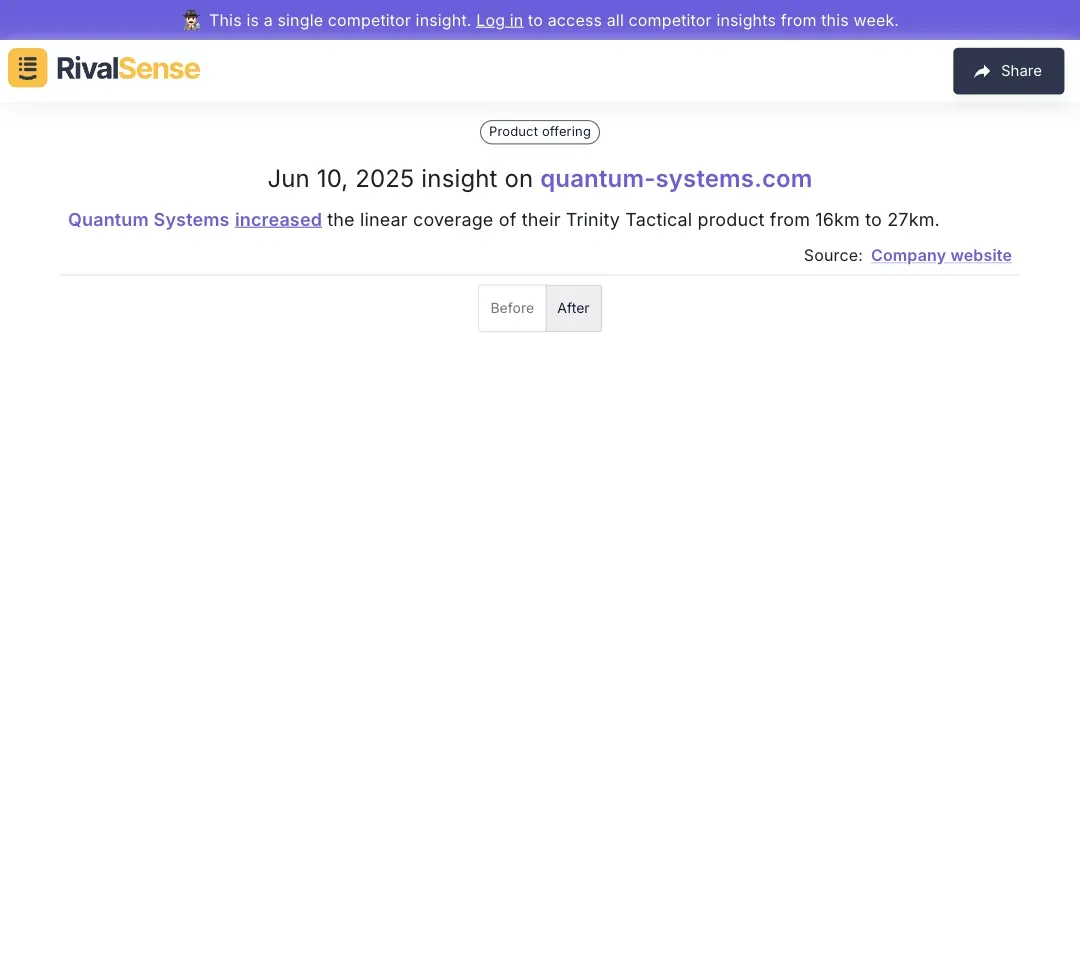
Why this matters: Technical improvements like this can redefine market expectations, forcing you to accelerate your own R&D or reposition offerings.
🛠️ Monitoring Tactics:
- Set up change-detection alerts for competitor product pages
- Track pricing pages monthly
- Analyze feature release notes
✅ Critical Tracking Checklist:
- [ ] Product specifications
- [ ] Pricing tiers
- [ ] Discount patterns
- [ ] Packaging changes
3. Analyze Marketing Strategies 📣
Competitor marketing activities reveal their targeting priorities and messaging strategies. Consistent monitoring helps you identify gaps in your own campaigns.
🛠️ Actionable Methods:
- Use social listening tools
- Reverse-engineer their ad campaigns
- Analyze content engagement metrics
| Metric | Why It Matters |
|---|---|
| Campaign frequency | Reveals resource allocation |
| Channel focus | Shows audience targeting priorities |
| Message testing | Uncovers value proposition shifts |
💡 Pro Tip: Note emotional triggers in their messaging—fear, urgency, or exclusivity often indicate conversion experiments.
4. Monitor Customer Feedback 🗣️
Customer reviews are unfiltered competitive intelligence. They reveal pain points you can solve and features users genuinely value.
✅ Execution Plan:
- Identify top review platforms in your industry
- Set up keyword alerts for competitor names
- Categorize complaints by product area
🛠️ Quick Win: Run quarterly sentiment analysis on competitor reviews using free tools like HuggingFace.
5. Track Partnerships and Major Projects 🤝
Strategic deals dramatically alter competitive dynamics. Monitoring these reveals expansion vectors and capability upgrades before public announcements.
For instance, RivalSense uncovered Fassmer's Ocean Going vessel project for Indonesia:
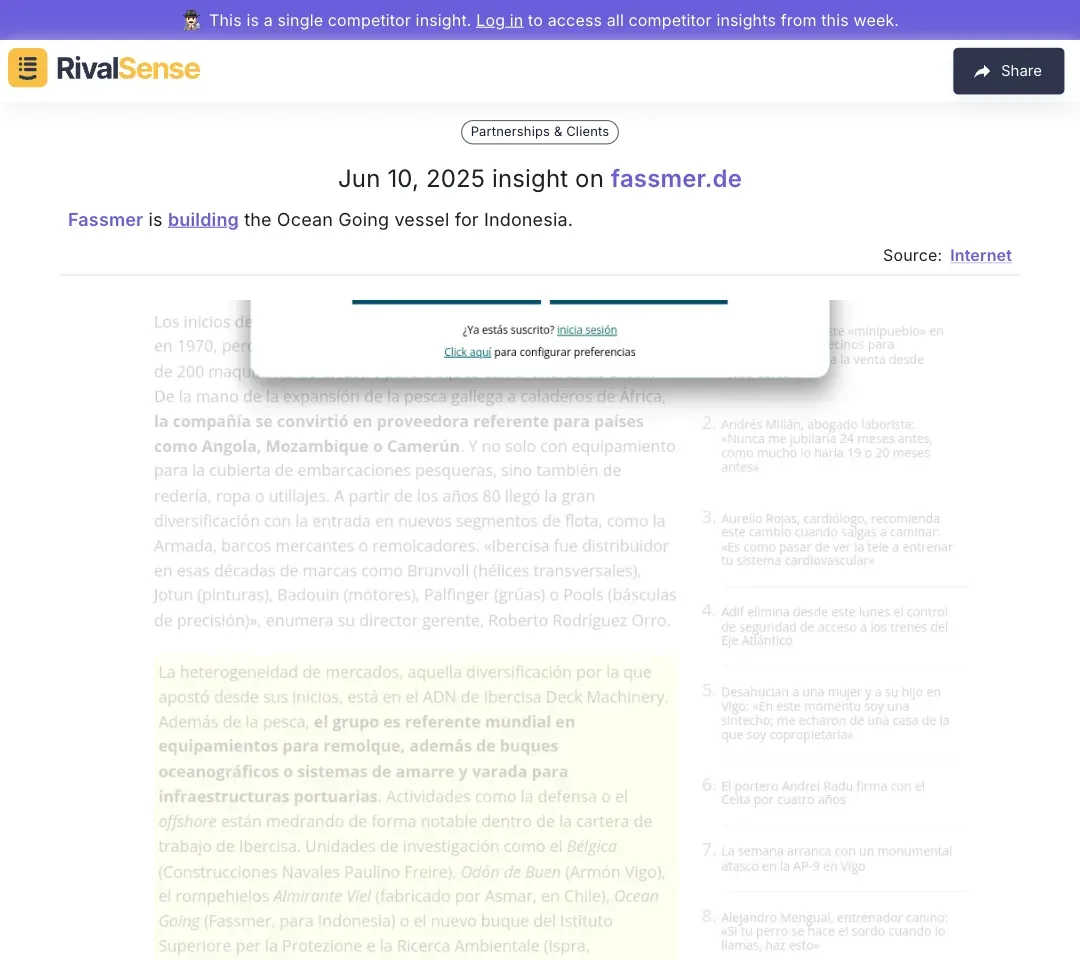
Why this matters: Major projects signal geographical expansion, new capabilities, or revenue streams that could threaten your position.
✅ Key Signals to Watch:
- [ ] Government contract wins
- [ ] Strategic partnerships
- [ ] Certification milestones
- [ ] Infrastructure investments
6. Stay Updated on Industry Trends 📈
Market context shapes competitive moves. Regulatory shifts, funding events, and emerging technologies create threats and opportunities.
For example, RivalSense captured Levelpath's $44.5M funding round and AI platform launch:
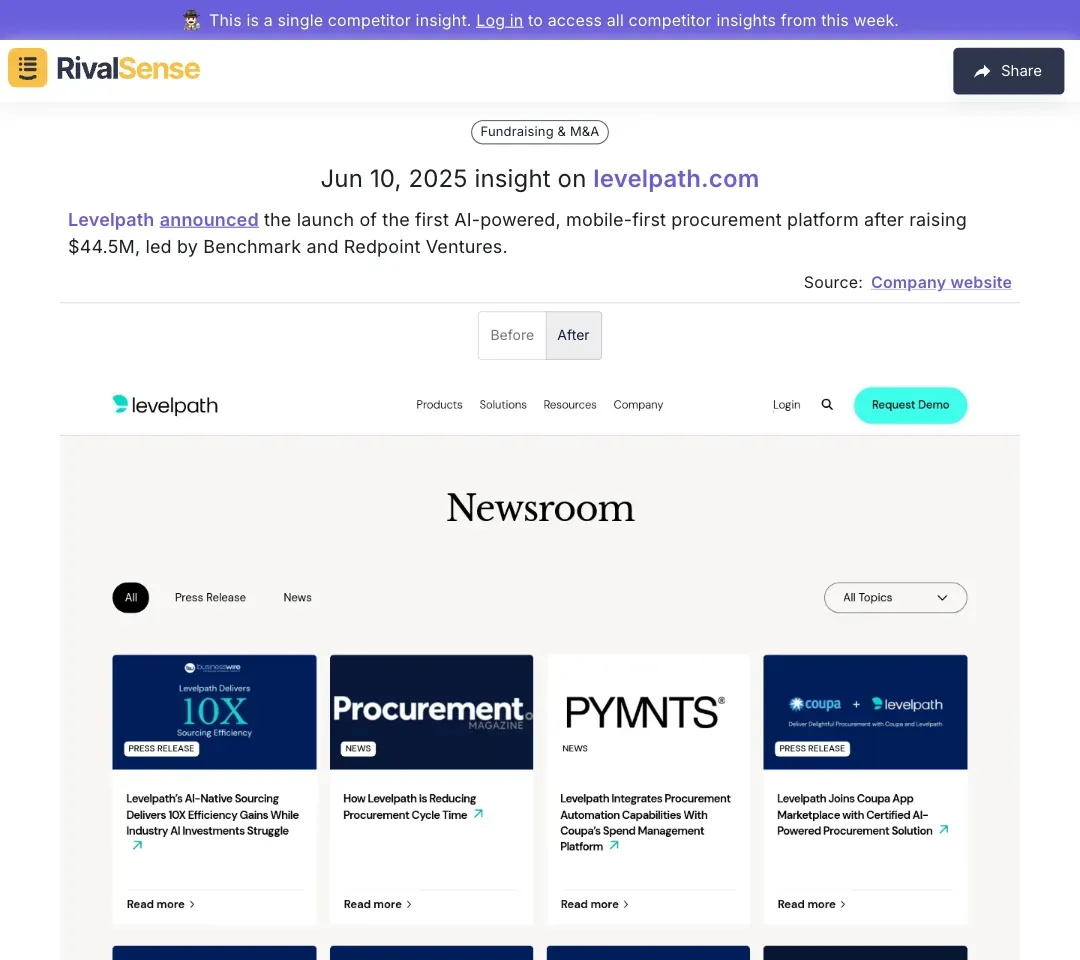
Why this matters: Funding announcements combined with product launches signal accelerated threats requiring immediate strategic responses.
🛠️ Staying Informed:
- Subscribe to regulatory body updates
- Set Google Alerts for competitor names + "funding" OR "investment"
- Attend virtual industry events
7. Conduct Regular SWOT Analyses 🔍
Structured competitive analysis turns data into strategy. Regular assessments prevent blind spots in your positioning.
✅ Quarterly Review Template:
Strengths: [Their advantages]
Weaknesses: [Consistent complaints/limitations]
Opportunities: [Market gaps they're ignoring]
Threats: [Their upcoming initiatives]
💡 Pro Tip: Involve cross-functional teams - sales often has unfiltered competitive insights from customer conversations.
8. Leverage Competitive Intelligence Tools 🤖
Manual monitoring can't match the scale of modern competitive landscapes. Automation provides consistent, comprehensive coverage.
Why RivalSense Delivers Strategic Advantage:
1. Tracks 80+ sources including registries and niche platforms
2. Detects pricing changes within 24 hours
3. Delivers actionable insights in weekly email reports
4. Monitors product updates, leadership changes, and regulatory filings
Final Thoughts
Vigilant competitive monitoring transforms threats into opportunities. By implementing these steps systematically, you'll gain the strategic foresight needed to outmaneuver competitors. Remember: The goal isn't just reaction—it's proactive advantage.
Ready to transform your competitive monitoring?
Try RivalSense free today and get your first competitor intelligence report delivered immediately. Stop guessing about competitor moves—start anticipating them.
📚 Read more
👉 HVAC Competitor Webinar Strategy Cheat Sheet: Outperform with Actionable Insights
👉 How Vanta's AWS Integration Ignited a Compliance Automation Revolution
👉 Strategic Competitor Insights: A CEO’s Guide to Outmaneuvering the Competition
👉 Naval Giants: Comparative Analysis for Shipbuilding Leaders
👉 How to Track Competitor Hiring and Layoffs for Strategic Insights