
Decoding Competitor Moves: What Vanta's New Storytelling Hire Reveals
Monitoring competitor activities is essential for staying ahead in any industry. One of the most telling signs of a competitor's strategic direction is when they bring on new executive talent. These hires can signal shifts in priorities, new market focuses, or efforts to strengthen specific capabilities within the organization.
For instance, when a competitor appoints a key leader in a specialized role, it often reflects their investment in areas they deem critical for future growth. This move can provide valuable insights into their upcoming campaigns, product narratives, or customer engagement strategies. Let's explore a real-world example to understand how to leverage such information.
🔍 Why This Insight Matters
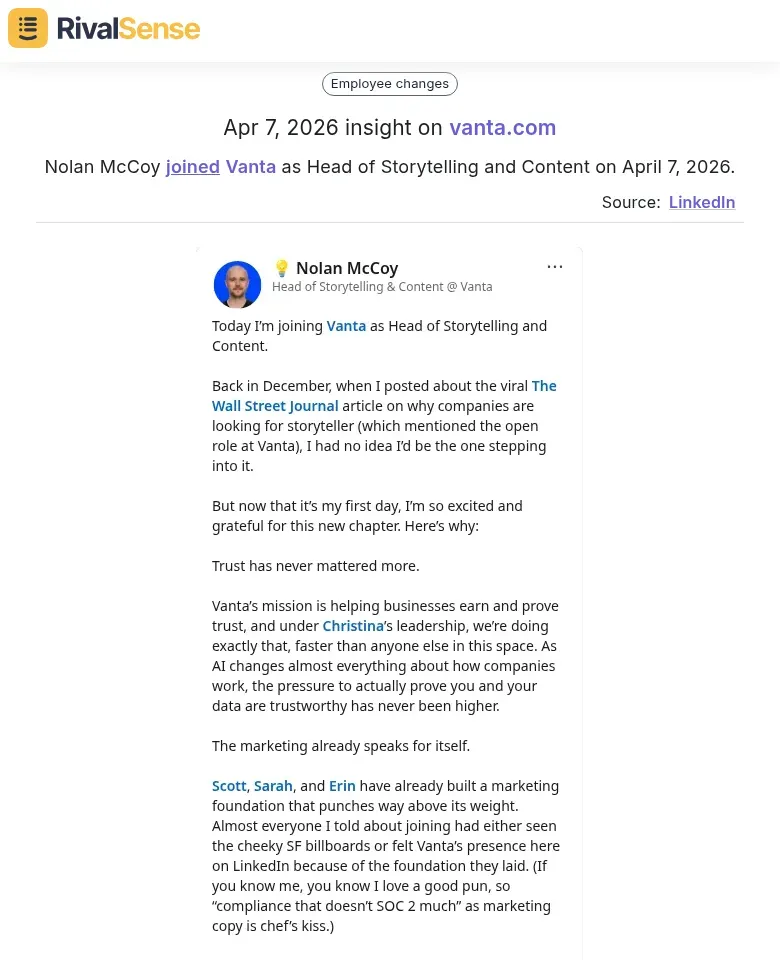
The appointment of Nolan McCoy as Head of Storytelling and Content at Vanta on April 7, 2026, is more than just a personnel change. It indicates Vanta's heightened focus on narrative-driven marketing and content creation to enhance brand perception and customer loyalty. Such a role typically aims to craft compelling stories around products, which can influence market positioning and competitive differentiation. By recognizing this, businesses can anticipate changes in Vanta's messaging and prepare their own strategies accordingly.
💡 Actionable Steps to Take When a Competitor Hires a Key Executive
When you spot a competitor bringing in a new leader, it's time to turn that insight into action. Start by assessing the role's impact on your business and identifying potential threats or opportunities. Then, develop a plan to adapt your own tactics to maintain or gain a competitive edge. Here are practical tips to guide your response:
- Analyze the Role's Function: Research the executive's background and past achievements. For Nolan McCoy, look into his previous work in storytelling to predict Vanta's content themes.
- Monitor Output Changes: Keep an eye on Vanta's website, blog, social media, and press releases for new content initiatives or narrative shifts.
- Evaluate Internal Gaps: Compare your own storytelling and content capabilities. Identify areas where you might need to invest or improve to keep pace.
- Engage Your Team: Discuss this hire with your marketing and strategy teams to brainstorm counter-strategies or innovation ideas.
📊 Checklist for Tracking Competitor Management Moves
To systematically handle such insights, use this quick checklist as part of your competitor analysis routine:
| Step | Action Item | Status (✓/✗) |
|---|---|---|
| 1 | Identify the hire and their role (e.g., Head of Storytelling) | |
| 2 | Research the executive's industry reputation and expertise | |
| 3 | Update competitor profiles with this new information | |
| 4 | Alert relevant internal teams (marketing, sales, product) | |
| 5 | Schedule a review to assess competitive response in 30 days |
🚀 Leverage Tools for Continuous Insights
Manually tracking every competitor move can be time-consuming and prone to oversight. Automated tools can streamline this process by aggregating data from various sources, ensuring you never miss a critical update. For example, RivalSense provides regular reports on product launches, pricing changes, event participations, partnerships, regulatory aspects, management changes, and media mentions across company websites, social media, and registries.
By incorporating such insights into your strategy, you can proactively adjust to market dynamics. Try out RivalSense for free at https://rivalsense.co/ to assist with these challenges and get your first report today!
📚 Read more
👉 The Ultimate Key Account Tracking Workflow: A Practical Guide for 2026
👉 Data-Driven Aviation Fuel Competitor App Review Tracking Strategies
👉 How Real-Time Competitor Intelligence Helped Capture Market Share from Foresters Financial
👉 Productivity Techniques: Track Competitor Website Changes for Key Account Insights
👉 How to Use AI Meeting Transcription for Competitor Market Research