
Data-Driven Aviation Fuel Competitor App Review Tracking Strategies
Aviation fuel represents the single largest operational cost for airlines, typically consuming 25-30% of total expenses. With such significant financial impact, strategic competitor monitoring becomes essential for optimizing fuel management. Traditional market research provides surface-level insights, but data-driven app review analysis delivers actionable intelligence by revealing real user experiences, pain points, and feature preferences across platforms like Fuelerfly, FUELTRAC, and SkyBreathe.
Systematic tracking of aviation fuel management software competitors provides a competitive advantage by enabling proactive strategy adjustments, identifying underserved market segments, and anticipating industry shifts before they impact your bottom line. Here are practical steps for effective competitor tracking:
- 🔍 Monitor review platforms (Capterra, SourceForge, Appvizer) for sentiment trends
- 🛠️ Analyze feature requests and complaints to identify market gaps
- 💰 Track pricing changes and value perception across competitor tiers
- 📅 Benchmark implementation timelines and integration capabilities
Identifying Key Competitors in Aviation Fuel Management Software
To build a robust competitive intelligence framework, start by mapping the aviation fuel management software landscape across multiple dimensions. Distinguish between specialized solutions and broader enterprise suites to understand where your offerings fit. Established players like FuelCloud and FuelerLinx often score high in user ratings, while enterprise suites from Ramco Aviation or SITA integrate fuel management into larger operations systems.
A practical categorization checklist helps organize competitors:
- Fuel Analytics Specialists: Track real-time consumption and emissions reporting (e.g., FuelCloud, FuelerLinx)
- Route Optimization Platforms: Focus on flight planning and tankering efficiency
- Predictive Maintenance Integrators: Combine fuel data with aircraft health monitoring
- Enterprise ERP Modules: Embedded within broader aviation operations suites
For app store intelligence, analyze review volume patterns: specialized apps typically have 50-200 reviews focusing on usability, while enterprise solutions show fewer but longer reviews discussing integration complexity. Monitor review sentiment trends monthly—sudden negative clusters often indicate feature gaps you can exploit. Track emerging competitors through low-volume but high-rating apps (4.5+ stars with <50 reviews) as these signal promising disruptors.
Data-Driven App Review Collection and Analysis Framework
Implementing a systematic framework for competitor app review intelligence requires automation and consistent metrics. Start with tools like AppFollow or Appbot that connect to major app stores and enterprise software platforms for continuous data collection. These platforms provide API access to streamline the process without manual intervention.
For sentiment analysis, leverage AI-powered categorization to identify themes specific to aviation fuel management, such as route optimization accuracy, fuel consumption calculations, compliance reporting features, and integration capabilities. Create custom tags for recurring issues like "data synchronization errors" or "weather integration gaps" to track pain points over time.
Track quantitative metrics through weekly dashboards monitoring:
| Metric | Why It Matters |
|---|---|
| Average rating trends by competitor and version | Indicates overall satisfaction and impact of updates |
| Review volume spikes after feature releases | Shows user engagement and feature reception |
| Sentiment ratio (positive/negative/neutral) | Highlights areas needing improvement |
| Feature request frequency | Identifies market demands and innovation opportunities |
| Response time benchmarks | Reflects competitor customer service quality |
Set up automated alerts for rating drops exceeding 0.5 stars within 48 hours to stay proactive. A practical checklist for setup includes:
- ✅ Configure daily review ingestion from all major app stores
- ✅ Establish custom tagging rules for aviation-specific pain points
- ✅ Create competitor comparison dashboards with version release overlays
- ✅ Implement weekly reporting cadence with actionable insights
- ✅ Integrate review data with product roadmap tools like Jira for direct feature prioritization
Extracting Strategic Insights from Competitor Reviews
Competitor reviews are a treasure trove of strategic insights that can guide your business decisions. Negative reviews often reveal weaknesses in competitor offerings, such as customer service delays or pricing transparency issues. By analyzing these patterns, you can avoid similar pitfalls and highlight your strengths in marketing campaigns.
Unmet needs in competitor reviews reveal market opportunities. Track phrases like "wish they offered..." or "if only they had..." to spot gaps. If reviews frequently mention the need for real-time fuel availability tracking, consider prioritizing that feature in your development roadmap.
Benchmark performance using review-based KPIs to measure your competitive stance:
- Response Rate: Track how quickly competitors reply to reviews
- Resolution Score: Calculate percentage of resolved complaints
- Feature Requests: Count unmet needs mentioned per month
A practical checklist for insight extraction:
- 🧠 Use sentiment analysis tools to categorize reviews by emotion
- 📊 Create a spreadsheet tracking top 5 competitor weaknesses monthly
- 🔔 Set up alerts for new reviews mentioning specific keywords
- ⏱️ Compare your response times against industry averages
- 🎯 Prioritize features based on frequency of requests in competitor reviews
Tip: Focus on 1-2 star reviews for weaknesses, 3-4 star reviews for improvement opportunities, and monitor how competitors address issues over time.
Implementing Review-Driven Competitive Intelligence Strategies
Transforming review insights into actionable strategies requires a systematic approach across departments. Start by setting up automated monitoring for competitor apps using tools like Crayon or Kompyte that track review sentiment, feature requests, and pain points in real-time. This ensures you're always informed about market shifts.
Product Development Integration: Create a quarterly review analysis report that categorizes competitor feedback into feature gaps, UX issues, and emerging needs. Use this to prioritize your roadmap—if multiple competitors receive complaints about fuel price transparency, accelerate development of your real-time pricing dashboard. Establish a cross-functional review task force with product, marketing, and customer success teams to align efforts.
Targeted Marketing Messages: Analyze competitor review themes to craft precise value propositions. If users complain about competitor apps' complex fuel ordering, highlight your "3-click fuel request" in campaigns. Monitor sentiment trends to identify competitor weaknesses—if satisfaction drops during peak travel seasons, time your reliability-focused campaigns accordingly.
Competitive Response Strategies: Implement a 24-hour alert system for negative competitor reviews mentioning your brand. Develop pre-approved response templates addressing common comparison points. When competitors launch new features, analyze initial user reactions to inform your positioning—if their fuel tracking feature receives mixed reviews, emphasize your more accurate alternative.
A practical checklist for implementation:
- 🛠️ Set up daily review monitoring for top 3 competitors
- 📈 Create sentiment scoring system (positive/negative/neutral)
- 🗺️ Map competitor pain points to your feature advantages
- 📅 Establish monthly competitive intelligence briefings
- 📋 Develop response playbook for common scenarios
- 🔍 Track review volume trends as market health indicators
Beyond App Reviews: Leveraging Comprehensive Competitor Intelligence
While app reviews are invaluable, broadening your competitor tracking to include other data sources can provide a holistic view of the competitive landscape. Tools like RivalSense automate monitoring across company websites, social media, events, partnerships, and regulatory filings, delivering insights in weekly reports. This comprehensive approach helps you stay ahead of market movements beyond user feedback.
For instance, tracking product launches and awards can reveal competitor innovation and brand recognition strategies. Consider Noom's Mindful Art Break feature nomination for a Webby Award—this type of insight highlights how competitors leverage product recognition for marketing, which can inform your own award submissions or promotional campaigns.
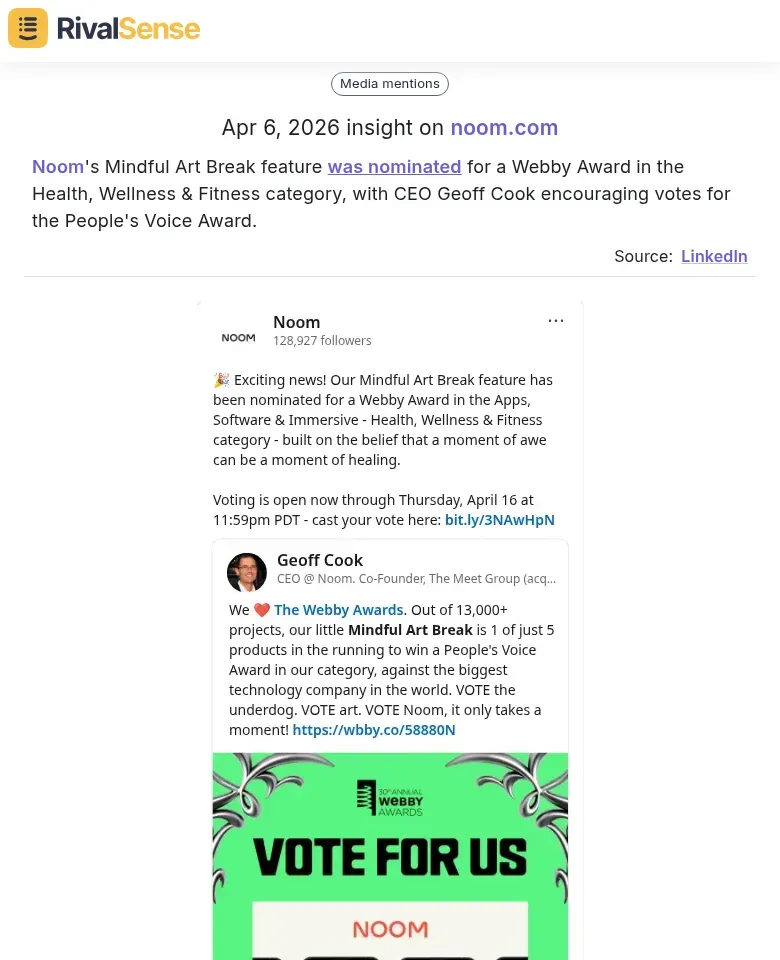
Why it's valuable: Award nominations signal product excellence and can impact customer perception, helping you benchmark your own innovations against industry recognition.
Operational expansions and partnerships are also critical to monitor. Iute Moldova's launch of a new loyalty program and ATM network expansion demonstrates how competitors grow their service footprint and form strategic alliances. Similar tracking in aviation could reveal competitor moves into new airports or fuel supply partnerships.
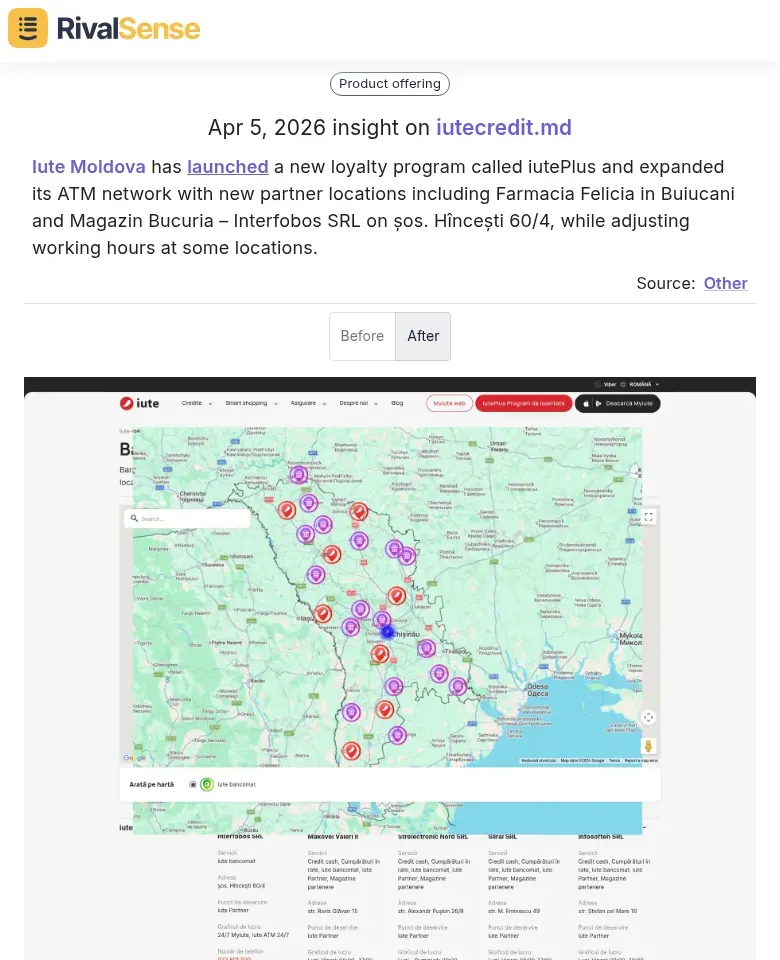
Why it's valuable: Network expansions and partnerships indicate market growth strategies, allowing you to anticipate competitive threats in your regions or service offerings.
Event participation and product updates offer insights into competitor R&D and market positioning. Sennheiser's showcase at NAB 2026 with immersive audio solutions and platform updates shows how competitors use trade shows to launch innovations and expand globally. In aviation, tracking events like the Aviation Fuel Forum can reveal competitor SAF (Sustainable Aviation Fuel) initiatives or technology rollouts.
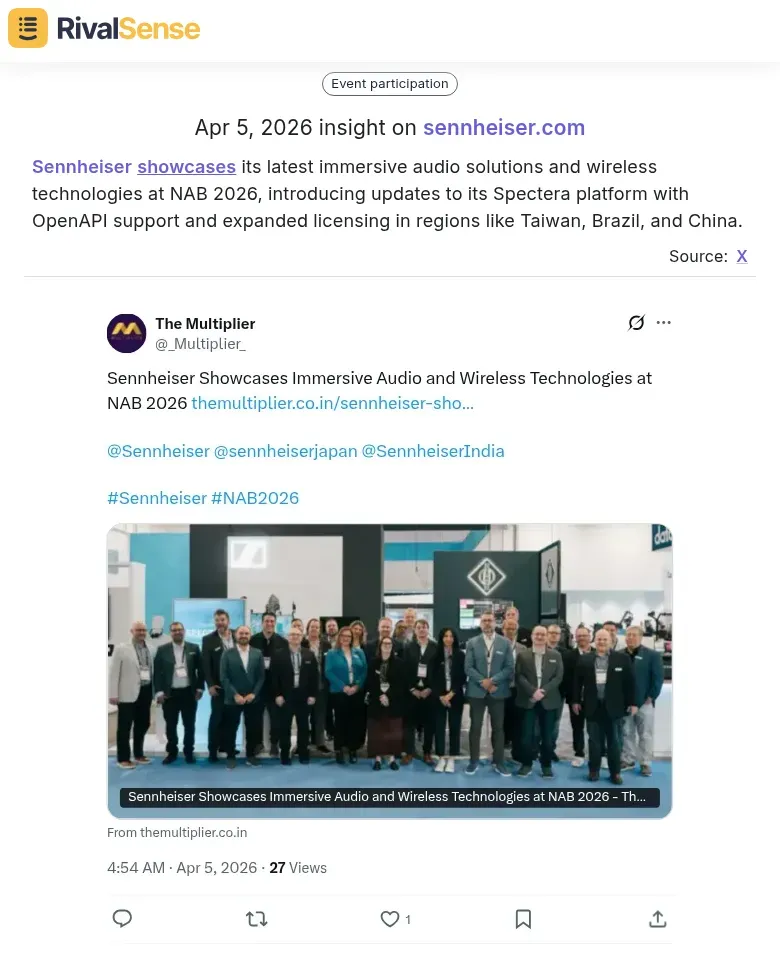
Why it's valuable: Event participation and product launches signal strategic focus areas, helping you align your development and marketing efforts with emerging trends.
Advanced Analytics and Future Trends in Aviation Fuel Competitor Tracking
Advanced analytics and AI are revolutionizing aviation fuel competitor tracking by enabling predictive insights and automation. Predictive analytics can anticipate competitor moves by analyzing review patterns, social sentiment, and market signals. For example, negative reviews about fuel quality at specific airports may signal upcoming competitor investments in those regions, allowing you to preemptively strengthen your presence.
AI-powered competitive intelligence tools like Crayon or SEMrush can automate insight generation from thousands of data sources, identifying emerging SAF technologies and partnership announcements. This reduces manual effort and increases accuracy in forecasting competitor behavior.
Practical steps for implementing advanced analytics:
- 🔬 Set up AI monitoring for competitor patent filings, regulatory submissions, and R&D publications
- 📊 Use predictive models to forecast competitor pricing changes based on feedstock cost trends
- 🔔 Implement real-time alerts for competitor facility expansions or new airport contracts
- 📉 Analyze review sentiment patterns to identify service gaps competitors may exploit
Future trends include IoT-enabled real-time monitoring of competitor fuel deliveries at airports, blockchain-based transparency in SAF certification claims, and AI simulations of competitor responses to carbon pricing policies. The evolving aviation fuel technology landscape demands continuous monitoring of hydrogen SAF blends, synthetic fuels, and electric aviation developments. Pro tip: Combine AI tools with human analysis to interpret nuanced competitive signals in this highly regulated industry.
Putting It All Together: Actionable Takeaways for Business Leaders
As a founder, business owner, or CEO in the B2B aviation space, leveraging competitor intelligence is crucial for maintaining a competitive edge. Start by integrating app review analysis with broader tracking of product launches, partnerships, and market expansions. Use the insights to inform product development, marketing strategies, and operational decisions.
To streamline this process, consider using automated tools that consolidate competitor data into actionable reports. For example, RivalSense tracks competitor product launches, pricing updates, event participations, partnerships, regulatory aspects, management changes, and media mentions across various sources, delivering all in a weekly email report. This saves time and ensures you never miss a critical market move.
Ready to enhance your competitor tracking strategy? Try RivalSense for free today at https://rivalsense.co/ and get your first competitor report to start gaining actionable insights immediately. Don't wait—stay ahead of the competition by understanding their moves as they happen.
📚 Read more
👉 How Real-Time Competitor Intelligence Helped Capture Market Share from Foresters Financial
👉 Productivity Techniques: Track Competitor Website Changes for Key Account Insights
👉 How to Use AI Meeting Transcription for Competitor Market Research
👉 Competitor Pricing Workflow: How to Leverage Insights for Content Strategy
👉 Decoding Competitor Strategy Through Hires: Lessons from Adobe's New Appointment