
Uncover Competitor Influencer Partnerships on Instagram for Strategic Business Advantage
In today's competitive landscape, monitoring competitor influencer partnerships on Instagram isn't just about social media tracking—it's a strategic intelligence goldmine. These collaborations reveal more than marketing tactics; they expose competitor positioning, target audience segments, and emerging market trends. By analyzing who your rivals partner with, you gain insights into their brand values, customer demographics, and growth strategies.
Practical tip: Create a competitor influencer tracking checklist: 1) Identify key competitors, 2) Monitor their Instagram posts and stories for tagged influencers, 3) Analyze influencer audience demographics and engagement rates, 4) Track partnership frequency and campaign themes.
Real-world example: When a SaaS company noticed a competitor consistently partnering with mid-tier tech influencers (50K-200K followers), they discovered a focus on SMB markets rather than enterprise clients—revealing a strategic shift they could counter. Another brand analyzed a rival's beauty influencer collaborations to identify untapped Gen Z segments.
These insights help you anticipate market moves, identify partnership opportunities, and refine your own influencer strategy. Start by setting up regular monitoring of 3-5 key competitors' Instagram activities to build your competitive intelligence foundation.
Identifying Competitor Influencer Partnerships: What to Look For
Competitor influencer partnerships are often visible through specific signals on Instagram. To effectively identify them, focus on three key areas with practical steps:
1. Analyze Tagged Posts & Branded Content Disclosures
Look for Instagram's "Paid Partnership" label in post headers—this is the most direct evidence of formal collaborations. Also monitor:
- Brand mentions in captions and comments
- Branded hashtags (#ad, #sponsored, #partner)
- FTC disclosure compliance patterns
- Product placement in Stories and Reels
Practical Checklist:
✓ Search competitor mentions using Instagram's search function
✓ Use social listening tools to track branded content tags
✓ Monitor influencer Stories for temporary promotions
✓ Check for consistent disclosure patterns across campaigns
2. Track Influencer Tiers & Partnership Patterns
Categorize influencers by follower count to understand competitor strategy:
- Micro-influencers (10K-100K): High engagement, niche audiences
- Macro-influencers (100K-1M): Balanced reach and credibility
- Mega-influencers (1M+): Maximum visibility, lower engagement
Key Insight: Competitors shifting from mega to micro-influencers often indicates a move toward higher conversion rates and targeted audience building.
3. Monitor Strategic Shifts Over Time
Create a timeline tracking system to identify:
- Seasonal partnership patterns (holiday campaigns, product launches)
- Platform migration trends (Instagram to TikTok shifts)
- New market entries through local influencer partnerships
- Budget allocation changes across influencer tiers
Pro Tip: Use tools like RivalSense to automate tracking and receive weekly reports on competitor influencer activities, allowing you to spot strategic shifts 3-6 months before they impact your market position. Document partnership durations, content formats, and engagement metrics to build predictive models of competitor behavior.
Extracting Strategic Insights from Partnership Types and Structures
Analyzing competitor influencer partnerships on Instagram goes beyond mere observation; it's about decoding strategic intent. By categorizing partnerships into distinct types, you can uncover underlying business objectives and market maneuvers. Let's explore three key partnership types with real-world examples from RivalSense insights.
1. Product Integration Partnerships
Product integration partnerships involve influencers or brands collaborating on specific products sold through retail channels. For instance, RivalSense tracked that Sephora now sells Cyklar's Bergamot Bond body care product, which smells unreal and keeps skin soft all day.

Why this insight is valuable: Monitoring such partnerships reveals how competitors expand into new retail channels or leverage influencer-founded brands for market penetration. It signals strategic moves in distribution and product placement that you can anticipate or counter.
Practical tip: Track when competitors partner with retail giants - this signals expansion into new channels or markets. Create a checklist: (1) Identify partnership scope (2) Analyze product categories involved (3) Monitor sales channel expansion.
2. Executive Influencer Partnerships
Executive movements and their promotion can indicate strategic shifts within a company. A key insight from RivalSense: Phil Spencer, head of Xbox, retires from Microsoft after 12 years and is replaced by Asha Sharma, an AI-focused executive who becomes CEO of Microsoft Gaming, as Xbox revenue declined nearly 10% last quarter despite Microsoft's $75 billion acquisition of Activision Blizzard.

Why this insight is valuable: Tracking executive changes helps you anticipate new business directions, such as a pivot towards AI or other technologies, allowing you to adjust your strategy accordingly.
Actionable insight: When competitors partner with or promote new executives, anticipate strategic shifts. Track these steps: (1) Document leadership announcements (2) Analyze executive backgrounds (3) Predict new business directions based on their expertise.
3. Co-branded Collection Partnerships
Co-branded collections often combine multiple brands or themes to target specific demographics. For example, RivalSense reported that Fanatics and Complex present the World Baseball Classic collection with Born x Raised and Undefeated capsules for five teams, launching February 26.
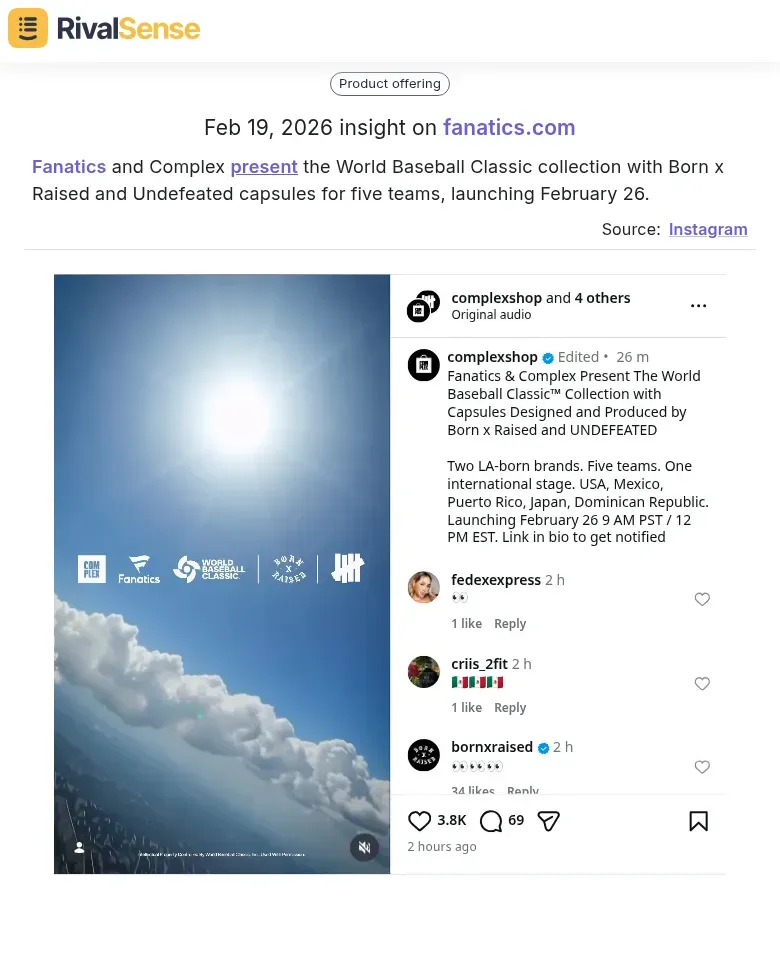
Why this insight is valuable: These partnerships reveal market positioning, audience targeting, and collaboration ecosystems. They can indicate trends in cross-industry partnerships and seasonal marketing campaigns.
Strategic advice: These partnerships reveal market positioning and audience targeting. Implement this process: (1) Map partnership ecosystems (2) Identify target demographics (3) Analyze pricing and distribution strategies.
Pro Tip: Use Instagram's partnership disclosures (#ad, #partner) to systematically track competitor collaborations. Create a spreadsheet with columns for: Partnership Type, Influencer/Partner, Strategic Objective, Target Audience, and Timeline. This structured approach transforms social media monitoring into actionable competitive intelligence.
Measuring Partnership Effectiveness and Competitive Impact
To measure competitor influencer partnership effectiveness, you need to go beyond surface-level metrics. Track engagement metrics beyond likes to understand true impact. Analyze comments for sentiment, shares for virality, and saves for content value. Monitor follower growth spikes during campaigns and compare engagement rates to the influencer's baseline. Use tools like RivalSense to track these metrics across multiple competitors simultaneously.
Assess competitive impact by correlating partnership timing with market share changes. Look for revenue trend shifts in competitor financial reports or pricing strategy adjustments post-campaign. Monitor brand perception through social listening tools tracking sentiment changes and share-of-voice metrics.
Create a competitive analysis checklist:
- Document partnership details (influencer, content type, duration)
- Track engagement metrics (comments, shares, saves, follower growth)
- Monitor competitor website traffic and conversion rate changes
- Analyze sentiment in comments and brand mentions
- Correlate with market share and revenue data
Identify successful strategies worth emulating: Look for authentic content integration, consistent brand messaging, and measurable call-to-actions. Avoid ineffective approaches like one-off partnerships without follow-up, mismatched audience targeting, or campaigns lacking clear KPIs. Focus on competitors who achieve sustained engagement lift and audience growth from strategic, long-term influencer relationships rather than isolated campaigns.
Turning Insights into Action: Building Your Competitive Advantage
Now that you've uncovered competitor influencer partnerships, it's time to transform these insights into actionable strategies. First, identify untapped opportunities by analyzing which micro-influencers your competitors work with but haven't fully leveraged. Look for influencers with high engagement rates but fewer brand partnerships in your niche—these represent low-hanging fruit for collaboration.
Develop counter-strategies by examining competitor weaknesses: Are they only partnering with mega-influencers while ignoring nano-influencers? Do they have seasonal gaps in their partnership calendar? Create targeted campaigns that fill these voids with more authentic, cost-effective collaborations.
Establish a systematic monitoring framework:
- Set up automated alerts for competitor influencer announcements
- Track partnership performance metrics (engagement rates, conversion patterns)
- Maintain a quarterly competitive partnership audit
- Create a "partnership opportunity matrix" ranking influencers by reach, relevance, and competitor association
Practical tip: Use a 3-tier approach—monitor 3 key competitors, track 5-10 of their top influencers, and identify 2-3 partnership gaps you can exploit each quarter. This structured approach ensures you're not just collecting data but actively building competitive advantage through smarter influencer relationships.
Conclusion: Staying Ahead in the Influencer Partnership Game
In the fast-paced world of Instagram influencer marketing, ongoing competitor monitoring isn't just an option—it's your strategic imperative. To maintain your advantage, implement a systematic tracking approach that transforms insights into proactive moves. Set up weekly alerts for competitor influencer collaborations, analyze engagement patterns across their partnerships, and benchmark your performance against theirs.
Integrate these insights into your marketing strategy by creating a quarterly competitor partnership report that identifies emerging influencer trends, partnership gaps in your market, and potential collaboration opportunities you've missed. Use this intelligence to refine your own influencer selection criteria and negotiation strategies.
Key takeaways for leveraging Instagram influencer intelligence:
- Track competitor partnerships monthly to identify market trends
- Analyze engagement metrics (not just follower counts) to find effective influencers
- Monitor partnership longevity to understand successful relationship dynamics
- Identify micro-influencers competitors are testing before they scale
- Benchmark your content performance against competitor influencer posts
Practical checklist for staying ahead:
- Weekly: Scan competitor Instagram accounts for new partnerships
- Monthly: Analyze engagement rates across competitor influencer campaigns
- Quarterly: Map competitor influencer networks and identify gaps in your own
- Annually: Review partnership ROI benchmarks against top competitors
Remember: The most successful brands don't just copy competitor strategies—they anticipate them. By systematically tracking and analyzing competitor influencer partnerships, you transform reactive monitoring into proactive market leadership.
To streamline your competitor monitoring, consider using tools like RivalSense. RivalSense tracks competitor product launches/updates, pricing updates, event participations, partnerships, regulatory aspects, management changes, and media mentions across company websites, social media, and various registries, delivering all in a weekly email report. Try RivalSense for free at https://rivalsense.co/ to assist with the challenges described, and get your first competitor report today!
📚 Read more
👉 Data-Driven Gaming Edge: Uncovering Competitors' Strategic Advantages
👉 Uncover Competitor Event Strategies for Enterprise Key Accounts
👉 How ProxyScrape's Free Trial Change Impacts Your Competitive Strategy
👉 The Ultimate Guide to Tracking Key Account Sentiment in 2026
👉 Mastering Key Account Lifecycles in Semiconductor Design: Actionable Strategies