
Turning Competitor Moves into Business Opportunities: A Guide to Management Change Analysis
Keeping an eye on competitor management changes is essential for maintaining a competitive edge in today's fast-paced market. These moves often reveal strategic priorities, potential market expansions, or shifts in competitive dynamics that can impact your business.
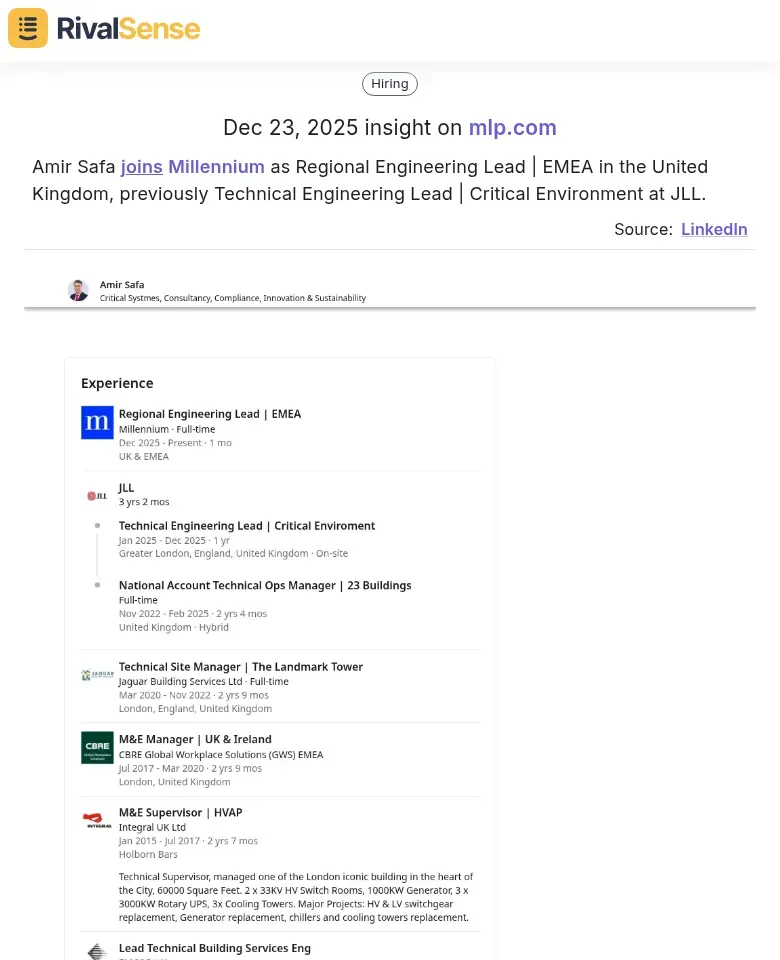
For example, a recent insight from RivalSense highlights: "Amir Safa joins Millennium as Regional Engineering Lead | EMEA in the United Kingdom, previously Technical Engineering Lead | Critical Environment at JLL." This signals Millennium's focus on strengthening engineering leadership in Europe, possibly to enhance their critical environment services or drive regional growth.
To effectively leverage such insights, you need to go beyond surface-level observation and translate them into actionable strategies. Here’s how you can analyze and act on competitor management changes to benefit your key account management and partnership efforts.
🔍 Interpreting the Insight: What Does This Move Mean?
Understanding the context behind a management change helps you anticipate competitor actions. Amir Safa’s transition from JLL to Millennium suggests a transfer of expertise in critical environments, which could lead to improved service offerings or new client targeting in EMEA. Start by assessing the role's scope and the individual's background to gauge potential impacts on market competition.
Consider the following key questions when analyzing such changes:
| Question to Ask | Why It Matters |
|---|---|
| What are the new hire's past achievements? | Indicates skills and networks they might bring. |
| How does this align with the competitor's recent strategies? | Reveals strategic priorities or gaps they're addressing. |
| Could this affect your key accounts or partnerships? | Helps identify risks or opportunities for client retention. |
💡 Actionable Tips for Responding to Competitor Moves
Once you’ve analyzed the insight, take proactive steps to adapt your approach. Here are some practical hints to integrate this into your competitor analysis routine:
- Update Competitive Intelligence Dashboards: Log this change and note any patterns, such as frequent hires from specific industries, which might indicate a competitor’s focus area.
- Engage with Your Network: Reach out to contacts in your industry to gather informal insights on how this move is perceived, which can complement automated tracking.
- Review Your Value Proposition: Compare your team’s expertise against the new hire’s background to identify areas where you can emphasize strengths or address weaknesses in client discussions.
To ensure you’re consistently monitoring such events, use this quick checklist:
- [ ] Document the Change in your competitor profiles with dates and potential implications.
- [ ] Alert Relevant Teams like sales or account management to prepare tailored messaging.
- [ ] Schedule a Follow-up Review in 3-6 months to assess any visible impacts from the move.
Regularly tracking competitor activities, from management changes to product launches, helps you stay agile and informed. Platforms like RivalSense streamline this by delivering curated insights via email, covering updates across websites, social media, and registries.
Boost your competitor analysis efforts today! Try RivalSense for free at https://rivalsense.co/ to get automated reports on critical moves like this, and receive your first insights report today to start making data-driven decisions.
📚 Read more
👉 Key Account Management Webinar: Transforming Strategy with Competitive Intelligence
👉 Optimizing Telecom Infrastructure Key Account Task Tracking: A Strategic Process Guide
👉 How Nextiva's EHR Integration Strategy Enabled Competitors to Counterattack
👉 Internet Intelligence Workflow: Uncovering Why Competitors Succeed
👉 Best Practices for Mobility Trade Show Strategy to Outpace Competitors