
The Ultimate Guide to Tracking Key Client Activity: Software Solutions & Strategic Insights for 2026
In today's competitive B2B landscape, understanding your clients' behavior isn't just helpful—it's essential for survival and growth. Tracking key client activity goes beyond basic CRM functionality; it's about gaining strategic insights into engagement patterns, identifying expansion opportunities, and preventing churn before it happens. According to recent research, companies that effectively track and analyze client activity experience higher retention rates, faster response times, and more successful upsell opportunities.
The 3 Levels of Client Activity Tracking
Understanding client activity requires looking at it from different perspectives. By categorizing tracking into levels, you can prioritize resources and gain deeper insights that drive business decisions. Here are the three levels to consider for comprehensive monitoring.
Level 1: Basic Contact Management
This includes tracking emails, calls, meetings, and basic interaction history. Most CRMs handle this level adequately.
Level 2: Engagement Intelligence
This involves understanding how clients interact with your products, services, and content. It includes feature usage patterns, support ticket metrics, content engagement, and platform login frequency.
Level 3: Strategic Relationship Mapping
This advanced level connects client activity to business outcomes and competitive positioning, such as client growth patterns, industry changes, competitive threats, and expansion opportunities.
Practical Checklist: What to Track in Your Client Database
A comprehensive checklist ensures you don't miss critical data points. Focus on these essential elements to build a robust client activity database that informs strategy and strengthens relationships.
Essential Tracking Elements:
-
Communication History 📞
- All emails, calls, and meetings (with context)
- Response times and patterns
- Preferred communication channels
-
Engagement Metrics 📊
- Product/service usage frequency
- Feature adoption rates
- Support interactions and satisfaction scores
- Training session attendance
-
Business Context 🏢
- Client's quarterly results and announcements
- Industry news affecting their business
- Organizational changes
- Budget cycles and planning periods
-
Relationship Health Indicators ❤️
- NPS/CSAT scores over time
- Renewal likelihood indicators
- Expansion signals
- Risk factors and red flags
The 11 Best Software Solutions for Tracking Client Activity in 2026
Choosing the right software is crucial for effective tracking. Here are the best tools for 2026, each offering unique features to monitor key client activity and provide actionable insights for founders and CEOs.
1. Assembly: Best for Integrated Client Experience Management
Why it stands out: Assembly combines client database functionality with a branded client portal, creating a unified system where internal tracking and client-facing interactions stay synchronized.
Key tracking capabilities:
- Complete communication history with context
- File sharing and document access tracking
- Billing and contract activity monitoring
- Client portal engagement metrics
Pro tip: Use Assembly's AI Assistant to surface patterns in client activity that might otherwise go unnoticed, like declining engagement before renewal periods.
2. Salesforce Sales Cloud: Best for Enterprise-Level Activity Analytics
Why it stands out: Advanced reporting and Einstein Activity Capture provide deep insights into client engagement patterns across large organizations.
Key tracking capabilities:
- Custom activity dashboards
- Email and calendar sync with engagement scoring
- Multi-touchpoint attribution tracking
3. HubSpot CRM: Best for Marketing-Sales Alignment
Why it stands out: Seamless integration between marketing engagement data and sales activity tracking.
Key tracking capabilities:
- Content engagement tracking
- Website activity monitoring
- Email campaign performance tied to client records
4. Zoho CRM: Best for Automated Activity Workflows
Why it stands out: Rule-based automation that triggers actions based on client activity patterns.
Key tracking capabilities:
- Automated follow-ups based on engagement
- Activity-based lead scoring
- Workflow triggers from client behavior
5. Pipedrive: Best for Visual Activity Pipeline Management
Why it stands out: Clear visual representation of where each client stands in the engagement lifecycle.
Key tracking capabilities:
- Deal stage activity tracking
- Visual pipeline status updates
- Activity-based deal progression
6. Freshsales: Best for Communication-Centric Tracking
Why it stands out: Built-in calling, email, and chat with automatic activity logging.
Key tracking capabilities:
- Native communication tracking
- Real-time engagement monitoring
- Multi-channel activity consolidation
7. Salesflare: Best for Automatic Activity Capture
Why it stands out: Minimizes manual data entry by automatically syncing emails, meetings, and contact updates.
Key tracking capabilities:
- Automatic email and calendar sync
- Contact enrichment from digital interactions
- Engagement pattern recognition
8. Bitrix24: Best for Internal-External Activity Coordination
Why it stands out: Combines client activity tracking with internal team collaboration.
Key tracking capabilities:
- Team activity alongside client interactions
- Project-task relationship tracking
- Internal-external communication flow monitoring
9. Airtable: Best for Custom Activity Data Models
Why it stands out: Complete flexibility in designing how you track and analyze client activity.
Key tracking capabilities:
- Custom activity categorization
- Relational activity tracking
- Flexible reporting structures
10. monday CRM: Best for Activity-to-Workflow Connection
Why it stands out: Links client activity directly to delivery workflows and project management.
Key tracking capabilities:
- Activity-triggered workflow automation
- Visual activity-to-delivery mapping
- Cross-team activity coordination
11. Capsule: Best for Simplified Activity Tracking
Why it stands out: Clean, straightforward approach to tracking essential client interactions.
Key tracking capabilities:
- Basic communication history
- Simple pipeline activity tracking
- Uncomplicated reporting
The Missing Piece: Competitive Context in Client Activity Tracking
While all these tools excel at tracking internal client interactions, there's a critical gap they don't address: competitive intelligence. Understanding what's happening with your competitors can provide crucial context for interpreting your clients' activity and making strategic decisions. This is where tools like RivalSense become invaluable, tracking competitor moves across product launches, pricing changes, partnerships, and more from 80+ sources.
Why Competitive Intelligence Matters for Client Activity Interpretation:
- Contextual Understanding: When a client's engagement drops, is it due to your actions or a competitor's new feature?
- Proactive Response: Knowing about competitor moves before your clients do allows you to prepare and maintain strong relationships.
- Strategic Planning: Competitive intelligence helps anticipate client needs and concerns before they become issues.
Real-World Competitive Insights from RivalSense 🔍
Here are examples of insights that RivalSense tracks, demonstrating how different types of competitive intelligence can inform your client activity strategy:
-
Product Launches & Updates:
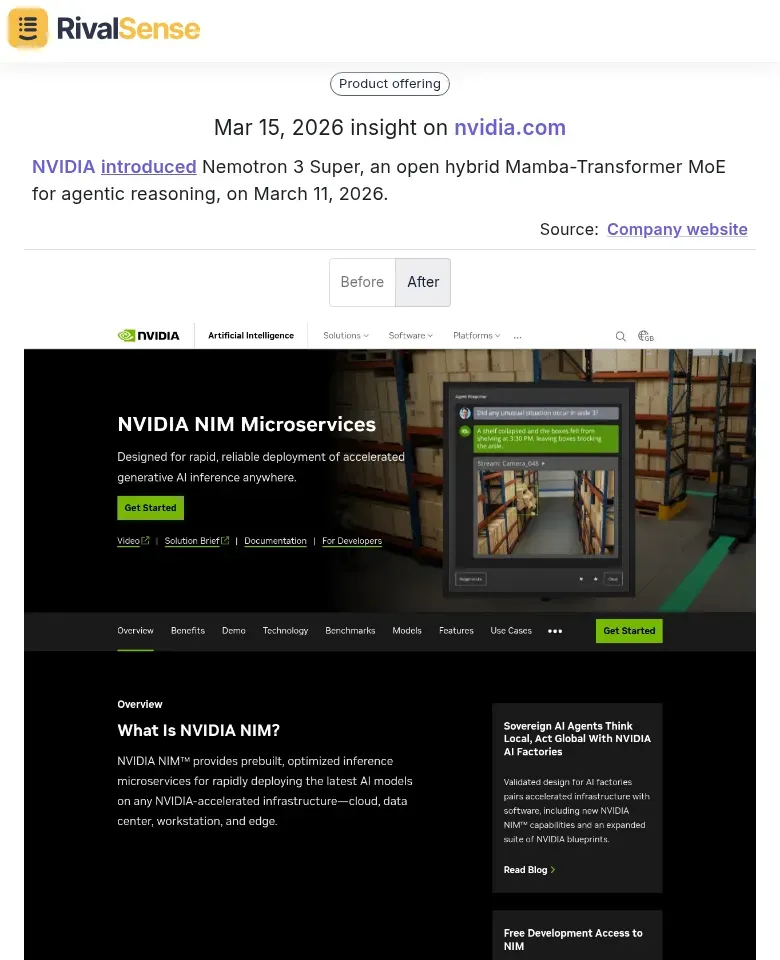
Why it matters: Tracking competitor product launches, like NVIDIA's Nemotron 3 Super, helps you anticipate shifts in client expectations and adjust your offerings to stay relevant. This insight allows you to contextualize changes in client engagement and highlight your unique value propositions. -
Market Expansions & Investments:
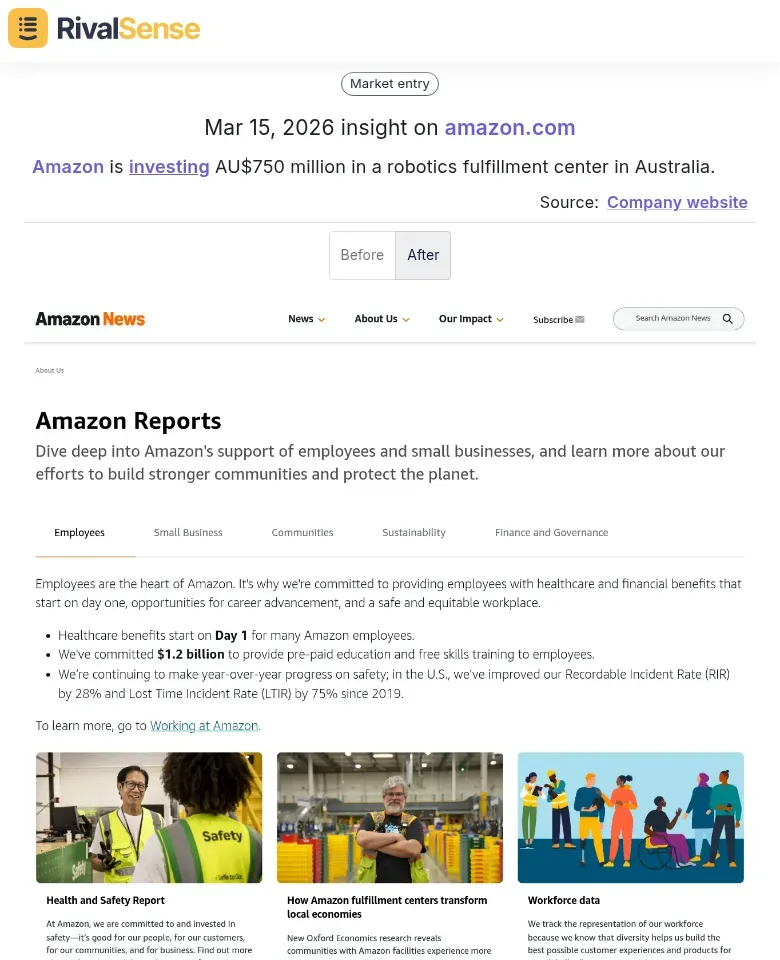
Why it matters: Competitor investments, such as Amazon's fulfillment center, signal market trends and potential new service areas. This knowledge helps you anticipate client needs in evolving regions and refine your strategy to capture opportunities or mitigate threats. -
Pricing Changes:
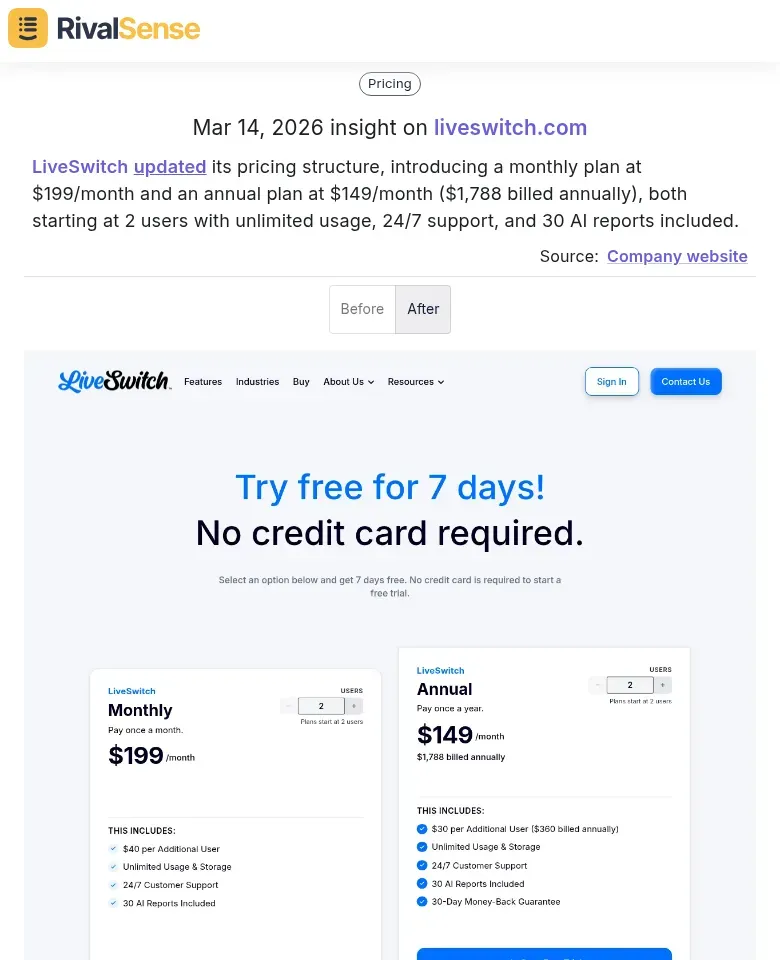
Why it matters: Competitor pricing updates, like LiveSwitch's new plans, directly affect your clients' cost-benefit analysis. Monitoring these changes enables you to prepare for pricing conversations, maintain competitive offers, and understand fluctuations in client interest.
Practical Implementation Strategy
Implementing a tracking system requires a structured approach. Follow these steps to ensure successful adoption and maximum value from your client activity data, turning insights into actionable strategies for growth.
Step 1: Define Your Tracking Priorities
- Identify the 5-7 most critical client activities to track
- Determine success metrics for each activity type
- Establish baseline measurements
Step 2: Choose the Right Tool Stack
- Select a primary CRM based on your tracking needs
- Consider complementary tools for specific tracking requirements
- Pro tip: Pair your CRM with RivalSense for complete market intelligence
Step 3: Implement Systematic Tracking
- Train your team on consistent data entry
- Set up automated tracking where possible
- Establish regular review processes
Step 4: Analyze and Act
- Schedule weekly activity reviews
- Look for patterns and anomalies
- Connect activity data to business outcomes
Advanced Tracking Techniques
Beyond basic tracking, advanced techniques can provide competitive edges. These methods leverage data for predictive insights and integrated analysis, helping you stay ahead in client relationships.
1. Sentiment Analysis Integration
Combine activity tracking with sentiment analysis tools to understand not just what clients are doing, but how they feel about it.
2. Predictive Analytics
Use historical activity data to predict future behavior and identify at-risk accounts before problems surface.
3. Cross-Platform Integration
Connect your activity tracking across multiple platforms for a complete view of client engagement.
4. Competitive Benchmarking
Compare your client activity patterns against industry benchmarks and competitor performance.
Common Tracking Mistakes to Avoid
Even with the best tools, mistakes can undermine your efforts. Avoid these common pitfalls to maintain accurate and actionable client activity data that drives real business results.
-
Tracking Everything, Analyzing Nothing
Collecting data without actionable insights is wasted effort. -
Siloed Data Systems
Activity data spread across disconnected tools creates blind spots. -
Ignoring Competitive Context
Client activity doesn't happen in a vacuum—market movements matter. -
Inconsistent Implementation
Sporadic tracking creates unreliable data.
The Future of Client Activity Tracking
The landscape of client activity tracking is evolving rapidly. Looking ahead to 2026 and beyond, we expect to see several key trends that will shape how businesses monitor and respond to client behavior and market dynamics.
- AI-Powered Insights: More sophisticated pattern recognition and predictive analytics
- Real-Time Competitive Intelligence: Integration of market data with client activity tracking
- Automated Action Triggers: Systems that not only track activity but automatically initiate appropriate responses
- Holistic Relationship Scoring: Comprehensive metrics that combine activity data with market context
Final Recommendation
Making the right choices in tools and strategy is essential for success. The most effective client activity tracking combines robust internal monitoring with external market intelligence. While tools like Assembly, Salesforce, and HubSpot provide excellent internal tracking capabilities, complementing them with competitive intelligence from RivalSense creates a complete picture that drives strategic decision-making.
Remember: Tracking client activity isn't just about collecting data—it's about gaining insights that help you serve clients better, anticipate their needs, and stay ahead of the competition. The right software stack makes this possible, but strategic implementation makes it powerful.
Actionable Next Steps
Ready to improve your client activity tracking? Start with these actionable steps to implement changes and see immediate benefits in your client relationships and business outcomes.
- Audit your current tracking systems - Identify gaps and opportunities
- Prioritize 3 key improvements - Focus on high-impact changes first
- Consider competitive context - Explore how tools like RivalSense can enhance your understanding by providing insights into competitor moves
- Implement systematically - Start small, measure results, and scale what works
To gain competitive context for your client activity, try RivalSense for free at https://rivalsense.co/. Get your first competitor report today and see how market movements impact your client relationships.
Effective client activity tracking is a journey, not a destination. The companies that master it will be the ones that build lasting relationships, anticipate market shifts, and maintain competitive advantage in an increasingly complex business environment.
📚 Read more
👉 Advanced Tactics: Track Competitor Sales for Supply Chain Optimization
👉 How LinkedIn's Product Shift Revealed a $2B Market Gap for Competitors
👉 Data-Driven Competitor Intelligence: Key Account Success Strategies
👉 AI-Driven Productivity for Digital Identity Companies: A Guide for Business Leaders
👉 Avoid These 5 Competitor Product Offering Mistakes That Drive Customer Churn