
The Ultimate Guide to Competitive Pricing Analysis: Unlocking Benefits and Implementation for 2026
by RivalSense Team
January 2, 2026
In today's hyper-competitive business landscape, competitive pricing analysis isn't just a nice-to-have—it's a strategic imperative that can make or break your profitability. As we enter 2026, the stakes are higher than ever, with AI-driven pricing strategies becoming the norm and market dynamics shifting faster than most businesses can track manually.
What is Competitive Pricing Analysis?
Competitive pricing analysis is the systematic process of gathering, analyzing, and acting on competitor pricing data to optimize your own pricing strategy. It goes beyond simply checking competitor websites occasionally—it involves continuous monitoring, trend analysis, and strategic decision-making based on real-time market intelligence.
In 2026, this process has evolved from manual spreadsheet tracking to sophisticated, AI-powered systems that monitor 80+ data sources across company websites, social media, regulatory registries, and market intelligence platforms. The most successful companies understand that pricing isn't just about numbers—it's about positioning, value perception, and strategic market movement.
The 5 Transformative Benefits of Competitive Pricing Analysis
1. Maximize Profit Margins While Staying Competitive
Research shows that companies using real-time competitive pricing data achieve 15-30% higher profit margins than those relying on outdated information. The sweet spot isn't about being the cheapest—it's about finding the optimal price point where customers perceive value while maintaining healthy margins.
Practical Tip: Create a pricing matrix that maps your products against competitors, highlighting where you can increase prices without losing market share. Look for products where you offer unique value that competitors can't match.
2. Identify Market Opportunities Before Your Competitors Do
Competitive pricing analysis reveals more than just price points—it uncovers market gaps, emerging trends, and competitor weaknesses. By tracking pricing changes, product launches, and promotional strategies across your competitive landscape, you can spot opportunities for market expansion or product differentiation.
Checklist for Opportunity Identification:
- Monitor competitor price changes during seasonal shifts
- Track new product launches and their introductory pricing
- Analyze competitor discount patterns and timing
- Identify products where competitors consistently underprice or overprice
- Watch for regulatory changes that might affect pricing strategies
3. Make Data-Driven Decisions Instead of Guesses
Gut feelings have no place in modern pricing strategy. Competitive pricing analysis provides the hard data needed to justify pricing decisions to stakeholders, optimize inventory management, and forecast revenue more accurately.
Step-by-Step Data Collection Framework:
- Identify Your True Competitors: Go beyond obvious competitors to include indirect competitors and market disruptors
- Establish Monitoring Parameters: Determine which products, price points, and market segments to track
- Set Data Collection Frequency: Daily monitoring is minimum; real-time tracking is ideal for volatile markets
- Analyze Historical Trends: Look at pricing patterns over time, not just current prices
- Correlate with Other Data: Combine pricing data with sales volume, customer feedback, and market conditions
4. Respond to Market Changes in Real-Time
In 2026, prices can change multiple times per day. Companies that can't keep up with these changes risk losing sales or leaving money on the table. Real-time competitive pricing analysis enables you to:
- Match or beat competitor promotions immediately
- Adjust prices based on supply chain changes
- Respond to economic shifts before they impact your bottom line
- Test pricing strategies with minimal risk
Implementation Checklist:
- [ ] Set up automated price monitoring for key competitors
- [ ] Establish price change alert thresholds
- [ ] Create response protocols for different types of price changes
- [ ] Train team members on interpreting pricing data
- [ ] Integrate pricing data with your CRM and inventory systems
5. Build Sustainable Competitive Advantage
Competitive pricing analysis isn't just about reacting—it's about building a proactive pricing strategy that competitors can't easily replicate. By understanding the complete competitive landscape, you can:
- Develop pricing strategies that align with your brand positioning
- Create value-based pricing models that customers appreciate
- Build pricing intelligence into your product development process
- Establish pricing as a core competency within your organization
The 7-Step Competitive Pricing Analysis Framework for 2026
Step 1: Define Your Competitive Universe
Start by categorizing your competitors into three groups:
- Direct Competitors: Companies offering identical or very similar products
- Indirect Competitors: Companies solving the same customer problem differently
- Market Disruptors: New entrants or companies changing market dynamics
Practical Exercise: Create a competitor matrix that includes market share, pricing strategy, value proposition, and customer segments for each competitor.
Step 2: Establish Your Data Collection System
Manual data collection is no longer viable. You need automated systems that track:
- Product prices and changes
- Promotional offers and discounts
- Shipping costs and policies
- Bundle pricing and package deals
- Seasonal pricing patterns
RivalSense Integration Tip: Our platform monitors 80+ sources including company websites, social media, regulatory registries, and market intelligence platforms, delivering comprehensive competitive intelligence in weekly email reports.
Step 3: Analyze Pricing Strategies and Patterns
Go beyond surface-level price comparisons to understand:
- Competitor pricing models (subscription, one-time, freemium, etc.)
- Price elasticity in your market
- Competitor response patterns to market changes
- Geographic pricing variations
- Customer segment targeting through pricing
Step 4: Conduct Value-Based Analysis
Compare not just prices, but value propositions:
- Feature comparisons at different price points
- Customer service and support included
- Warranties and guarantees
- Brand reputation and trust factors
- Customer reviews and satisfaction scores
Step 5: Implement Dynamic Pricing Rules
Based on your analysis, establish rules for:
- When to match competitor prices
- When to maintain premium pricing
- How to respond to competitor promotions
- Optimal timing for price changes
- Geographic pricing strategies
Step 6: Monitor and Measure Results
Track key metrics including:
- Price position relative to competitors
- Sales volume changes after price adjustments
- Customer acquisition cost changes
- Profit margin impact
- Market share movements
Step 7: Continuously Optimize
Pricing strategy is never "set and forget." Regular optimization should include:
- Monthly strategy reviews
- Quarterly competitive landscape assessments
- Annual pricing model evaluations
- Continuous A/B testing of pricing strategies
Common Pitfalls to Avoid
Mistake #1: Focusing Only on Price
Remember that price is just one component of value. Customers consider quality, service, convenience, and brand reputation. Your pricing analysis should incorporate these factors.
Mistake #2: Using Outdated Data
In fast-moving markets, data older than 24 hours can lead to poor decisions. Implement systems that provide real-time or near-real-time competitive intelligence.
Mistake #3: Ignoring Indirect Competitors
Some of your biggest threats come from companies that don't look like traditional competitors but solve the same customer problems differently.
Mistake #4: Not Considering Total Cost of Ownership
Customers evaluate total cost, not just purchase price. Include shipping, maintenance, training, and other costs in your analysis.
Tools and Technologies for 2026
While manual tracking might work for very small businesses, most companies need automated solutions. Look for tools that offer:
- Real-time monitoring across multiple channels
- AI-powered insights and trend detection
- Competitor benchmarking capabilities
- Integration with your existing systems
- Actionable reporting with clear recommendations
RivalSense Advantage: Our platform tracks competitor product launches, pricing updates, event participations, partnerships, regulatory changes, management updates, and media mentions across 80+ sources, delivering comprehensive competitive intelligence directly to your inbox each week.
Real-World Competitive Intelligence Insights
Competitive pricing analysis is part of a broader competitive intelligence strategy. Understanding various aspects of competitor activities can provide context for pricing decisions and strategic planning. Here are real examples from RivalSense that demonstrate how different types of insights can inform your business strategy.
Insight 1: Management Changes
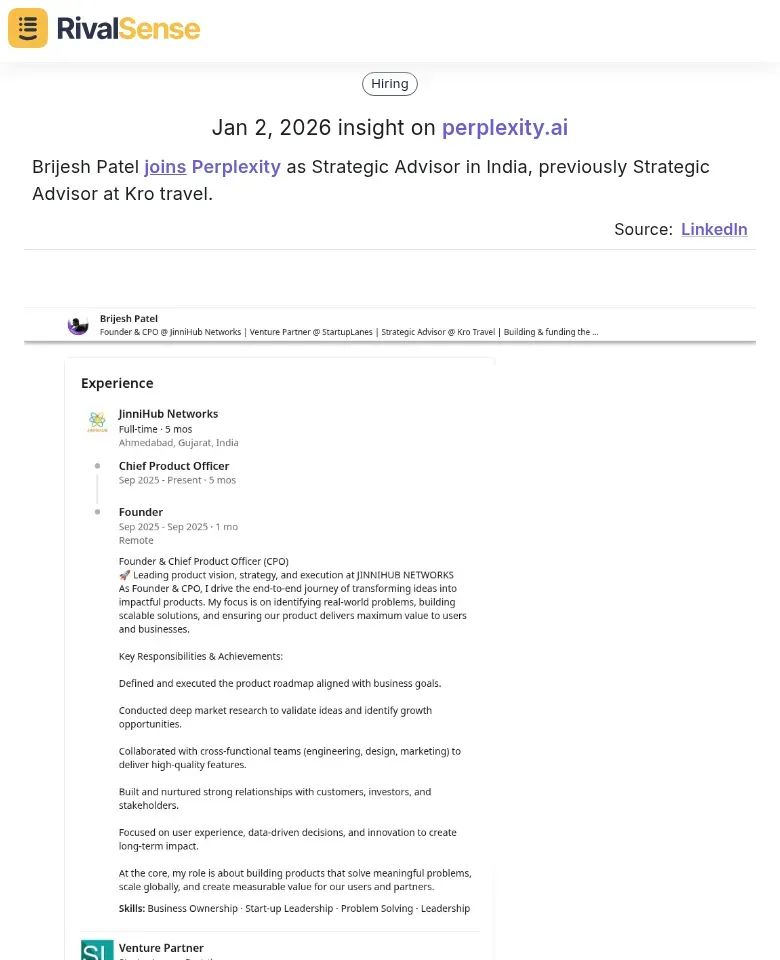
Brijesh Patel joins Perplexity as Strategic Advisor in India, previously Strategic Advisor at Kro travel.
Why this matters: Management changes can signal strategic realignments, new market entries, or enhanced capabilities. For instance, when a key advisor joins, it might indicate a focus on specific regions or industries, which could lead to pricing adjustments to capture new customer segments or respond to competitive moves.
Insight 2: Product Updates and Enhancements
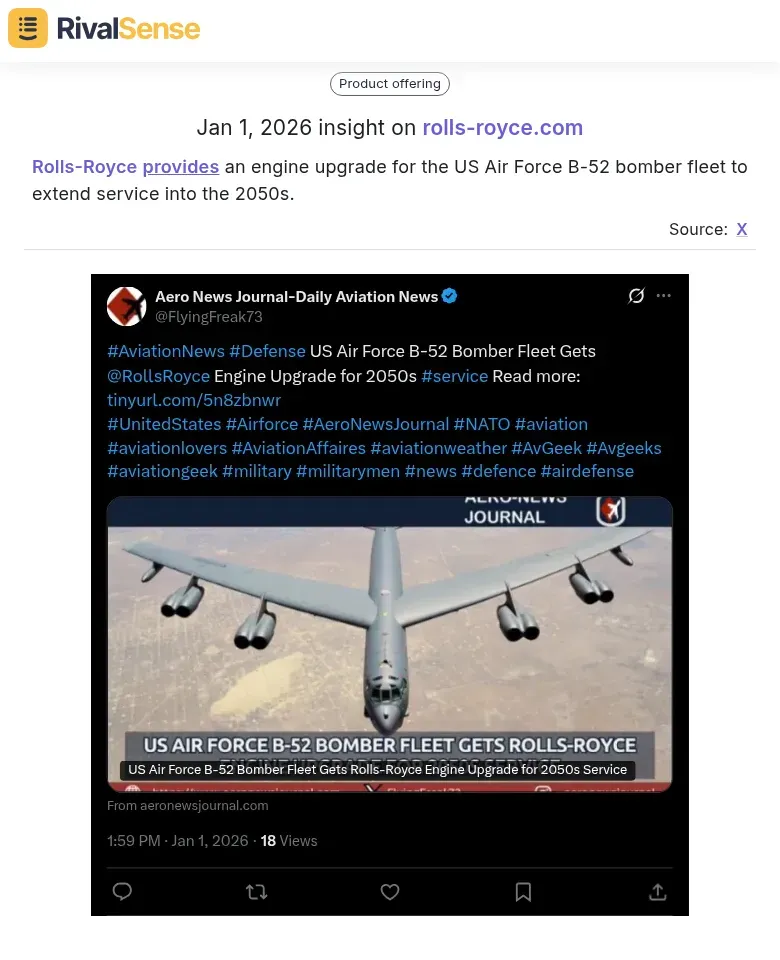
Rolls-Royce provides an engine upgrade for the US Air Force B-52 bomber fleet to extend service into the 2050s.
Why this matters: Product upgrades often come with new features or improved performance, which can justify premium pricing or affect competitive positioning. Monitoring such updates helps you anticipate price changes or value propositions that competitors might promote, allowing you to adjust your strategy proactively.
Insight 3: Acquisitions and Partnerships
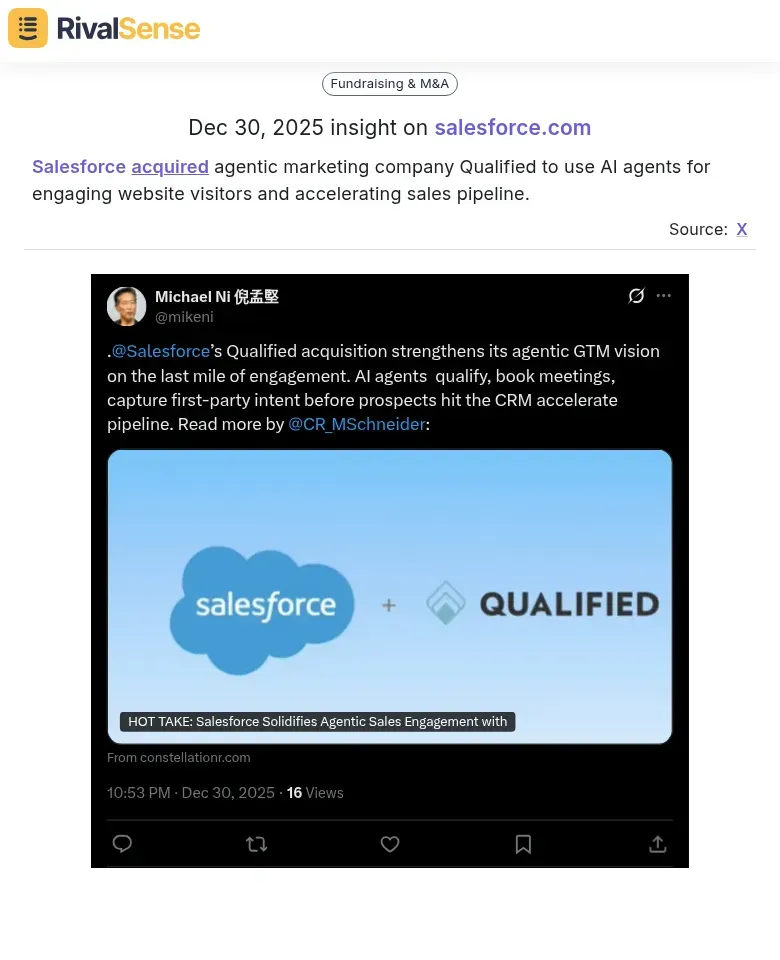
Salesforce acquired agentic marketing company Qualified to use AI agents for engaging website visitors and accelerating sales pipeline.
Why this matters: Acquisitions reveal strategic moves to integrate new technologies or expand market reach. This can disrupt pricing norms as companies bundle services or offer enhanced solutions, requiring you to reassess your pricing strategy to maintain competitiveness and value perception.
Getting Started: Your 30-Day Implementation Plan
Week 1-2: Foundation Building
- Identify your top 5-10 competitors
- Define your key products/services for monitoring
- Set up basic tracking systems
- Establish baseline pricing data
Week 3-4: Analysis and Strategy Development
- Analyze competitor pricing patterns
- Identify 2-3 immediate pricing opportunities
- Develop initial response protocols
- Train your team on the new system
Month 2+: Optimization and Scaling
- Implement automated monitoring solutions
- Expand tracking to indirect competitors
- Integrate pricing data with other business systems
- Establish ongoing review processes
Conclusion: Pricing as a Competitive Weapon
In 2026, competitive pricing analysis has evolved from a tactical exercise to a strategic capability. The companies that will thrive are those that treat pricing intelligence as a core business function, not an occasional task. By implementing systematic competitive pricing analysis, you're not just tracking numbers—you're building market intelligence, developing strategic foresight, and creating sustainable competitive advantages.
The investment in proper pricing analysis tools and processes pays for itself many times over through increased margins, better market positioning, and more informed strategic decisions. Remember: In today's market, the company with the best information wins. Make competitive pricing analysis your secret weapon for 2026 and beyond.
Ready to transform your pricing strategy with comprehensive competitive intelligence? Try RivalSense for free at https://rivalsense.co/ to assist with the challenges described in this post. Get your first competitor report today and start making smarter pricing decisions.
📚 Read more
👉 Key Account Health Dashboard Case Study: Influencer Platform Success
👉 How VSPARTICLE's $1/kg Hydrogen Breakthrough Forced Competitors to Accelerate
👉 2026 Competitor Website Trends: Decode Strategy Shifts Before They Happen
👉 Automating Key Account Intelligence: A Strategic Guide for HR Tech Leaders
👉 Free Tools for Tracking Competitor Hiring and Layoffs: A Practical Guide