
The Complete Guide to Competitor Industry Award Monitoring: Strategies, Checklists, and Practical Tips
Competitive intelligence isn't just about tracking product launches or pricing changes—it's about understanding market validation and industry recognition patterns. When competitors win awards, they're not just collecting trophies; they're receiving market validation that can influence customer decisions, attract talent, and shape industry perceptions.
Award monitoring serves as a competitive intelligence goldmine because it reveals:
- Market positioning signals - What aspects of their business are they highlighting?
- Innovation trends - Where are industry leaders investing their R&D dollars?
- Customer priorities - What do award juries and customers value most?
- Strategic gaps - Where are competitors NOT winning awards that you could dominate?
The 5-Step Framework for Effective Competitor Award Monitoring
Step 1: Identify Your Monitoring Targets
Start by creating a comprehensive list of what to monitor. This foundational step ensures you capture all relevant award activities from key players in your industry.
Competitor Checklist:
- [ ] All direct competitors (3-5 minimum)
- [ ] Indirect competitors in adjacent markets
- [ ] Industry leaders you aspire to compete with
- [ ] Fast-growing startups in your space
Award Organization Checklist:
- [ ] Industry-specific awards (e.g., SaaS Awards, G2, Capterra)
- [ ] Innovation and technology awards
- [ ] Customer satisfaction and service awards
- [ ] Sustainability and ESG awards
- [ ] Regional and local business awards
Step 2: Set Up Your Monitoring Infrastructure
Building a robust monitoring system is crucial for timely insights. Without automation, you risk missing critical announcements that could inform your strategy.
Social Media Monitoring Setup:
-
Twitter: Create specialized lists for competitors, award organizations, and industry media. Use advanced search operators:
"wins award" OR "named best" OR "industry recognition"#IndustryAwards2025 OR #AwardWinningfrom:@competitor (award OR recognition OR won)
-
Facebook: Monitor official pages for award announcements. Track engagement metrics on achievement posts to gauge market interest.
-
LinkedIn: Follow company pages and key executives who often share award wins.
Automated Alert Setup:
- Google Alerts for "[competitor name] + award"
- Social listening tools for award-related keywords
- Industry newsletter subscriptions
Step 3: Analyze Award Patterns for Strategic Insights
Raw data alone isn't enough; you need to extract actionable insights. Analyzing patterns helps you understand competitor priorities and market trends.
Award Analysis Checklist:
- [ ] Frequency: How often do competitors win awards? (Monthly, quarterly, annually)
- [ ] Categories: What types of awards are they winning? (Innovation, customer service, sustainability)
- [ ] Timing: Do awards cluster around product launches or financial announcements?
- [ ] Engagement: How does the market respond to their award wins?
- [ ] Positioning: How do they promote their awards in marketing materials?
Practical Example: If a competitor consistently wins "Best Place to Work" awards, it signals heavy investment in talent retention—a potential area for you to differentiate or compete.
Step 4: Translate Insights into Action
Insights without action are meaningless. Use award intelligence to refine your competitive positioning and operational strategies.
Response Strategy Checklist:
- [ ] Immediate Response: Have templated social media responses ready for competitor award announcements
- [ ] Sales Enablement: Update competitive battle cards with award context
- [ ] Marketing Positioning: Adjust messaging to highlight your strengths in underserved award categories
- [ ] Award Submissions: Identify 2-3 award categories where you can establish thought leadership
Pro Tip: When a competitor wins an award, immediately share your own relevant achievements with a congratulatory tone that highlights complementary strengths.
Step 5: Integrate Award Intelligence into Business Strategy
Award monitoring should influence decisions across departments. This integration ensures that insights drive tangible business outcomes.
Cross-Departmental Implementation:
- Marketing: Analyze award messaging strategies and adjust positioning
- Product: Identify award-winning features to benchmark against
- Sales: Use award recognition in competitive battle cards
- Leadership: Schedule quarterly reviews of award intelligence
- HR: Monitor "Best Place to Work" awards for talent acquisition insights
Advanced Monitoring Techniques
1. Predictive Award Tracking
Proactive monitoring can help you anticipate award wins. By tracking broader competitor activities, you can identify signals that often precede industry recognition.
Track patterns that predict future award wins:
- Research Recognition: Monitor academic papers, patents, and open-source contributions
- Partnership Announcements: Strategic alliances often precede joint award submissions
- Media Coverage: Increased positive press can signal upcoming award nominations
- Executive Speaking Engagements: Industry recognition often follows thought leadership
2. Competitive Intelligence Dashboards
Visual tools enhance decision-making by presenting data clearly. Dashboards help you spot trends and anomalies at a glance.
Build visual dashboards that track:
- Award frequency patterns by competitor
- Award types and categories
- Geographic distribution of wins
- Social media engagement metrics
- Year-over-year recognition trends
3. Award Opportunity Identification
Use competitor intelligence to identify your own award opportunities. This turns defensive monitoring into offensive strategy.
- Gap Analysis: Identify award categories where competitors consistently win but you have strong capabilities
- Timing Strategy: Submit to awards 3-6 months before deadlines based on industry patterns
- Material Optimization: Analyze winning submission materials for best practices
- Jury Research: Understand award jury composition and priorities
Practical Checklists and Templates
Weekly Award Monitoring Checklist
- [ ] Review all competitor social media for award announcements
- [ ] Check industry publications and award organization websites
- [ ] Update award tracking spreadsheet with new wins
- [ ] Analyze engagement metrics on award posts
- [ ] Identify emerging award trends or patterns
- [ ] Update competitive intelligence database
- [ ] Schedule award submission opportunities for your company
Monthly Award Intelligence Report Template
- Executive Summary: Key award wins and market implications
- Competitor Analysis: Award frequency and category trends
- Market Insights: What award types are gaining prominence
- Opportunity Identification: Gaps in award categories you can target
- Action Items: Strategic recommendations based on findings
Award Response Playbook Template
When Competitor Wins Award:
- Immediate (Day 1): Share congratulatory post highlighting your complementary strengths
- Short-term (Week 1): Update sales materials with competitive positioning
- Medium-term (Month 1): Identify similar award opportunities for submission
- Long-term (Quarter 1): Develop capabilities in award-winning areas
Common Pitfalls to Avoid
- Award Inflation: Not all awards carry equal weight—distinguish between prestigious industry awards and paid recognition
- Timing Blindness: Missing seasonal award patterns that could inform your submission strategy
- Engagement Overemphasis: High social media engagement doesn't always equal market impact
- Category Confusion: Differentiating between innovation awards (R&D focus) vs. customer awards (retention focus)
- Manual Monitoring Burnout: Spending excessive time on manual tracking instead of strategic analysis
Real-World RivalSense Insights for Award Monitoring
Competitor moves beyond awards can signal future recognition. Tracking activities like expansions, partnerships, and sustainability projects helps you anticipate award submissions and industry trends.
Example 1: Product Expansion Insights
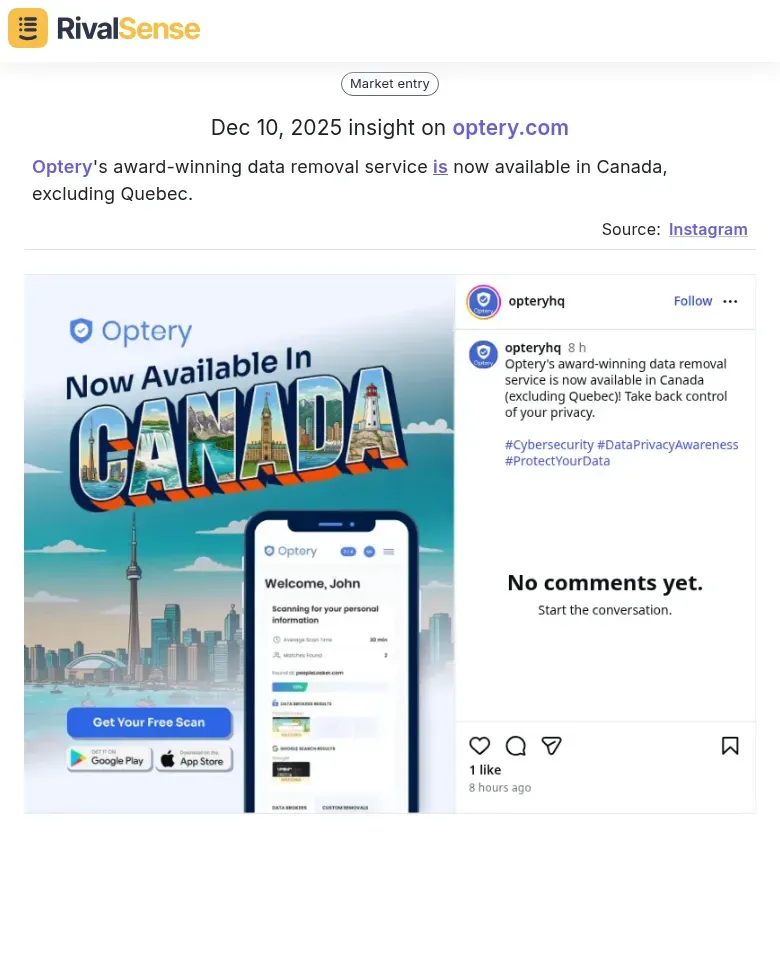
Insight: Optery's award-winning data removal service is now available in Canada, excluding Quebec.
Strategic Value: This type of product expansion insight can indicate a competitor's growth strategy, often leading to nominations for innovation or market penetration awards. By monitoring such launches, you can benchmark your own expansion plans and identify award categories where you might compete.
Example 2: Partnership Announcements
Insight: Legends Global and Saudi Arabia's Events Investment Fund announced a joint venture on December 10 to operate venues in Saudi Arabia, starting with an Olympic standard shooting range in Riyadh.
Strategic Value: Partnership insights reveal strategic alliances that frequently result in joint award submissions for collaboration or event excellence. Tracking these helps you understand competitor networks and spot opportunities for similar recognitions in your industry.
Example 3: Sustainability Project Updates
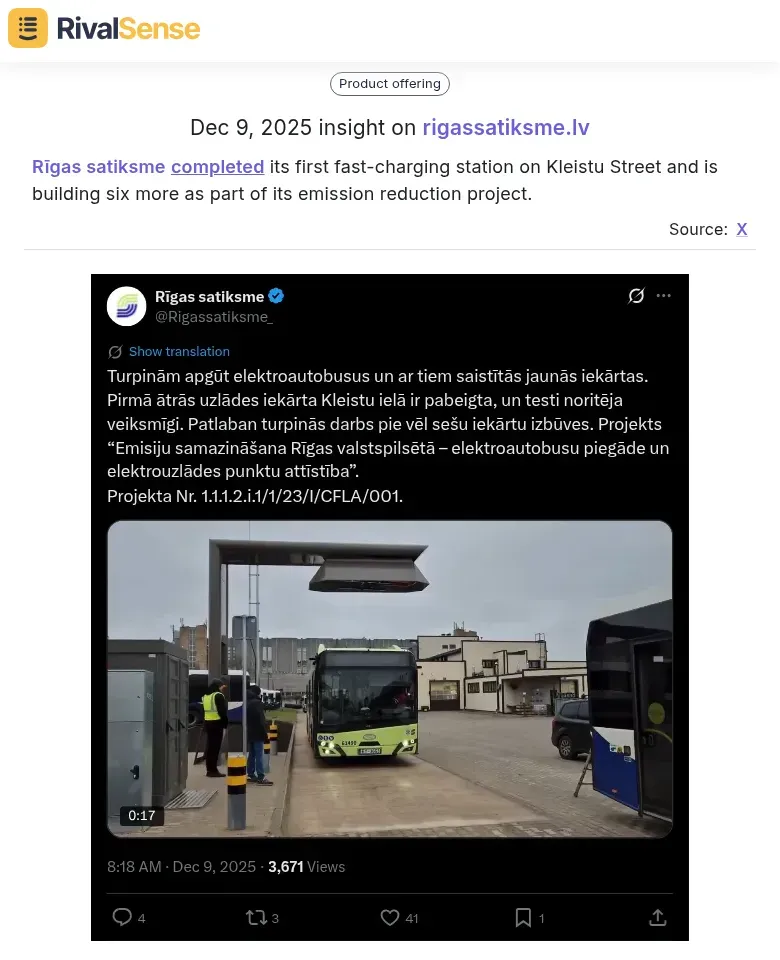
Insight: Rīgas satiksme completed its first fast-charging station on Kleistu Street and is building six more as part of its emission reduction project.
Strategic Value: Sustainability project insights are valuable for predicting ESG or green innovation awards. Monitoring these initiatives allows you to assess competitor commitments to environmental goals and align your own projects for potential award recognition.
Streamlining Your Award Monitoring with RivalSense
While manual monitoring provides valuable insights, it can be time-consuming and may miss broader competitor moves. This is where dedicated competitive intelligence tools like RivalSense can transform your award monitoring strategy.
RivalSense automates competitor tracking across 80+ sources, including:
- Award Announcements: Industry recognition and certifications
- Product Launches & Updates: Innovation that often precedes award wins
- Event Participations: Conference speaking slots that signal industry influence
- Partnerships: Strategic alliances that can lead to joint award submissions
- Media Mentions: Press coverage that validates market position
- Management Changes: Leadership moves that may affect award strategies
Practical Benefits for Award Monitoring:
- Comprehensive Coverage: Track awards across company websites, social media, industry publications, and various registries
- Time Efficiency: Receive consolidated weekly email reports instead of manual daily searches
- Pattern Recognition: Identify award timing patterns and category trends automatically
- Competitive Benchmarking: Compare your award frequency against competitors
- Opportunity Identification: Spot award submission opportunities based on competitor intelligence
Example Use Case: A B2B software company used RivalSense to discover that their main competitor consistently won "Best Customer Service" awards in Q3 each year. By analyzing the competitor's customer case studies and support metrics, they identified specific gaps in their own customer success program, implemented improvements, and successfully submitted for the same award category the following year—ultimately winning and using it as a key differentiator in sales conversations.
Getting Started with Your Award Monitoring Strategy
30-Day Implementation Plan:
Week 1-2: Foundation
- Identify 3-5 key competitors to monitor
- Set up social media lists and Google Alerts
- Create award tracking spreadsheet template
Week 3-4: Analysis
- Conduct historical award analysis (past 12 months)
- Identify award patterns and trends
- Create initial competitive positioning based on findings
Month 2: Optimization
- Implement automated monitoring tools like RivalSense
- Develop award submission strategy based on gaps
- Train sales team on award-based competitive positioning
Month 3: Integration
- Establish quarterly award intelligence review meetings
- Integrate award insights into product roadmap planning
- Measure impact on marketing and sales performance
Key Takeaways for Business Leaders
- Awards are Market Signals: They validate what customers and industry experts value
- Patterns Reveal Strategy: Award frequency and categories reveal competitor priorities
- Gaps Create Opportunities: Where competitors aren't winning is where you can dominate
- Automation Enables Scale: Manual monitoring limits strategic thinking—tools free up time for analysis
- Integration Drives Impact: Award intelligence should inform marketing, sales, product, and HR strategies
Pro Tip for Founders and CEOs: Don't just track awards—use them to validate your market positioning. If competitors consistently win awards in areas where you're strong but unrecognized, it's a signal to improve your submission strategy or messaging, not necessarily your product.
Next Steps
Ready to transform your competitor award monitoring from reactive tracking to proactive strategy? Start by implementing the 5-step framework outlined above. To scale your efforts and focus on strategic analysis rather than manual data collection, consider trying RivalSense for free at https://rivalsense.co/ and get your first competitor report today.
About RivalSense: RivalSense is a competitor tracking tool that monitors product launches, pricing updates, event participations, partnerships, regulatory aspects, management changes, and media mentions across company websites, social media, and 80+ sources, delivering consolidated weekly email reports to help B2B companies stay ahead of the competition.
📚 Read more
👉 Air Freight Podcast Intelligence: A Strategic Guide to Tracking Competitors
👉 How RivalSense Alerted Competitors to CrowdStrike's AI Security Move
👉 Competitor Insights Cheat Sheet: Mastering Key Account Lifecycle Tracking for B2B Success
👉 Facility Management Competitive Intelligence Workflow: Uncover Rival Insights
👉 Uncover Competitor Financial Moves: Monitor Press Releases for M&A Insights