
Step-by-Step Guide: Uncover Competitor Event Strategies for Enterprise Key Accounts
In the high-stakes world of enterprise key accounts, events represent more than just marketing activities—they're strategic battlegrounds where competitors directly influence decision-makers. Understanding how rivals use conferences, trade shows, and executive summits to court your most valuable clients is critical for maintaining competitive advantage. Competitors leverage events to build relationships with enterprise stakeholders through targeted sponsorships, speaking opportunities, and exclusive networking sessions. These interactions aren't accidental—they're carefully orchestrated to position solutions, shape perceptions, and ultimately sway purchasing decisions. Event intelligence reveals which competitors are targeting your key accounts, what messaging they're using, and how they're positioning against your offerings.
Practical steps to start:
- Map competitor event calendars: Track which industry events your rivals sponsor or speak at
- Analyze sponsorship tiers: Higher sponsorship levels indicate strategic priorities
- Monitor speaker topics: Content reveals competitor positioning and solution focus
- Track executive attendance: Which competitor leaders are networking with your clients?
Event intelligence provides early warning signals about competitor strategies before they impact your pipeline. By understanding how competitors use events to influence enterprise decision-makers, you can proactively counter their moves and protect your most valuable relationships.
Step 1: Identify Competitor Event Participation Patterns
Tracking competitor event participation is essential to decode their market priorities and audience targeting. By systematically analyzing where competitors invest their event budgets, you can anticipate their strategic moves and identify potential threats to your key accounts. Begin by logging competitor presence across industry conferences, trade shows, and exclusive executive gatherings in a spreadsheet, noting sponsorship tiers, speaking slots, booth sizes, and networking events.
Practical Checklist: ✅
- Monitor event websites and social media for sponsor lists
- Track competitor announcements about event participation
- Analyze booth positioning and size at trade shows
- Note speaking topics and session attendance patterns
Look for investment patterns: Are competitors consistently platinum sponsors at certain events? Do they prioritize speaking opportunities over exhibition space? Map these patterns against event types to reveal strategic priorities. For example, heavy investment in exclusive C-level gatherings suggests enterprise key account focus, while broad conference sponsorship indicates market visibility goals.
Example from RivalSense:
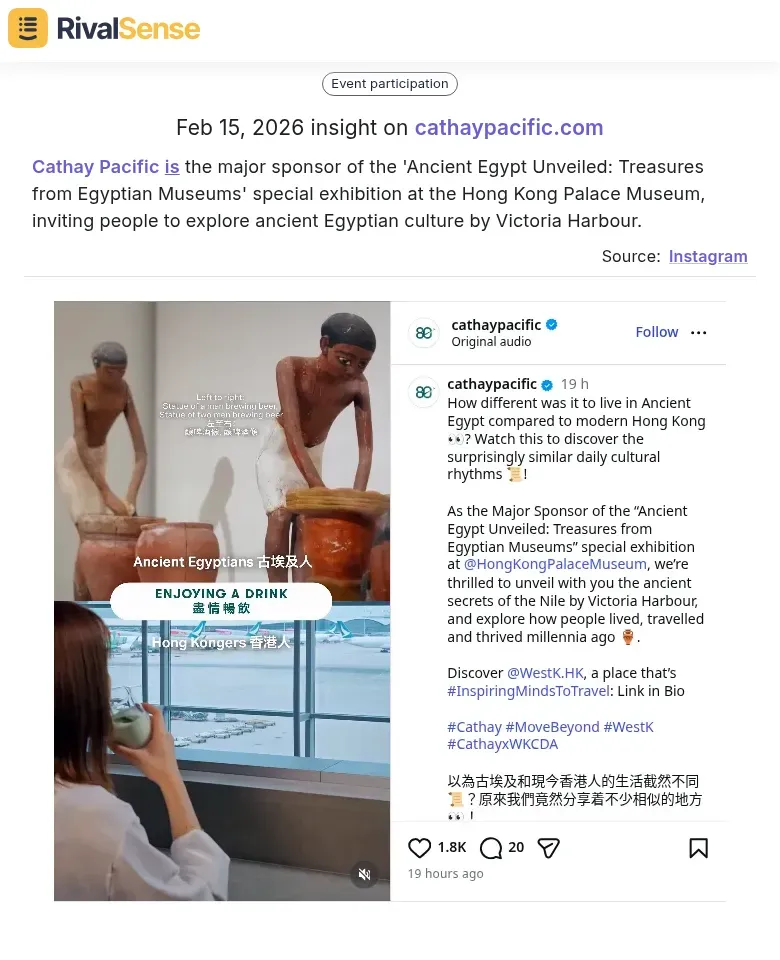
Cathay Pacific is the major sponsor of the 'Ancient Egypt Unveiled: Treasures from Egyptian Museums' special exhibition at the Hong Kong Palace Museum, inviting people to explore ancient Egyptian culture by Victoria Harbour. This type of insight into event sponsorships is valuable because it reveals how competitors align their brand with cultural or niche events to enhance visibility and engage specific demographics, helping you understand their marketing strategy and target audience.
Key Insight: Competitors often reveal their target audience through event selection. Financial services conferences attract different decision-makers than technology summits. Track which competitors attend which events to understand their ideal customer profile and account targeting strategy.
Tip: Use event hashtags and LinkedIn event pages to identify competitor attendees and engagement levels. This reveals not just participation but actual networking effectiveness.
Step 2: Decode Competitor Event Messaging and Positioning
Decoding competitor messaging at events allows you to anticipate their market narratives and identify gaps in your own strategy. By analyzing how competitors position themselves through speeches and presentations, you can refine your value proposition to better appeal to enterprise accounts. Start by examining event themes and session titles—are they focusing on innovation, ROI, or industry disruption? Look for patterns in how competitors position themselves: Are they the 'thought leaders,' 'practical problem-solvers,' or 'technology pioneers'?
Next, examine alignment with their overall brand strategy. Compare event messaging to their website content, marketing materials, and recent announcements. Are they introducing new products, targeting specific verticals, or addressing emerging market concerns? This reveals strategic priorities.
Example from RivalSense:
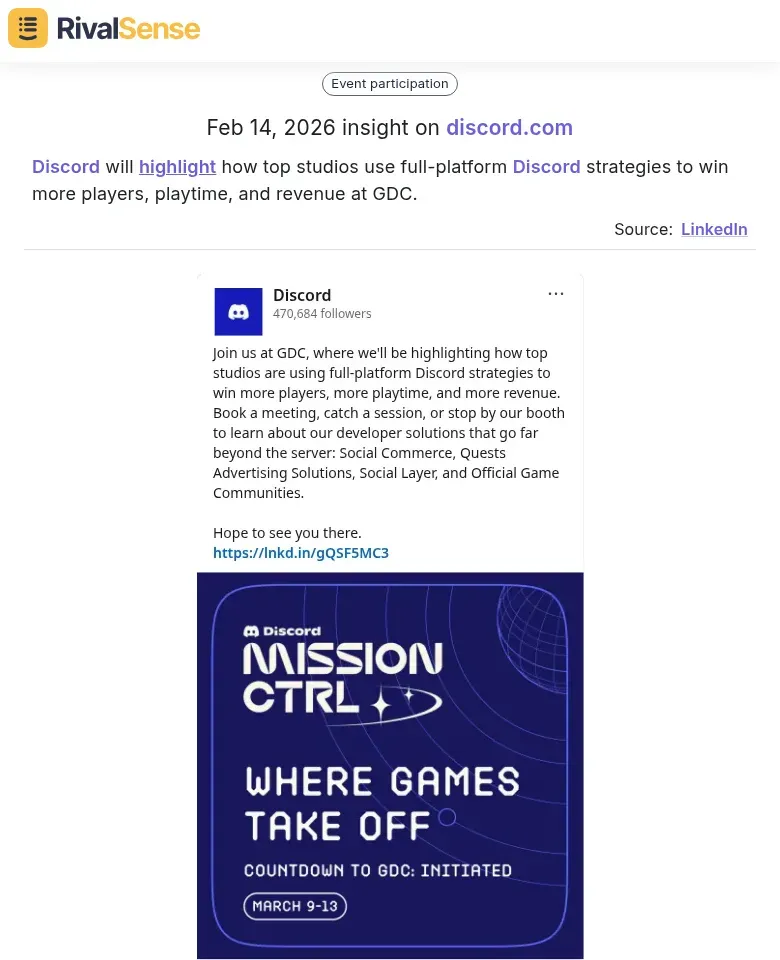
Discord will highlight how top studios use full-platform Discord strategies to win more players, playtime, and revenue at GDC. Insights like this are valuable for business strategy as they show how competitors use event speaking opportunities to showcase expertise and attract key industry players, helping you understand their positioning and competitive advantages.
Practical checklist: ✅
- Document key value propositions emphasized in presentations
- Note recurring themes across multiple sessions
- Track how they differentiate from other players
- Identify target audience segments addressed
- Analyze speaker selection and expertise areas
Pro tip: Pay attention to what competitors DON'T talk about - these gaps represent potential opportunities for your own positioning. Look for subtle shifts in messaging over time to anticipate strategic changes before they're publicly announced.
Step 3: Analyze Competitor Engagement Strategies at Events
Analyzing competitor engagement tactics reveals how they convert event presence into tangible relationships with enterprise accounts. Understanding their on-the-ground strategies helps you design more effective countermeasures to protect your key clients. This step focuses on how competitors build connections through giveaways, VIP treatment, and success showcases at events.
Examine Giveaways & Incentives: Look beyond generic swag. Track what premium items competitors offer to enterprise prospects—are they high-value tech gadgets, custom-branded accessories, or exclusive software trials? Note how they structure contests: Do they require business card drops, demo sign-ups, or LinkedIn connections? These mechanics reveal their lead qualification priorities.
Example from RivalSense:
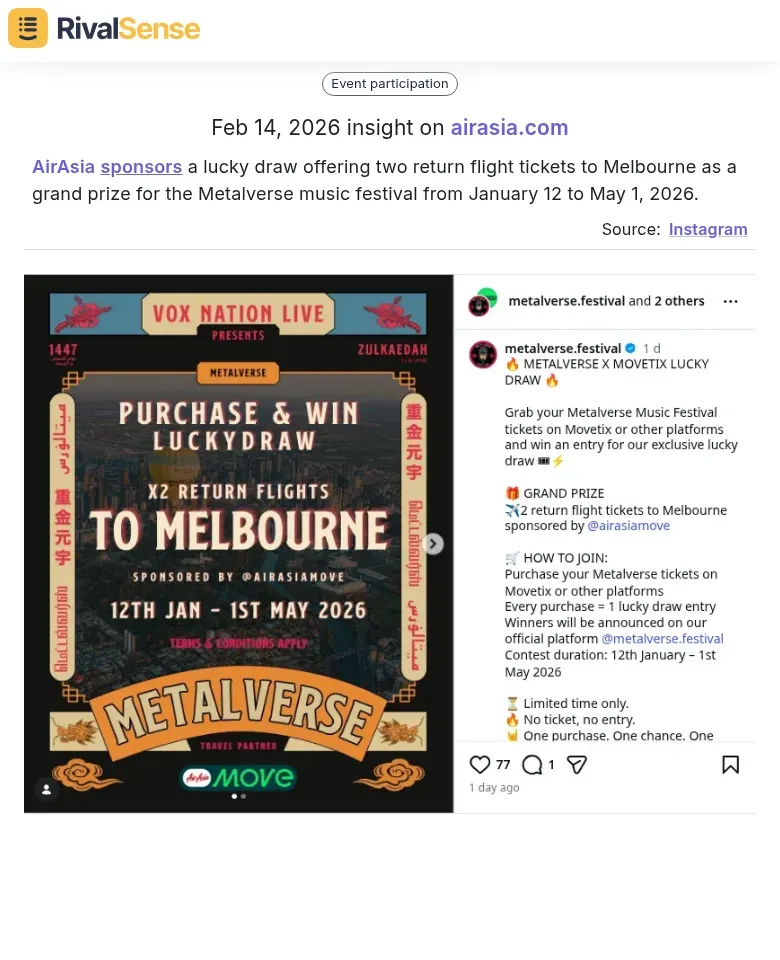
AirAsia sponsors a lucky draw offering two return flight tickets to Melbourne as a grand prize for the Metalverse music festival from January 12 to May 1, 2026. This insight into event incentives is valuable because it demonstrates how competitors use creative promotions to drive engagement and capture leads, offering lessons for your own event marketing tactics.
Analyze VIP Treatment: Enterprise decision-makers expect exclusivity. Document how competitors create VIP experiences: private meeting rooms, executive dinners, or personalized tours. Notice if they offer tiered access—some prospects get standard demos while key accounts receive C-level executive briefings. This signals their account prioritization strategy.
Study Success Showcases: Pay attention to how competitors present case studies. Do they use interactive displays, live client testimonials, or ROI calculators? Note which metrics they highlight (cost savings, efficiency gains, revenue growth) and which industries they feature. This reveals their ideal customer profile and value proposition.
Practical Checklist: ✅
- Photograph competitor booth layouts and engagement zones
- Collect all promotional materials and swag items
- Note lead capture mechanisms and qualification criteria
- Document VIP program structures and access levels
- Record case study presentation formats and key metrics
- Track follow-up communication timing and channels
This analysis helps you identify gaps in your own event strategy and opportunities to differentiate your enterprise approach.
Step 4: Map Competitor Networking and Relationship Building Tactics
Mapping competitor networking tactics is crucial for understanding how they nurture enterprise relationships beyond the event floor. By observing their executive presence and private interactions, you can anticipate which accounts they're targeting and how to intercept them. This step reveals their strategic approach to converting event contacts into long-term clients.
Practical Steps to Map Competitor Tactics:
- Track Executive Presence: Monitor which C-level executives from competitor companies attend which events. Are they sending sales leaders to one conference and product executives to another? This reveals their targeting strategy.
- Analyze Private Meeting Patterns: Look for patterns in their private meeting schedules. Do they consistently host exclusive dinners for specific enterprise accounts? Are they conducting on-site demos during major industry events? Create a checklist of their preferred meeting formats.
- Monitor Relationship-Building Activities: Track how competitors use events for account expansion. Are they bringing existing enterprise clients to events as references? Do they use events to introduce new decision-makers to their solutions? Look for cross-selling opportunities they're pursuing.
Key Questions to Answer:
• Which enterprise accounts are they targeting at each event?
• What types of exclusive gatherings do they host (dinners, roundtables, VIP sessions)?
• How do they follow up post-event to maintain momentum?
Pro Tip: Use social media monitoring tools to track event-related posts from competitor executives. Their LinkedIn activity often reveals which enterprise relationships they're cultivating.
By mapping these tactics, you'll understand how competitors convert event participation into enterprise account growth, giving you actionable insights to refine your own approach.
Step 5: Turn Competitor Event Insights into Strategic Action
Transforming competitor event insights into action is where intelligence delivers real business value. By developing counter-strategies and identifying opportunities, you can outmaneuver rivals and secure your enterprise key accounts. This step focuses on operationalizing your findings to drive measurable results.
1. Develop Counter-Strategies:
- Timing Advantage: Schedule your enterprise events 2-3 weeks before competitors target the same accounts
- Content Differentiation: Identify topics competitors missed and create specialized sessions addressing those gaps
- Speaker Strategy: Recruit industry experts who outshine competitor event presenters
2. Identify Gaps & Opportunities:
- Audience Analysis: Note which enterprise roles competitors aren't targeting (e.g., CTOs vs. CIOs)
- Format Innovation: If competitors use webinars, consider in-person workshops for deeper engagement
- Geographic Gaps: Map competitor event locations to identify underserved regions
3. Create Differentiated Event Strategy:
- Value Proposition Matrix: Compare your event benefits against competitors' across 5 key dimensions
- Exclusive Experiences: Design VIP sessions for top-tier accounts that competitors can't replicate
- Post-Event Engagement: Develop a 90-day follow-up plan that outperforms competitor nurturing cycles
Action Checklist: ✅
✓ Create competitive response playbook for each major competitor
✓ Assign team members to monitor competitor event announcements in real-time
✓ Develop quarterly event strategy review sessions to adapt to competitor moves
✓ Build a library of counter-messaging for common competitor event themes
Pro Tip: Use competitor event attendance patterns to predict which accounts they're prioritizing, then create targeted pre-emptive outreach campaigns for those same enterprises.
Put Your Insights into Action with RivalSense 🚀
Manually tracking competitor events, sponsorships, and engagements can be time-consuming and prone to missed opportunities. To streamline this process and gain a competitive edge, consider using RivalSense. This tool automatically tracks competitor product launches, pricing updates, event participations, partnerships, regulatory aspects, management changes, and media mentions across websites, social media, and various registries, delivering all insights in a weekly email report.
Why it matters: With RivalSense, you can stay ahead of competitor moves without constant manual monitoring, allowing you to focus on strategic actions to protect and grow your enterprise key accounts.
👉 Try RivalSense for free today at https://rivalsense.co/ and get your first competitor report to start uncovering hidden strategies! 🔍
📚 Read more
👉 Analyzing Competitor Advertising Launches: Lessons from Uber Advertising's New Format
👉 Key Account Tracking Best Practices: The 2026 Strategic Guide for Business Leaders
👉 Mastering Key Account Management: A Practical Implementation Guide for B2B Leaders
👉 How IDnow's Regulatory Hire Enabled Competitors to Counter EU Wallet Strategy
👉 Website Change Intelligence: A Proactive Framework for Key Account Success