
Step-by-Step Guide to Competitor Matrices for Event Participation Insights
In today's competitive B2B landscape, understanding where your rivals show up reveals more than just their event calendar. Competitor matrices transform scattered event data into actionable intelligence, visualizing strategic priorities, target markets, and resource allocation. By mapping event participation, you can uncover patterns that drive informed decisions and competitive advantage.
Practical Tip: Start by creating a simple matrix with competitors as rows and key industry events as columns. Track their participation levels (keynote, sponsor, exhibitor, attendee) and note their messaging themes. This visualization immediately reveals patterns: Are they targeting enterprise vs. SMB events? Focusing on specific verticals? Scaling back or doubling down on certain regions?
Checklist for Initial Setup:
✅ Identify top 5-7 direct competitors
✅ List 10-15 key industry events for the next 12 months
✅ Document each competitor's participation level and messaging
✅ Note booth size, sponsorship tier, and speaking roles
✅ Track year-over-year changes in their event strategy
These insights help you anticipate market moves, identify underserved opportunities, and allocate your event budget strategically. When you see a competitor consistently dominating a particular event type, it signals where they perceive the highest ROI—information you can use to compete more effectively or establish leadership elsewhere.
Building Your Competitor Event Matrix: Key Dimensions to Track
Building an effective competitor event matrix requires tracking multiple dimensions. By systematically categorizing event types, partnerships, and audiences, you can uncover hidden patterns and opportunities. Focus on three key areas to structure your data collection and analysis.
First, categorize event types and formats: Track job fairs, retail pop-ups, educational workshops, industry conferences, and virtual webinars. Create a spreadsheet with columns for event name, type, format (in-person/hybrid/virtual), frequency, and competitor participation level (sponsor/speaker/exhibitor).
Second, analyze partnership strategies: Identify co-branded events, joint sponsorships, and strategic alliances. Note which competitors collaborate with industry associations, educational institutions, or complementary brands. Track partnership longevity and exclusivity arrangements.
Third, map target audience segments through event locations: Record geographic focus (local/regional/national/international), venue types (universities, convention centers, retail spaces), and audience demographics. Use this data to identify underserved markets and audience gaps.
Practical Checklist for Data Collection:
📊 Create a master spreadsheet with competitor columns
📊 Use event hashtags and social media monitoring
📊 Subscribe to competitor newsletters and industry calendars
📊 Track post-event content and lead generation tactics
📊 Analyze attendee feedback and engagement metrics
Tip: Focus on events where competitors consistently participate year-over-year – these likely deliver their highest ROI and strategic value.
Extracting Strategic Insights from Competitor Event Patterns
Once your matrix is built, the next step is to extract strategic insights. Analyzing competitor event patterns can reveal their recruitment, promotional, and educational strategies, providing actionable intelligence for your own planning.
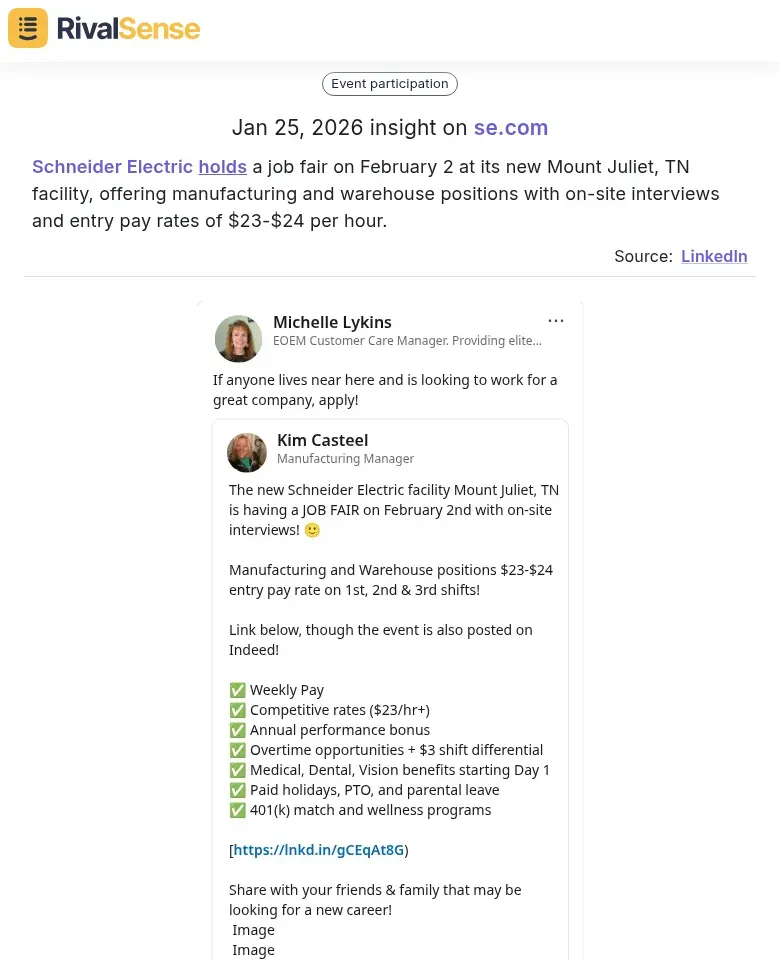
Recruitment Strategy Intelligence: Track which job fairs competitors attend and their booth positioning. For example, Schneider Electric holds a job fair on February 2 at its new Mount Juliet, TN facility, offering manufacturing positions with on-site interviews. This insight into local recruitment events is valuable for understanding their expansion plans and talent acquisition priorities, helping you anticipate hiring trends or identify regional competition.
Practical tip: Create a spreadsheet tracking competitor participation frequency, booth size, and advertised salary ranges across different industry events.
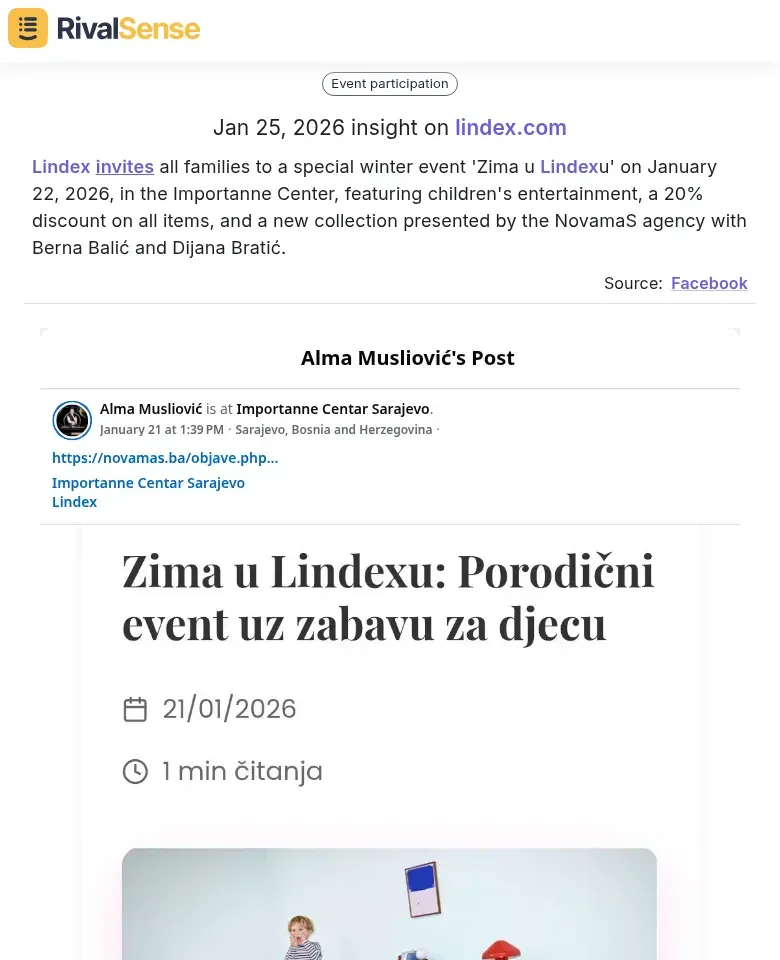
Promotional Tactics Analysis: Monitor retail events for competitor discount strategies and new product launch timing. For instance, Lindex invites families to a winter event 'Zima u Lindexu' on January 22, 2026, featuring a 20% discount and new collection. Insights like this reveal seasonal marketing tactics and promotional calendars, enabling you to time your own campaigns effectively.
Checklist item: Document competitor promotional offers, launch dates, and customer engagement tactics at major retail expos.
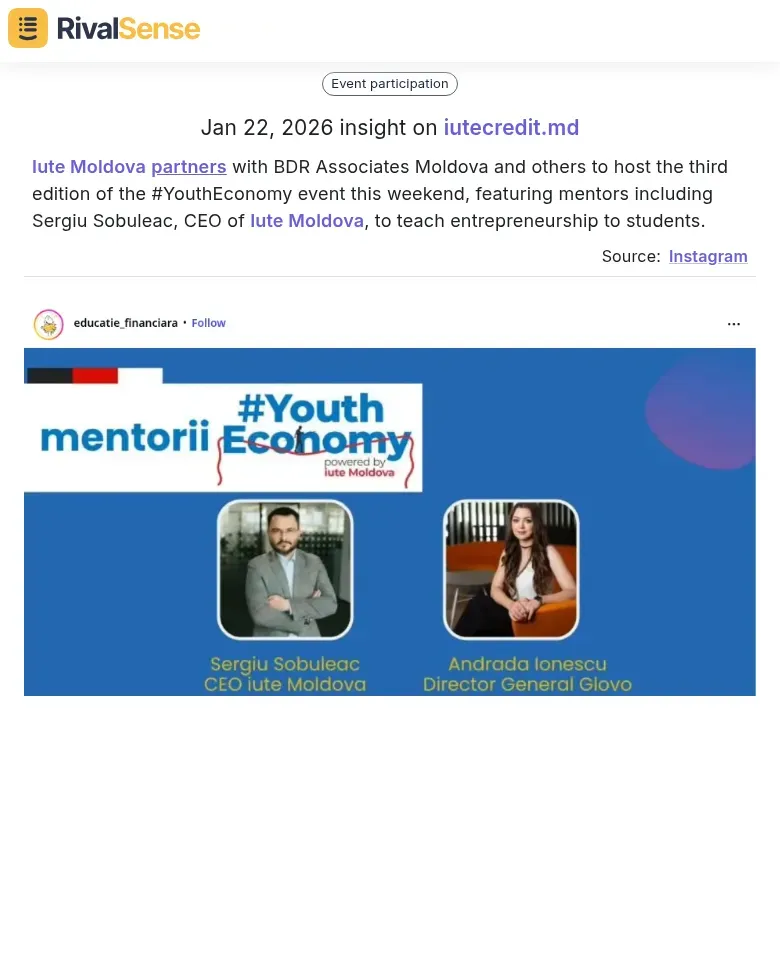
Educational Positioning Insights: Study mentorship programs and partnership networks at educational events. As an example, Iute Moldova partners with BDR Associates Moldova to host the #YouthEconomy event, featuring CEO mentors teaching entrepreneurship. Such insights highlight community engagement and educational positioning, aiding in identifying partnership opportunities or content gaps.
Actionable step: Map competitor educational content themes and identify gaps in your own positioning.
Pro tip: Use a competitor matrix to visualize patterns across multiple events. Track metrics like event frequency, investment levels, and audience engagement strategies to reveal strategic priorities and underserved opportunities.
Analyzing Event Participation Data for Competitive Positioning
Event participation data provides a wealth of information for competitive positioning. By analyzing frequency, timing, and scale, you can identify gaps and opportunities in the market that inform your strategic moves.
Practical Steps:
- Frequency Analysis: Count each competitor's events per quarter. High frequency may indicate aggressive market penetration.
- Timing Gaps: Identify months with minimal competitor presence - these represent prime opportunities for your own events.
- Resource Assessment: Compare event scale (booth size, speaker slots, sponsorship levels). Larger investments signal strategic priorities.
- Brand Positioning: Analyze event themes and partnerships. Are competitors targeting technical audiences vs. executive decision-makers?
Quick Checklist for Analysis:
- [ ] Map all major industry events attended by competitors
- [ ] Note sponsorship tiers and speaking opportunities secured
- [ ] Track audience engagement metrics (social mentions, session attendance)
- [ ] Identify exclusive partnerships revealed through event collaborations
Pro Tip: Monitor event themes year-over-year. Shifts from "product features" to "industry solutions" indicate evolving positioning strategies. Use this intelligence to position your events where competitors are underinvested or targeting different audience segments.
Turning Insights into Action: Strategic Applications
Transforming insights into action is where the real competitive advantage lies. Use your event matrix to develop counter-strategies, identify partnerships, and optimize resource allocation for maximum impact.
Developing Counter-Strategies
When your matrix reveals competitor weaknesses—like consistently missing key industry conferences or poor booth engagement—create targeted counter-moves. For example, if a competitor skips an annual summit, secure premium sponsorship there. Checklist: Identify 3-5 competitor event gaps quarterly, allocate budget to fill those spaces, and measure lead generation from these counter-strategies.
Identifying Partnership Opportunities
Analyze competitor collaboration patterns to uncover potential allies. If a competitor consistently partners with specific speakers, approach those influencers with enhanced offers. Tip: Create a partnership matrix tracking competitor-event partner relationships, noting contract durations to time your outreach strategically.
Optimizing Resource Allocation
Benchmark your event investments against competitors to maximize ROI. If a competitor overspends on trade shows but neglects local meetups, consider reallocating funds to underserved regional events. Practical steps: Calculate competitors' estimated event spend per channel, compare to your allocations, and adjust quarterly based on lead-to-cost ratios.
Best Practices for Maintaining and Updating Your Competitor Event Matrix
To keep your competitor event matrix effective, regular maintenance is key. Establishing systematic processes ensures that your insights remain current and actionable, driving continuous improvement in your event strategy.
Systematic Data Collection: Create a weekly cadence for tracking competitor event announcements, booth sizes, and sponsorship levels using automated tools. Designate team members with clear checklists for specific competitor monitoring.
Visualization Frameworks: Use color-coded heat maps to show event frequency by quarter, bubble charts for investment trends, and timeline views for seasonal patterns. Create executive dashboards that highlight key takeaways in under 30 seconds.
Integration with Broader Intelligence: Link event data with product launches, pricing changes, and hiring patterns. Establish monthly reviews where sales, marketing, and product teams discuss implications. Use event matrix data to inform your own event strategy and targeting.
Maintenance Routine: Maintain a living document with quarterly updates and historical trend analysis to spot emerging patterns before they become obvious.
Ready to Elevate Your Event Strategy?
Putting these strategies into practice requires timely and accurate competitor data. Tools like RivalSense automate tracking of competitor product launches, pricing updates, event participations, and more, delivering weekly reports straight to your inbox. This saves time and ensures you never miss a critical move.
Try RivalSense for free at https://rivalsense.co/ to get your first competitor report today and start gaining actionable insights from competitor events.
📚 Read more
👉 Turning Executive Moves into Competitive Intelligence
👉 How to Track Competitor Email Campaigns: From Manual Methods to Automated Intelligence
👉 5 Actionable Hacks to Master Key Account Feedback in Cybersecurity
👉 From Monitoring to Action: How Real-Time Competitor Intelligence Drives Strategic Wins
👉 From Tracking to Winning: How Competitor Insights Unlock Key Account Opportunities