
Solving Regulatory Compliance Gaps: How Competitor Insights Drive Proactive Account Management
Regulatory compliance gaps represent far more than just potential fines—they're hidden business risks that erode customer trust, damage brand reputation, and create competitive vulnerabilities. When compliance blind spots persist, they become silent profit drains, exposing companies to operational disruptions, lost business opportunities, and strategic disadvantages.
Proactive compliance management transforms regulatory requirements from burdens into competitive advantages. Companies that leverage competitor insights to anticipate regulatory changes gain crucial market positioning. By monitoring how competitors adapt to new regulations, you can identify emerging compliance standards before they become mandatory, allowing you to implement changes more efficiently and cost-effectively.
Traditional compliance approaches fail because they're reactive, siloed, and disconnected from market realities. Compliance teams working in isolation often miss the competitive implications of regulatory changes. The solution? Integrate competitor tracking into your compliance strategy. Practical steps:
- Monitor competitor communications about regulatory changes
- Track industry association positions on emerging regulations
- Analyze how competitors adjust their products/services for compliance
- Benchmark your compliance timelines against market leaders
- Use competitor insights to anticipate regulatory enforcement patterns
By transforming compliance from a defensive cost center to an offensive strategic function, you create sustainable competitive advantages while mitigating hidden business risks.
Learning from Competitor Missteps: Three Critical Case Studies
Analyzing real-world competitor failures in regulatory compliance provides actionable lessons for your business. These case studies highlight how insights into legal, technological, and communication missteps can inform your strategy and prevent costly errors.
1. Legal Process Failures: The Court Appearance Disaster
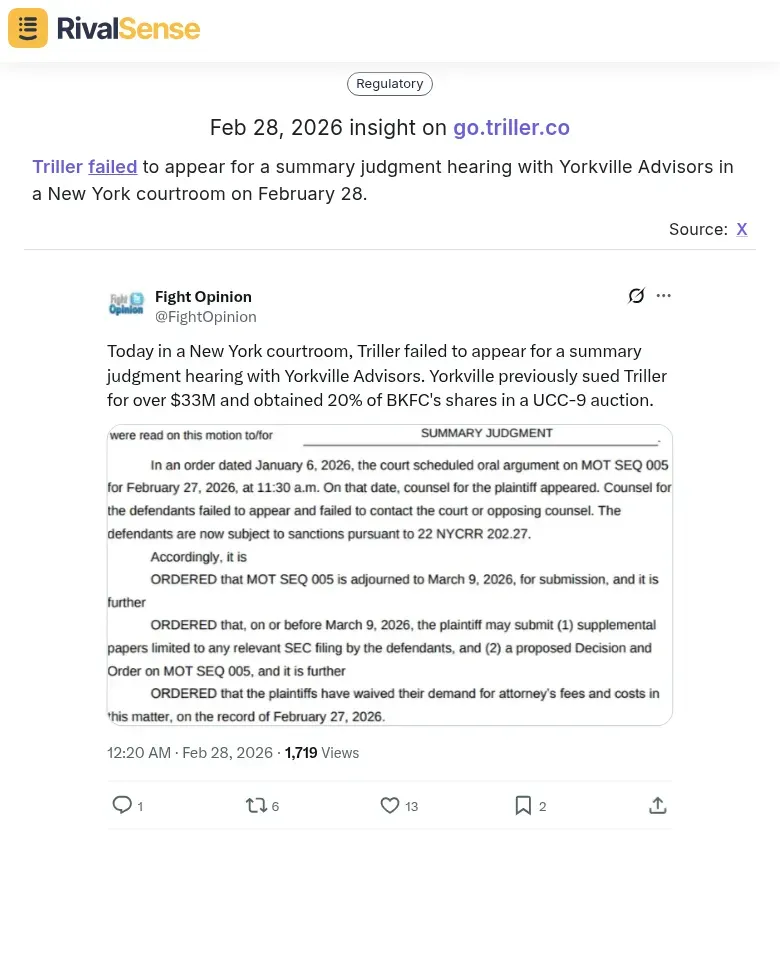
Insight: Triller failed to appear for a summary judgment hearing with Yorkville Advisors in a New York courtroom on February 28. This type of insight is valuable for business strategy as it reveals systemic legal and compliance breakdowns, helping you avoid similar procedural failures that lead to default judgments and penalties.
Practical tip: Implement a legal calendar with automated reminders and escalation protocols. Assign compliance officers to track all regulatory proceedings. Create a checklist:
- ✅ Document all regulatory notices
- ✅ Set calendar alerts 30/15/3 days before deadlines
- ✅ Designate backup personnel for each proceeding
2. Technology Boundary Violations: When Innovation Crosses Regulatory Lines
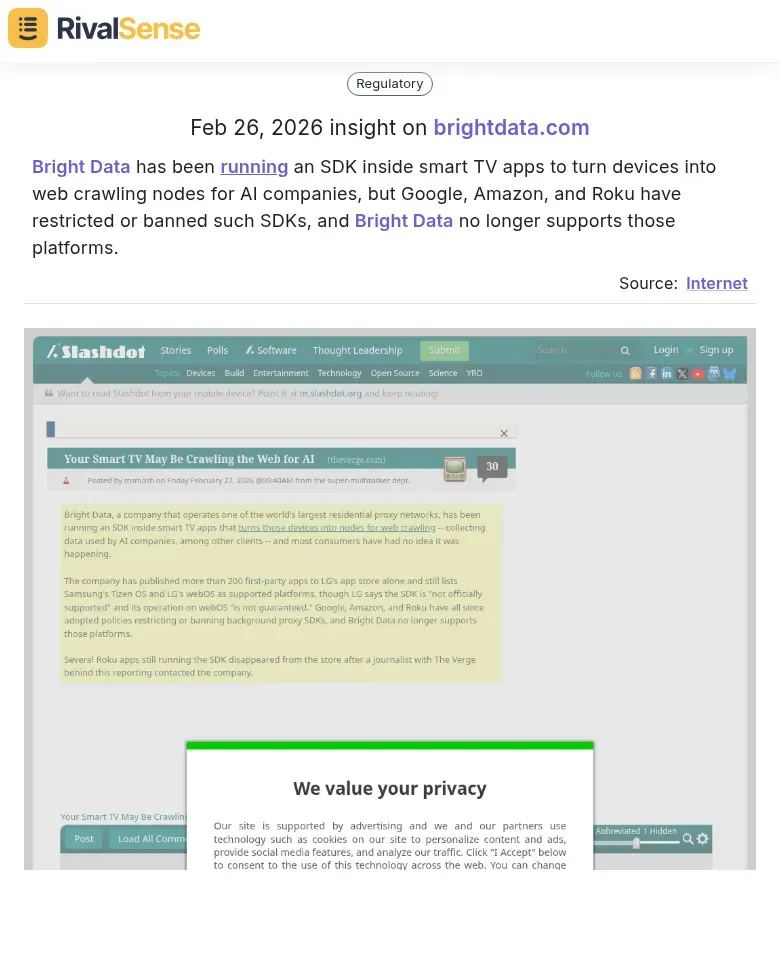
Insight: Bright Data has been running an SDK inside smart TV apps to turn devices into web crawling nodes for AI companies, but Google, Amazon, and Roku have restricted or banned such SDKs, and Bright Data no longer supports those platforms. Monitoring such insights helps anticipate regulatory and platform boundary shifts, allowing you to adapt products proactively and avoid bans or recalls.
Actionable advice: Before launching new technology, conduct a regulatory boundary assessment. Map your innovation against existing regulations and consult with compliance experts. Establish a "regulatory sandbox" for testing innovations within controlled parameters.
3. Customer Communication Errors: The Costly Guidance Mistake
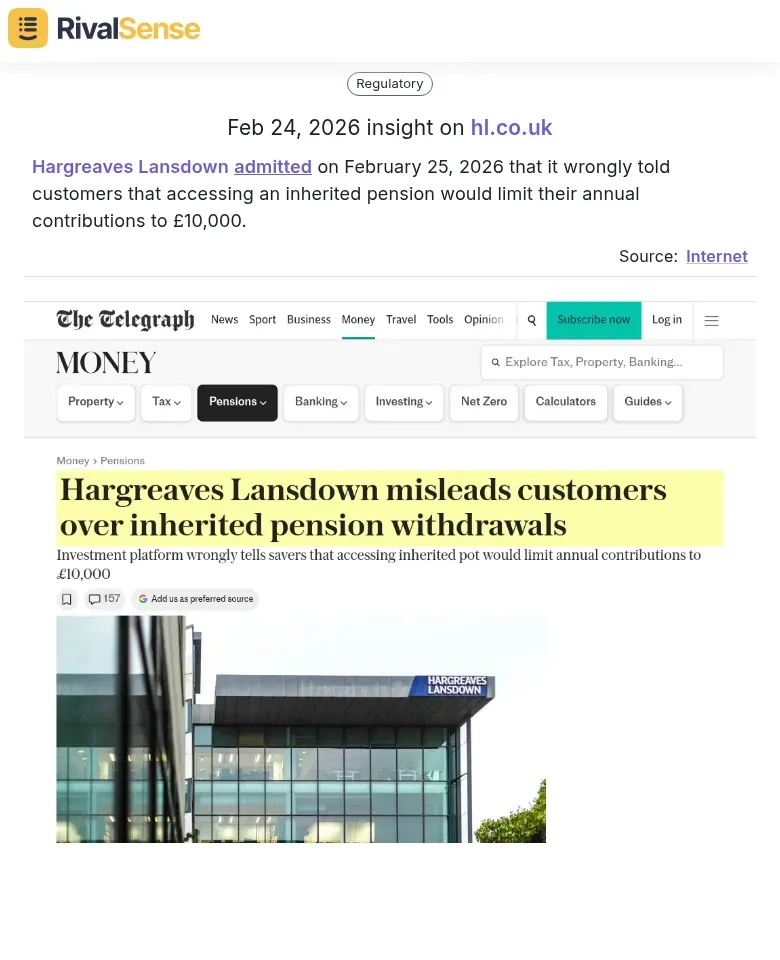
Insight: Hargreaves Lansdown admitted on February 25, 2026 that it wrongly told customers that accessing an inherited pension would limit their annual contributions to £10,000. Insights into competitor communication errors are crucial for business strategy as they highlight the need for accurate regulatory guidance, preventing fines and customer distrust.
Critical steps:
- ✅ Create standardized regulatory guidance templates approved by legal counsel
- ✅ Implement mandatory compliance training for all customer-facing staff
- ✅ Establish a "regulatory question escalation" process for complex inquiries
- ✅ Regularly audit customer communications for compliance accuracy
Proactive Monitoring Strategy: Track competitors' regulatory filings, enforcement actions, and customer complaints. Set up alerts for their compliance-related announcements. Analyze their missteps to identify your own potential vulnerabilities before they become costly problems.
Competitor Intelligence as Your Early Warning System
Think of competitor intelligence as your regulatory radar system—it detects compliance threats before they reach your doorstep. By systematically monitoring competitors' regulatory actions, you can anticipate industry-wide compliance changes that regulators are likely to enforce across the board. This proactive approach shifts your compliance strategy from reactive to predictive, saving time and resources.
Practical Steps to Implement Your Early Warning System:
-
Monitor Regulatory Filings: Track competitors' SEC submissions, regulatory disclosures, and legal settlements. These documents often reveal emerging enforcement patterns months before they become industry-wide requirements.
-
Analyze Litigation Patterns: When competitors face lawsuits or regulatory actions, document the specific violations and enforcement outcomes. This creates a valuable database of "what not to do" scenarios for your compliance team.
-
Set Up Automated Alerts: Use tools like RivalSense to create threshold-based alerts for competitor regulatory events. When a competitor receives a warning letter or faces enforcement action, your team gets notified immediately.
-
Conduct Quarterly Competitor Compliance Audits: Systematically review how industry leaders are adapting to regulatory changes. Their compliance program adjustments often signal upcoming regulatory priorities.
Pro Tip: Create a "Competitor Misstep Database" that maps regulatory violations to your internal controls. When a competitor stumbles, use their experience to validate and strengthen your own compliance frameworks. This transforms their failures into your proactive defense strategy.
By treating competitor intelligence as an early warning system, you shift from reactive compliance to proactive risk management—anticipating regulatory changes 6-12 months before they impact your operations.
Proactive Account Management Through Regulatory Foresight
Transform compliance from a reactive burden into a strategic account management advantage. Start by establishing a regulatory monitoring system that tracks competitor responses to new regulations. When you spot a compliance gap in your client's industry, proactively reach out with a tailored solution before they even realize the risk. This builds trust and positions you as a forward-thinking partner.
Practical steps for regulatory foresight:
- Create a competitor compliance dashboard tracking regulatory filings, policy updates, and public statements
- Set up alerts for regulatory changes in your clients' industries
- Analyze how top competitors are adapting to new requirements
- Develop proactive compliance checklists for each client segment
Build client trust by demonstrating regulatory leadership. When you identify an emerging compliance issue, share your analysis with clients before they ask. Show them how competitors are preparing and provide a clear roadmap for compliance. This positions you as a strategic partner rather than just a vendor.
Create value by helping clients navigate complex regulatory landscapes. Offer compliance gap analysis comparing their current practices against industry leaders. Provide implementation roadmaps based on competitor best practices. Host quarterly regulatory briefings where you share insights on how the competitive landscape is evolving in response to new requirements.
Key tip: Document your regulatory insights in a shareable format that clients can use internally to justify compliance investments. This transforms your intelligence into tangible business value.
Implementing a Competitor-Driven Compliance Strategy
To implement a competitor-driven compliance strategy, start by establishing systematic monitoring of key competitors' regulatory activities. This approach ensures you're always one step ahead, learning from others' experiences to fortify your own practices. Track their SEC filings, regulatory disclosures, and enforcement actions using automated tools to maintain a real-time view of the landscape.
Integrate these insights into your compliance risk assessments by analyzing patterns: Are multiple competitors struggling with the same regulation? What penalties did they face? Use this intelligence to identify your own vulnerabilities before regulators do.
Develop proactive response protocols based on competitor experiences. For example, if a competitor received a warning about data privacy practices, immediately audit your own systems and update policies. Create a checklist:
- ✅ Monitor 3-5 key competitors weekly
- ✅ Document their compliance issues and resolutions
- ✅ Assess your exposure to similar risks
- ✅ Update internal controls before issues arise
This approach transforms compliance from reactive firefighting to strategic advantage, reducing risks and enhancing operational efficiency.
Conclusion: Turning Regulatory Challenges into Competitive Advantages
Regulatory compliance isn't just about avoiding penalties—it's a strategic lever for sustainable growth. By leveraging competitor insights, you transform compliance from a reactive burden into a proactive advantage that drives business expansion and market leadership. Embracing this mindset allows you to stay ahead of the curve and capitalize on opportunities that others miss.
Proactive compliance fuels growth by building customer trust and reducing acquisition costs. Companies implementing competitor-informed compliance strategies see 25-40% lower customer acquisition costs and higher trust scores. Practical steps:
- ✅ Monitor competitor regulatory violations weekly
- ✅ Create compliance checklists from competitor missteps
- ✅ Benchmark your implementation speed against industry leaders
The ROI is measurable: Organizations using competitor intelligence for compliance reduce incidents by 60% and cut legal consultation fees by 30%. Track these metrics: reduction in compliance costs, faster campaign approval cycles, and market share gains from compliance laggards. Tip: Allocate 3-5% of marketing budgets to proactive regulatory adaptation based on competitor patterns.
Position as an industry leader by implementing changes 20-30 days before regulatory deadlines. Monitor competitor lobbying activities and public comments to anticipate policy shifts. Practical checklist:
- ✅ Set up alerts for competitor regulatory filings
- ✅ Map enforcement patterns
- ✅ Create a compliance dashboard tracking competitor responses
Early adopters capture 15-30% market share from slower competitors. Transform regulatory challenges into competitive advantages by making competitor intelligence your compliance early warning system. The result: sustainable growth, measurable ROI, and industry leadership built on proactive, data-driven compliance strategies.
Ready to leverage competitor insights for your compliance strategy? Try RivalSense for free and get your first competitor report today to start proactively managing regulatory risks and gaining a competitive edge.
📚 Read more
👉 How to Decode Competitor Moves from Event Announcements: A DataDome Case Study
👉 The Strategic Guide to Tracking Key Account Milestones for B2B Leaders
👉 Mastering Key Account Management with Commercial Banks for B2B Companies
👉 How RivalSense Alerted Competitors to CrowdStrike's Browser Extension Control
👉 Instagram Competitor Insights: Actionable Strategies for Key Account Growth