
SEO Agency Benchmarking: Track Key Account Interactions for Growth
In the competitive landscape of SEO agencies, client retention is the ultimate growth metric. While traditional KPIs like rankings and traffic are essential, they don't capture the full picture of account health. The real competitive advantage lies in systematic account-level benchmarking that tracks client interactions, satisfaction signals, and relationship dynamics.
Most agencies focus on performance metrics alone, missing critical warning signs like declining communication frequency, delayed feedback cycles, or reduced strategic collaboration. These subtle shifts often precede client churn by months. By implementing account benchmarking, you can identify at-risk relationships before they become lost revenue.
Practical steps to start:
- Track communication frequency and quality across all channels
- Monitor client engagement with reports and strategic recommendations
- Document satisfaction signals and concerns during regular check-ins
- Benchmark each account against your agency's top-performing client relationships
- Create early warning systems for declining engagement patterns
In today's crowded agency market, systematic account benchmarking transforms reactive client management into proactive relationship growth. It's the difference between losing clients to competitors and building lasting partnerships that drive mutual success.
Key Account Interactions to Track for SEO Agency Success
Tracking key account interactions is essential for SEO agency growth. By systematically monitoring these interactions, you can proactively manage client relationships and drive retention. Focus on three critical areas to ensure you're capturing the right data.
-
Client Communication Patterns: Monitor frequency, quality, and response times across email, Slack, and calls. Use tools like RivalSense to benchmark against competitors—aim for 24-hour response times and weekly check-ins.
- Tip: Create a communication scorecard with metrics like sentiment analysis and issue resolution rates.
-
Strategic Meeting Outcomes: Document goal alignment, action items, and follow-through. After each meeting, log decisions in a shared tracker (e.g., Asana) and set deadlines.
- Checklist:
- Confirm objectives pre-meeting
- Assign owners post-meeting
- Review progress in 7 days
This ensures accountability and reduces churn.
- Checklist:
-
Performance Review Metrics: Track satisfaction scores (e.g., NPS), renewal signals (e.g., contract discussions), and upsell opportunities. Analyze trends quarterly—a drop in satisfaction may indicate churn risk.
- Practical step: Automate feedback collection post-deliverables and flag at-risk accounts for proactive outreach.
By systematizing these interactions, you'll improve retention, identify growth opportunities, and outperform competitors. Start with a simple spreadsheet, then scale with dedicated software.
Competitor Benchmarking: How Top Agencies Manage Client Relationships
Top SEO agencies excel at client relationship management through structured account management frameworks. Understanding how they operate provides a blueprint for improving your own agency's practices. Analyze competitors' organizational charts to identify dedicated account managers, strategic consultants, and technical specialists per client tier. Benchmark their service delivery cadence - most successful agencies offer weekly tactical check-ins, bi-weekly strategic reviews, and quarterly business planning sessions.
Practical steps for benchmarking:
- Map competitor client engagement models (dedicated vs. shared resources)
- Track reporting frequency and depth (executive summaries vs. detailed analytics)
- Analyze strategic consultation offerings (ROI forecasting, market expansion advice)
- Monitor client communication channels (Slack, email, video calls)
- Evaluate value demonstration methods (case studies, ROI calculators, success metrics)
Key competitive gaps to identify:
- Retention strategies: How competitors handle contract renewals and upsells
- Proactive vs. reactive communication patterns
- Educational content and training provided to clients
- Crisis management and escalation procedures
Tip: Use social listening tools to monitor client testimonials and complaints about competitors' account management. Look for patterns in what clients praise (responsiveness, strategic insights) versus criticize (slow communication, lack of transparency). This reveals opportunities to differentiate your agency's client experience.
Real-World Competitor Insights: Lessons from Other Industries
Benchmarking isn't just about your direct competitors; it's about understanding strategic moves across industries. Insights from other sectors can reveal patterns and tactics that apply to SEO agencies. By tracking events, product launches, and expansions, you can anticipate market shifts and adapt your strategies accordingly. Here are examples from RivalSense insights that demonstrate the value of competitor tracking.
-
Event Participation Insight: Sennheiser invites people to test its gear and meet a factory representative at a Music Arts Enterprises event in Fort Lauderdale on February 16.

Why it's valuable: Tracking competitor events helps you understand their client engagement and marketing tactics. For SEO agencies, monitoring events like webinars or industry conferences can reveal how competitors attract and retain clients, allowing you to refine your own event strategies. -
Product Launch Insight: Shure's new 2026 KSM line is officially boutique with hand-crafted capsules and clean electronics.
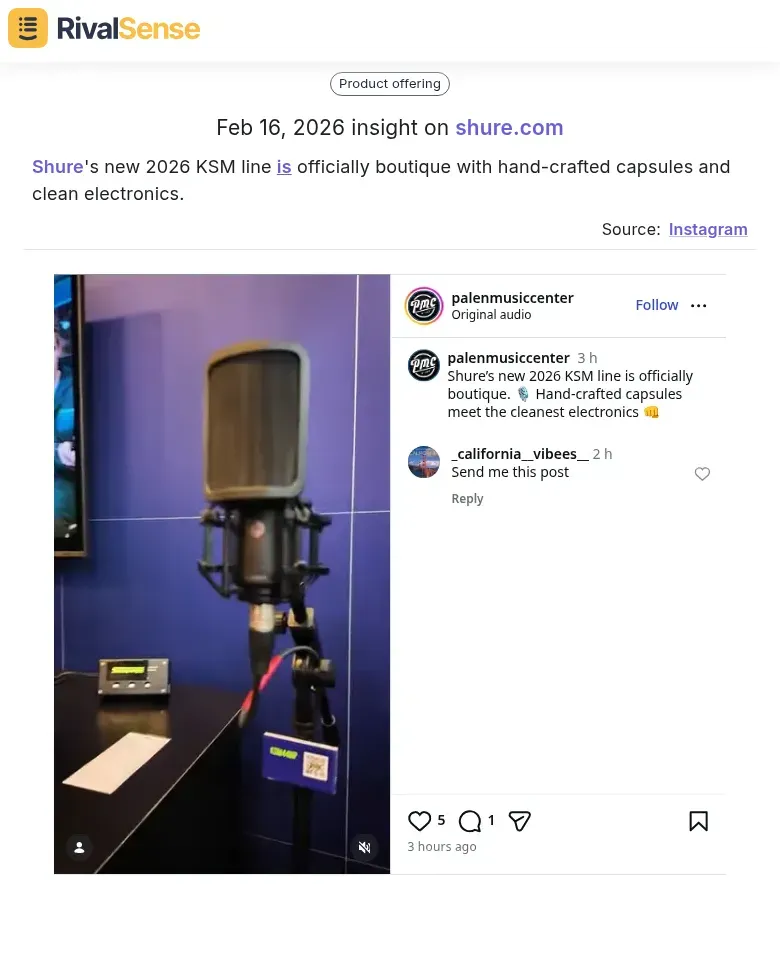
Why it's valuable: Product updates signal innovation and service enhancements. By tracking launches, SEO agencies can identify trends in service offerings, such as new SEO tools or packages, and ensure their services remain competitive. -
Expansion Insight: Sanofi announced plans on Monday to expand its global capability centre in Hyderabad, India, with a multi-hundred-million investment aiming to increase its workforce to over 4,500 employees.

Why it's valuable: Operational expansions indicate growth strategies and market focus. For agencies, tracking competitors' hiring or office expansions can provide insights into their scaling plans and potential new service areas, helping you anticipate competitive moves.
Incorporating such insights into your benchmarking process can provide a broader perspective on competitor behavior and industry trends.
Implementing a Systematic Account Interaction Tracking Framework
A robust tracking framework is the backbone of effective account management. Without it, agencies risk missing critical client signals and falling behind competitors. To implement a systematic account interaction tracking framework, start by selecting centralized tools like CRM platforms (e.g., HubSpot, Salesforce) or specialized competitor tracking software (e.g., RivalSense) that integrate with your existing systems. These tools should offer dashboards for real-time monitoring of client communications, project updates, and feedback across channels like email, calls, and meetings.
Establish standardized protocols by categorizing clients into tiers (e.g., enterprise, mid-market, small business) and defining service-level agreements (SLAs) for tracking frequency. For example, track enterprise accounts weekly with detailed reports, while mid-market accounts might be reviewed bi-weekly. Use checklists to ensure consistency in logging interactions, such as noting key discussion points, action items, and sentiment.
Set up automated alerts for at-risk accounts by configuring triggers based on metrics like declining engagement scores, missed deadlines, or negative feedback. Proactively intervene by scheduling check-ins when alerts fire, offering solutions like additional support or strategy adjustments.
Tips:
- Regularly audit your tracking system for gaps
- Train your team on protocols
- Leverage data analytics to identify trends for growth opportunities
Turning Account Data into Growth Opportunities
Your SEO agency's account interaction data is a goldmine for growth. Leveraging this data can unlock upsell opportunities and strengthen client partnerships. Track key metrics like client engagement frequency, project satisfaction scores, and renewal patterns to identify cross-sell and upsell signals. For example, if a client consistently engages with content marketing reports but hasn't purchased your content creation service, that's a clear cross-sell opportunity.
Practical steps:
- Create a quarterly account health dashboard tracking 5-7 key interaction metrics
- Flag accounts with 90%+ satisfaction scores for referral requests
- Document successful project outcomes immediately for case study development
- Analyze service usage patterns to identify underutilized offerings
Leverage positive relationships systematically: After successful campaign launches, request testimonials within 48 hours while results are fresh. Use referral tracking codes to measure which clients generate the most valuable leads.
Apply insights to refine your offerings: If multiple clients request similar add-ons (like technical SEO audits), consider bundling them into premium packages. Monitor which services deliver the highest ROI for clients to justify pricing adjustments. Remember: The most profitable growth comes from deepening relationships with existing satisfied clients who already trust your expertise.
Action Plan: Building Your Agency's Competitive Edge
Building a competitive edge requires a structured approach. This action plan will guide you through implementing account benchmarking from scratch, ensuring you can track, analyze, and act on key interactions effectively.
Step-by-Step Implementation Roadmap:
- Define Scope & Baselines: Start with 3-5 key accounts. Document current interaction frequency, response times, and satisfaction scores as your baseline.
- Establish Tracking Systems: Implement CRM automation to log all client interactions - emails, calls, meetings, and deliverables. Use tools like HubSpot or Salesforce with custom fields for SEO-specific metrics.
- Create Benchmark Dashboards: Build weekly dashboards comparing account health scores against industry averages and your top-performing accounts.
- Monthly Review Cadence: Schedule dedicated sessions to analyze interaction patterns, identify at-risk accounts, and adjust strategies.
Key Performance Indicators to Track:
| KPI Category | Specific Metrics | Target |
|---|---|---|
| Account Health Score | Retention likelihood, satisfaction surveys, growth potential | Weighted score > 80 |
| Interaction Quality | Response time, meeting attendance rates, proactive communication frequency | Response time <24 hours |
| Business Impact | Upsell success rate, referral generation, contract renewal velocity | Increase quarter-over-quarter |
| Strategic Alignment | Quarterly business review completion, goal achievement tracking | 100% completion |
Continuous Improvement Strategies:
- Quarterly Benchmark Reset: Compare performance against previous quarters and adjust targets based on market changes
- Competitor Interaction Analysis: Monitor how competitors engage with similar clients using social listening tools
- Client Feedback Loops: Implement structured feedback sessions after major deliverables
- Team Training: Regular workshops on communication best practices and account management techniques
Pro Tip: Use the ICE framework (Impact, Confidence, Ease) to prioritize improvement initiatives. Focus first on quick wins like reducing response times and improving meeting preparation, then tackle strategic initiatives like developing personalized account growth plans.
Conclusion: Leverage Competitor Insights for Agency Growth
Systematic account benchmarking and competitor tracking are powerful tools for SEO agency growth. By implementing the strategies outlined, you can improve client retention, identify upsell opportunities, and stay ahead of competitors.
To assist with these challenges, try out RivalSense for free at https://rivalsense.co/. RivalSense tracks competitor product launches, pricing updates, event participations, partnerships, regulatory aspects, management changes, and media mentions across company websites, social media, and various registries, delivering all in a weekly email report. Get your first competitor report today and start gaining actionable insights to drive your agency's success.
📚 Read more
👉 How Tet's HBO Removal Enabled Competitors to Capture Premium Content Market
👉 Twitter Intelligence: Extract Competitor Insights for Key Account Success
👉 Actionable Competitive Intelligence for Gaming: Track Competitor Keywords to Stay Ahead
👉 Step-by-Step Guide: Uncover Competitor Event Strategies for Enterprise Key Accounts
👉 Analyzing Competitor Advertising Launches: Lessons from Uber Advertising's New Format