
Predictive Regulatory Intelligence: Anticipate Competitor Moves for Key Account Wins
Predictive regulatory intelligence transforms compliance from a reactive burden into a proactive competitive weapon. It's the systematic analysis of regulatory trends, policy shifts, and legislative developments to anticipate how competitors will adapt their strategies, products, and market positioning. By understanding regulatory changes before they're finalized, you gain critical foresight into competitor moves—whether they're launching new compliant offerings, adjusting pricing models, or targeting specific customer segments.
This foresight converts regulatory compliance from a cost center to a revenue driver. Instead of scrambling to meet new requirements, you can strategically position your solutions ahead of competitors. For key account wins, this means: 1) Identifying which regulatory changes will impact your target accounts most, 2) Analyzing how competitors' current offerings will need to adapt, 3) Developing compliant solutions before requirements take effect, and 4) Positioning your company as the forward-thinking partner who anticipates client needs.
Practical steps: Start by monitoring regulatory bodies relevant to your industry, track competitor compliance announcements, and analyze how past regulatory changes affected market dynamics. Create a regulatory intelligence dashboard that maps upcoming changes to competitor vulnerabilities and your key account opportunities. This approach doesn't just ensure compliance—it creates competitive moats and positions you as the strategic partner of choice for accounts navigating complex regulatory landscapes.
Learning from Real-World Competitor Regulatory Moves
Understanding competitor regulatory moves provides critical insights into their future strategies. By analyzing real-world examples, you can decode signals that precede market actions. To anticipate competitor moves, analyze their regulatory patterns. Track market expansion through regulatory approvals and licensing agreements.
For instance, consider this recent insight from RivalSense:
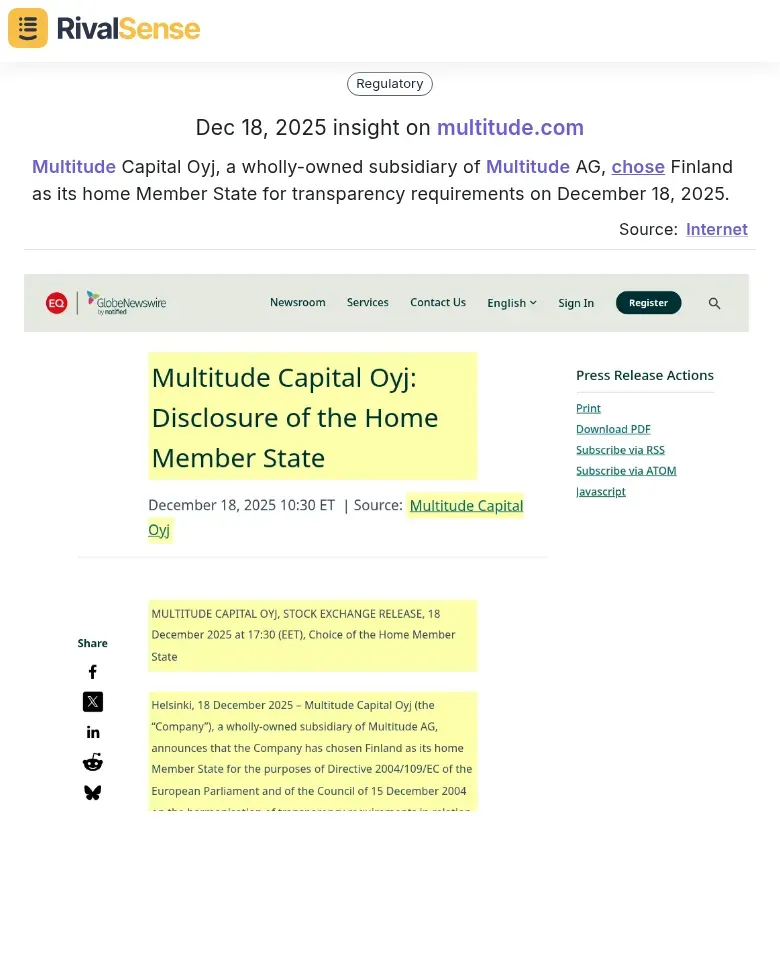
Why this insight matters: When a competitor selects a specific regulatory jurisdiction, it often reveals their strategic priorities for operations and compliance. Tracking such choices can help you anticipate where they might allocate resources or target markets next.
Similarly, when a competitor secures FDA approval for a new drug, they're likely targeting the U.S. market next. Licensing deals with local partners in Asia may signal entry into that region.
Companies strategically choose regulatory jurisdictions for operational advantages. Some opt for lenient EU countries for faster approvals, while others target strict markets like the U.S. for credibility. Monitor where competitors file first—it reveals their prioritization and resource allocation.
Identify early warning signs through regulatory filings and agreements. Watch for patent applications, clinical trial registrations, or partnership announcements. These often precede market entry by 6-12 months. Set up alerts for key competitors in databases like ClinicalTrials.gov or regulatory agency websites.
Practical steps:
- Create a tracker for competitor regulatory activities (approvals, filings, licenses).
- Analyze jurisdiction patterns to predict next markets.
- Monitor licensing deals for partnership clues.
- Use tools like RivalSense to automate alerts for regulatory changes.
- Review quarterly reports for mentions of regulatory strategies.
By decoding these signals, you can proactively adjust your key account strategies and stay ahead.
The Regulatory Intelligence Framework for Anticipating Competitor Actions
A robust regulatory intelligence framework transforms compliance data into competitive foresight. This framework enables you to systematically anticipate competitor actions based on regulatory signals. Start by monitoring regulatory filings and approvals—these often signal expansion plans months before public announcements. For example, a competitor's FDA 510(k) submission for a new medical device indicates imminent market entry. Create a tracking system for key regulatory bodies relevant to your industry.
Next, track licensing agreements and regulatory partnerships. When competitors partner with local regulatory consultants or acquire licenses in new regions, they're telegraphing geographic expansion. Maintain a database of these relationships and analyze patterns—repeated partnerships in specific countries often precede market launches.
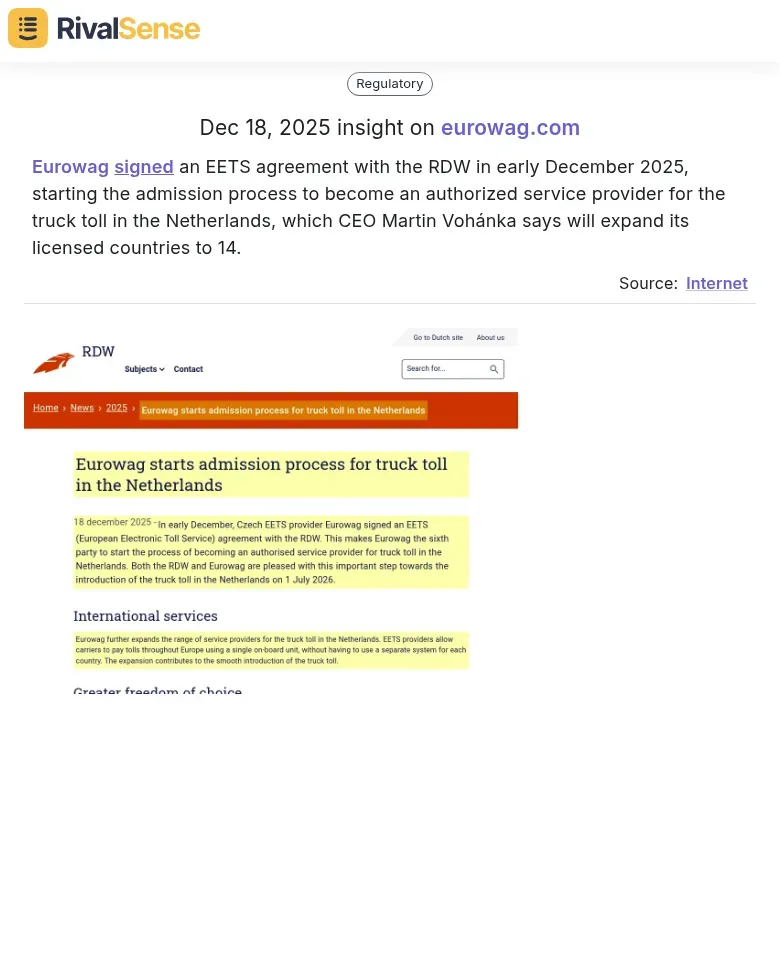
Why this insight matters: Partnerships and regulatory agreements are strong indicators of market expansion. By monitoring such moves, you can predict where competitors are entering new regions or services, allowing you to adjust your strategy accordingly.
Finally, analyze compliance patterns to predict resource allocation. Increased regulatory submissions in therapeutic areas or product categories reveal strategic focus. Monitor warning letters and inspection outcomes—frequent compliance issues in certain areas may indicate where competitors are cutting corners to accelerate development.
Practical steps:
- Set up alerts for competitor filings with major regulatory agencies.
- Create a matrix tracking licensing agreements by region and therapeutic area.
- Analyze submission frequency trends to identify emerging focus areas.
- Monitor regulatory meeting calendars for competitor participation.
- Track compliance violation patterns to anticipate resource constraints.
This framework turns regulatory data into actionable intelligence, helping you anticipate moves and secure key accounts before competitors gain momentum.
Turning Regulatory Insights into Key Account Strategy
Regulatory intelligence transforms from passive monitoring into active competitive advantage when applied to key account strategy. It allows you to identify opportunities where competitors are vulnerable due to regulatory challenges. Here's how to operationalize it:
1. Map Competitor Regulatory Vulnerabilities
- Track pending regulations in your target accounts' industries.
- Identify which competitors lack compliance certifications or have recent violations.
- Use this intelligence to pinpoint accounts where competitors are weakest.
2. Time Your Approach Strategically
- Monitor regulatory deadlines affecting your competitors' offerings.
- Schedule key account meetings 60-90 days before compliance deadlines.
- Position your solution as the "regulatory-safe" alternative when competitors face compliance gaps.
3. Build Regulatory-Based Value Propositions
- Develop compliance readiness assessments for target accounts.
- Create comparison matrices showing your regulatory advantages vs. competitors.
- Offer compliance gap analysis as a free consultation service.
Practical Checklist:
- [ ] Subscribe to regulatory alerts for your top 5 target industries.
- [ ] Map competitors' compliance certifications and expiration dates.
- [ ] Create a regulatory timeline for upcoming industry changes.
- [ ] Develop 3-5 regulatory-focused case studies.
- [ ] Train sales teams on compliance-based objection handling.
Key Insight: The most effective regulatory intelligence isn't just about avoiding risks—it's about identifying when competitors' regulatory challenges create your biggest opportunities. By anticipating compliance pain points before they become crises, you can position your solution as the proactive choice while competitors scramble to catch up.

Why this insight matters: Regulatory fines and legal challenges highlight competitor vulnerabilities. This intelligence can be used to position your offerings as more compliant and reliable, especially when targeting accounts concerned with regulatory risks.
Building Your Predictive Regulatory Intelligence System
Building a predictive regulatory intelligence system requires systematic monitoring, integration, and early warning capabilities. Implementing such a system ensures you have timely data to make informed decisions. Start by establishing automated tracking of competitor regulatory filings across key jurisdictions using tools like RivalSense. Create a centralized dashboard that aggregates FDA submissions, EMA applications, and other regulatory activities from your top 5-10 competitors.
Integrate this regulatory data with market intelligence—combine clinical trial data, patent filings, and pricing approvals to create comprehensive competitor profiles. For example, track how a competitor's Phase III trial completion correlates with their regulatory submission timeline to predict market entry.
Develop early warning systems by setting alerts for specific regulatory triggers: new guidance documents, policy changes, or competitor advisory committee meetings. Create a checklist: 1) Monitor regulatory agency meeting calendars, 2) Track competitor press releases about regulatory interactions, 3) Analyze historical approval patterns by therapeutic area, 4) Set up keyword alerts for your competitors' drug names plus "regulatory submission" or "approval."
Practical tip: Assign team members to specific competitor-regulatory pairings (e.g., one analyst tracks Competitor A's FDA activities, another monitors their EMA submissions) for deeper expertise. Regularly review integrated reports that combine regulatory timelines with market events to anticipate competitive moves 6-12 months in advance.
Case Study Applications and Implementation Roadmap
Applying regulatory intelligence to real-world scenarios maximizes its impact. This roadmap guides you from insight to action for key account wins.
Action Plans from Regulatory Intelligence:
- Create a Competitor Regulatory Dashboard tracking key approval timelines, compliance status, and enforcement actions.
- Set Real-Time Alerts for competitor filings, public hearings, and regulatory milestones.
- Conduct Quarterly Regulatory Audits of competitors' compliance history to predict market movements.
- Develop Scenario-Based Response Plans for regulatory events (investigations, approvals, violations).
Competitive Response Strategies:
- Capitalize on Compliance Failures: When competitors face regulatory scrutiny, position your product as the safer alternative.
- Accelerate Your Own Certifications: When rivals achieve major compliance milestones, speed up your certification process.
- Target Underserved Segments: Use regulatory gaps to identify markets where compliance creates barriers to entry.
- Engage Proactively with Regulators: Participate in consultations to shape favorable regulations.
Measuring ROI on Key Account Performance:
- Track Correlation Metrics: Map regulatory events to sales data (e.g., delayed FDA approval = 15-20% market share loss within 6 months).
- Monitor Account Acquisition Rates: Measure how regulatory intelligence impacts new key account wins in regulated sectors.
- Calculate Compliance Advantage ROI: Compare certification costs against premium pricing and market access benefits.
- Quantify Risk Mitigation: Track avoided penalties and compliance-related disruptions.
Implementation Checklist:
- [ ] Subscribe to automated regulatory alerts for key competitors.
- [ ] Build regulatory intelligence dashboards with compliance status indicators.
- [ ] Train teams on regulatory scenario planning and response protocols.
- [ ] Conduct gap analyses comparing your compliance against competitors' weaknesses.
- [ ] Time market entry based on competitors' regulatory achievements or failures.
- [ ] Use compliance milestones as validation to educate your market about certification importance.
Ready to Anticipate Your Competitors' Moves?
Predictive regulatory intelligence is a game-changer for winning key accounts, but manually tracking all regulatory signals is time-consuming. Tools like RivalSense automate this process by tracking competitor product launches, pricing updates, event participations, partnerships, regulatory aspects, management changes, and media mentions across company websites, social media, and various registries. All delivered in a weekly email report.
Try RivalSense for free at https://rivalsense.co/ to start anticipating competitor moves and gain a strategic edge. Get your first competitor report today!
📚 Read more
👉 Turning Competitor Moves into Business Opportunities: A Guide to Management Change Analysis
👉 Key Account Management Webinar: Transforming Strategy with Competitive Intelligence
👉 Optimizing Telecom Infrastructure Key Account Task Tracking: A Strategic Process Guide
👉 How Nextiva's EHR Integration Strategy Enabled Competitors to Counterattack
👉 Internet Intelligence Workflow: Uncovering Why Competitors Succeed