
Mastering Key Account Management in Quantitative Trading: Strategies and Insights
Quantitative trading firms face unique key account management challenges that traditional financial institutions rarely encounter. Unlike conventional asset managers, quant firms rely on complex algorithmic models where a single institutional client can represent 20-30% of total AUM, making client retention mission-critical. These high-value accounts demand specialized attention: they require transparent model governance, real-time performance analytics, and customized risk reporting that goes beyond standard portfolio statements.
Practical Tip: Implement a three-tier client communication framework:
- 📊 Monthly detailed model performance reports with attribution analysis
- 🔍 Quarterly governance reviews explaining any algorithm adjustments
- ⚡ Real-time alerts for significant market events affecting their positions
Regulatory scrutiny amplifies these challenges—as seen in Two Sigma's $90M SEC settlement over unauthorized model changes. A 2024 Bloomberg survey found 72% of institutional investors now prioritize firms with transparent model governance. Market volatility further complicates KAM, requiring proactive communication during drawdowns to prevent panic redemptions. Successful quant firms maintain dedicated relationship managers who understand both the technical aspects of their models and the compliance requirements of institutional clients.
Risk Management and Regulatory Compliance: Learning from Industry Challenges
Effective risk management and regulatory compliance are critical for quantitative trading firms managing key accounts. Regulatory landscapes are constantly evolving, and staying ahead requires proactive monitoring of industry developments.
For instance, tracking legal challenges faced by competitors can provide early warnings and strategic insights. Consider the case of Jane Street, which faces a lawsuit alleging insider trading that sped up Terraform Labs' 2022 collapse, though it denies the claims as baseless.
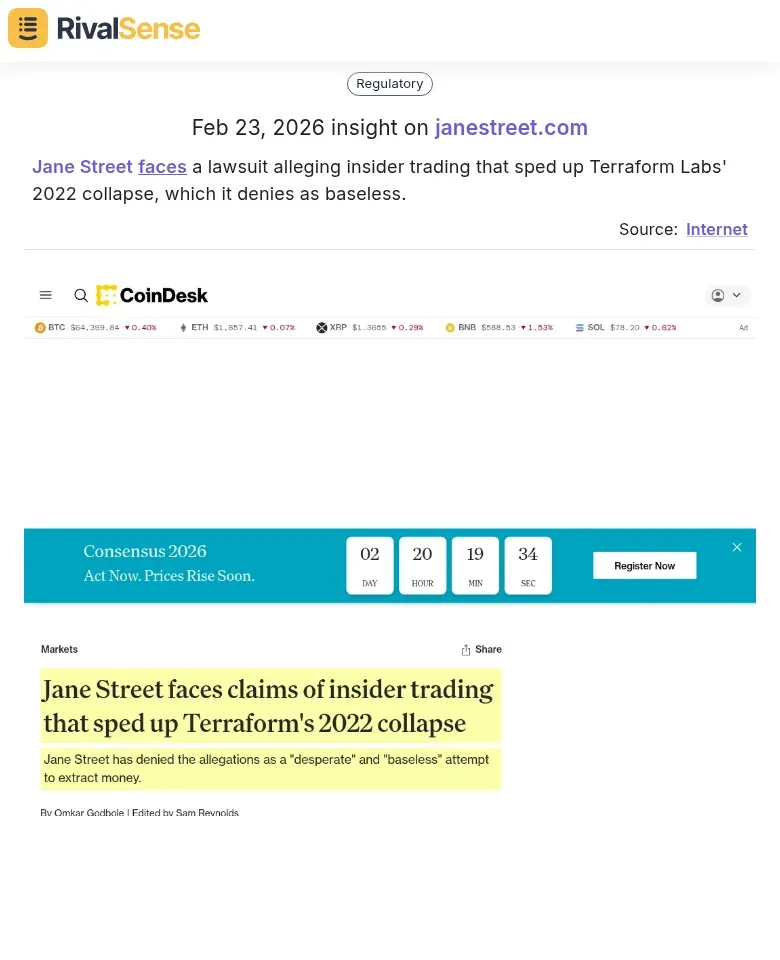
Why this insight matters: Monitoring lawsuits and regulatory actions against competitors helps in assessing industry risks, understanding regulatory focus areas, and adjusting compliance strategies accordingly.
Implement a three-tiered compliance framework:
- Pre-trade controls with automated order validation (size limits, price collars, position caps)
- Real-time monitoring for spoofing patterns and order-to-trade ratios
- Post-trade surveillance with comprehensive audit trails
Establish transparent communication protocols by providing clients with quarterly compliance reports detailing strategy risks, capacity constraints, and model limitations. Use automated alerts for any deviations from agreed parameters. Create clear separation between proprietary and client activities through physical information barriers, separate trading desks, and independent risk management systems.
Practical checklist: ✅
- Implement kill switches for all algorithms
- Maintain MiFID II-compliant record-keeping (5-year retention)
- Conduct quarterly compliance training
- Establish a three-lines-of-defense model with independent oversight
- Monitor for conflicts of interest through automated surveillance of order routing and execution quality across different account types
Talent Retention and Strategic Mobility: Navigating Human Capital Challenges
In quantitative trading, retaining top talent while managing inevitable transitions requires strategic human capital management. Creating robust systems to track personnel movements can offer competitive intelligence and inform retention strategies.
Take the example of Camden Hulse, previously an AMP Scholar at Jane Street in the United States, who has left to become Chief Operating Officer at Axient Labs.
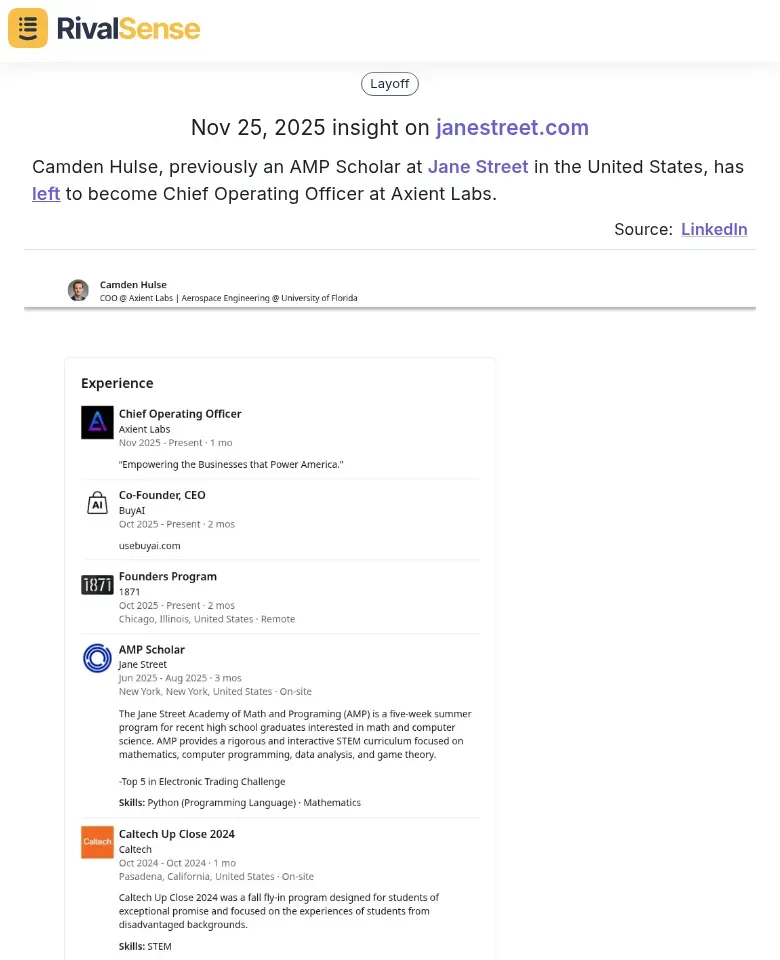
Why this insight matters: Tracking key personnel changes at rival firms can reveal talent trends, identify potential recruitment opportunities, and help in benchmarking compensation and career paths to retain your own stars.
Create clear career development pathways with quarterly progress reviews and structured promotion tracks that offer both technical leadership and portfolio management opportunities. This reduces churn by providing growth without requiring external moves.
Build robust knowledge transfer systems using:
- Documentation protocols for all proprietary algorithms
- Cross-training programs where senior quants mentor junior staff on specific strategies
- Regular knowledge-sharing sessions that capture institutional wisdom without exposing core IP
These systems minimize disruption when key personnel move between firms.
Develop non-compete and IP protection strategies that balance protection with fairness:
- Tailor non-compete durations to role sensitivity (6-12 months for junior roles, 12-24 months for senior positions)
- Include garden leave provisions with fair compensation
- Implement clear IP assignment agreements that define what constitutes proprietary work
- Use tiered non-compete clauses that restrict specific competitors rather than entire industries
Practical tip: Review non-compete enforceability in your jurisdiction and consider alternative protections like trade secret agreements that may be more legally defensible.
Strategic Partnerships and Institutional Investment: Expanding Client Relationships
Strategic partnerships and institutional investment represent the pinnacle of key account management in quantitative trading. Keeping an eye on competitors' investment activities can uncover market trends and partnership opportunities.
A relevant example is Jane Street's participation as an institutional investor in Kraken's $800 million funding round to advance its strategy of bringing traditional financial products on-chain.
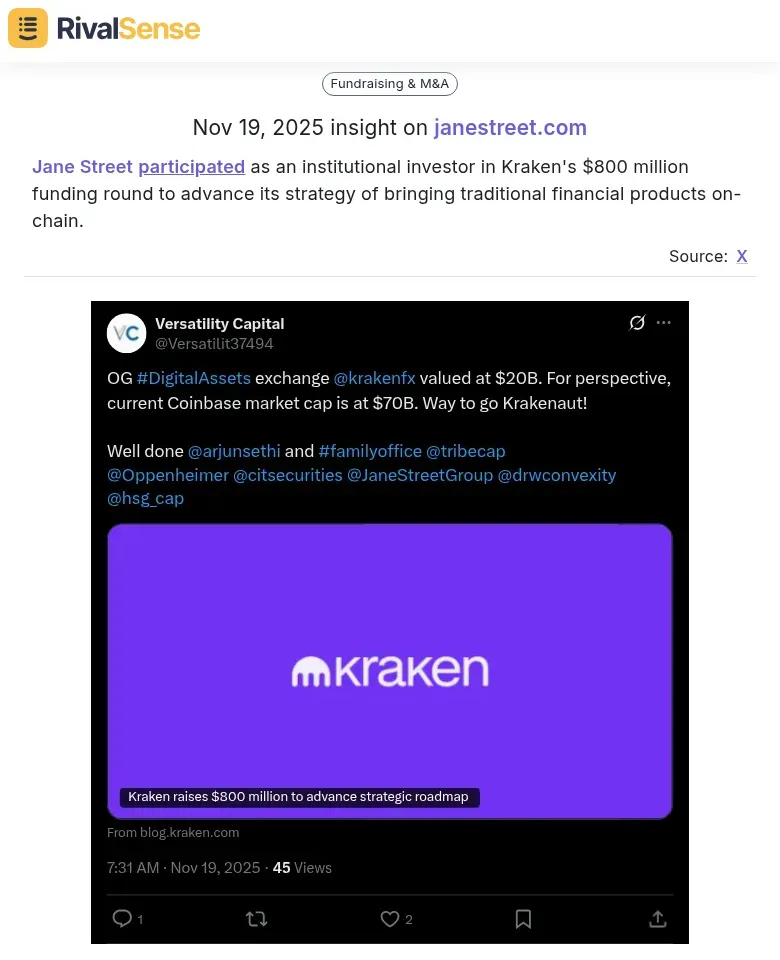
Why this insight matters: Insights into competitors' investments and partnerships help in understanding their strategic direction, identifying emerging market segments, and evaluating potential collaboration or competition areas.
To identify strategic investment opportunities, conduct a systematic alignment analysis: map client investment mandates against your firm's core capabilities, focusing on complementary strengths like your proprietary algorithms paired with their market access. Use a 3-step framework:
- Assess strategic fit (shared objectives, risk tolerance alignment)
- Evaluate resource complementarity (technology, data, expertise)
- Quantify mutual value potential (fee structures, capacity benefits)
Developing co-investment frameworks requires structured approaches. Implement tiered participation models:
- Direct co-investment (client invests alongside your fund)
- Sidecar vehicles (dedicated structures for specific strategies)
- Strategic capital allocations (long-term commitments with preferential terms)
Key checklist items: ✅
- Define clear governance structures
- Establish transparent fee arrangements
- Implement robust reporting protocols
- Create exit mechanisms with predefined triggers
Leveraging partnerships for market expansion demands careful risk management. Practical steps: conduct joint due diligence on new markets, establish phased entry plans with clear milestones, implement technology integration protocols, and create risk-sharing mechanisms. Essential risk controls: counterparty risk assessments, regulatory compliance frameworks, operational resilience testing, and scenario analysis for partnership dissolution. Always maintain a balanced portfolio of partnerships to avoid over-reliance on any single relationship while maximizing diversification benefits across markets and technologies.
Technology and Data Governance: Building Trust Through Transparency
Technology and data governance form the foundation of client trust in quantitative trading. Implementing transparent systems and protocols is essential to maintain credibility and compliance.
To build confidence, implement transparent data handling protocols with clear documentation of data sources, processing methods, and storage practices. Create algorithmic trading protocols that include version control, change logs, and audit trails for every trade decision.
Develop client-facing dashboards that provide real-time visibility into executed trades, active positions, and performance metrics. Include compliance indicators showing adherence to regulatory requirements like FIFO rules and risk limits.
Practical tip: Use multi-layered risk controls displayed on dashboards—system-wide drawdown caps (e.g., 30% overall), subsystem thresholds, and position-specific stop-loss rules.
Establish clear protocols for algorithmic changes:
- Require pre-approval for model updates affecting client accounts
- Maintain detailed change logs with timestamps and responsible personnel
- Conduct sandbox testing before deployment
- Provide advance notification to clients of significant changes
- Offer rollback procedures for problematic updates
Checklist: ✅
- Document every algorithm modification
- Test under various market conditions
- Verify compliance with regional regulations
- Maintain communication channels for client feedback
Proactive Solutions and Best Practices for Quant Trading KAM Success
Quantitative trading firms face unique KAM challenges requiring proactive solutions. Implementing structured frameworks and regular reviews can significantly enhance client retention and satisfaction.
Implement quarterly client relationship reviews with structured risk assessment protocols. For each institutional client, create a risk matrix evaluating market exposure, operational dependencies, and strategic alignment. Use a 1-5 scoring system to prioritize attention.
Develop customized communication strategies based on client archetypes:
| Client Type | Focus Areas |
|---|---|
| Hedge funds | Alpha generation metrics, risk-adjusted returns |
| Asset managers | Compliance, reporting transparency, scalability |
| Pension funds | Long-term stability, governance frameworks, ESG integration |
Create scalable KAM frameworks using tiered service models:
- Platinum tier (top 20% revenue): Dedicated relationship managers with weekly check-ins
- Gold tier (next 30%): Semi-dedicated managers with bi-weekly touchpoints
- Silver tier (remaining 50%): Automated monitoring with monthly strategic reviews
Practical checklist: ✅
- Map all client decision-makers and influencers quarterly
- Document all client-specific requirements and exceptions
- Establish clear escalation protocols for risk events
- Implement CRM automation for routine communications
- Conduct annual client satisfaction surveys with quant-specific metrics
Balance personalization with efficiency by creating client archetype playbooks while maintaining flexibility for unique requirements. Use data analytics to identify early warning signs of relationship deterioration before revenue impacts occur.
Leverage Competitive Intelligence for Strategic Advantage
As highlighted throughout this post, staying informed about competitors' legal challenges, talent movements, and investment activities is crucial for refining your key account management strategy. These insights enable proactive risk management, talent retention, and strategic partnership development.
To systematically track such competitor intelligence, consider using tools like RivalSense. It monitors competitor product launches, pricing updates, event participations, partnerships, regulatory aspects, management changes, and media mentions across various sources, delivering consolidated weekly reports.
Ready to enhance your competitive edge? Try RivalSense for free and get your first competitor report today to tackle the challenges outlined in this post!
📚 Read more
👉 How Competitor Hiring and Layoff Insights Solve Key Account Management Challenges
👉 Turning Event Insights into Competitive Advantage: A Proxima Fusion Case Study
👉 How to Conduct Competitor Research in 2026: A Step-by-Step Guide with Practical Checklists
👉 How a RivalSense Alert on Jane Street's Lawsuit Delivered Competitive Edge