
Mastering Facebook Competitor Analysis: A Strategic Guide for B2B Leaders
In today's hyper-competitive digital landscape, systematic Facebook competitor analysis is no longer optional—it's a strategic imperative for market intelligence. By methodically evaluating competitors' Facebook presence, you gain critical insights into audience engagement, content strategies, and market positioning that drive informed decision-making.
Facebook serves as the primary platform for competitive benchmarking because it offers unparalleled visibility into real-time competitor activities. From ad campaigns and audience interactions to content performance metrics, Facebook provides a comprehensive window into what works (and what doesn't) in your industry.
Practical steps to begin:
- Identify 3-5 key competitors and create a tracking spreadsheet
- Monitor their posting frequency, content types, and engagement patterns
- Analyze their ad strategies through Facebook's Ad Library
- Track audience growth and demographic shifts over time
These insights transform into actionable business strategies by revealing content gaps to exploit, identifying underserved audience segments, and uncovering emerging market trends before they become mainstream. The most successful companies use competitor intelligence to refine their messaging, optimize ad spend, and develop differentiated positioning that resonates with target audiences.
Remember: The goal isn't imitation, but strategic differentiation based on market intelligence. Regular competitor tracking on Facebook provides the data-driven foundation for sustainable competitive advantage.
Core Framework: Key Metrics and Analysis Dimensions
To conduct a comprehensive Facebook competitor analysis, focus on three core dimensions with actionable metrics. A systematic approach ensures you capture both quantitative and qualitative insights for strategic decision-making.
Audience Analysis: Track follower growth rates (weekly/monthly) and demographic shifts using Facebook Insights. Compare engagement quality by analyzing comments-to-likes ratios and follower activity patterns. Tip: Monitor when competitors gain/lose followers to identify successful campaigns or controversies.
Content Performance: Evaluate format effectiveness by comparing video vs. image engagement rates. Analyze optimal posting frequency by tracking when competitors post and receive peak engagement. For example, insights from RivalSense like Tet TV+'s release of a true crime series highlight how content timing and genre can drive audience engagement. Tracking such releases helps you anticipate content trends and adjust your calendar accordingly.

Checklist: Document top-performing content themes, hashtag strategies, and call-to-action effectiveness.
Brand Perception: Conduct sentiment analysis on comments and shares using social listening tools. Measure share of voice by tracking mentions across Facebook groups and pages. Practical step: Benchmark customer service response times and resolution quality by monitoring how competitors handle complaints.
Key action: Create a competitor scorecard tracking these metrics monthly to identify trends and opportunities for differentiation.
Strategic Insights from Competitor Announcements and Partnerships
Competitor announcements reveal strategic intent. Tracking these announcements provides early warnings of market shifts and competitor moves. For instance, event participations can indicate market expansion plans, while partnerships expose go-to-market strategies.
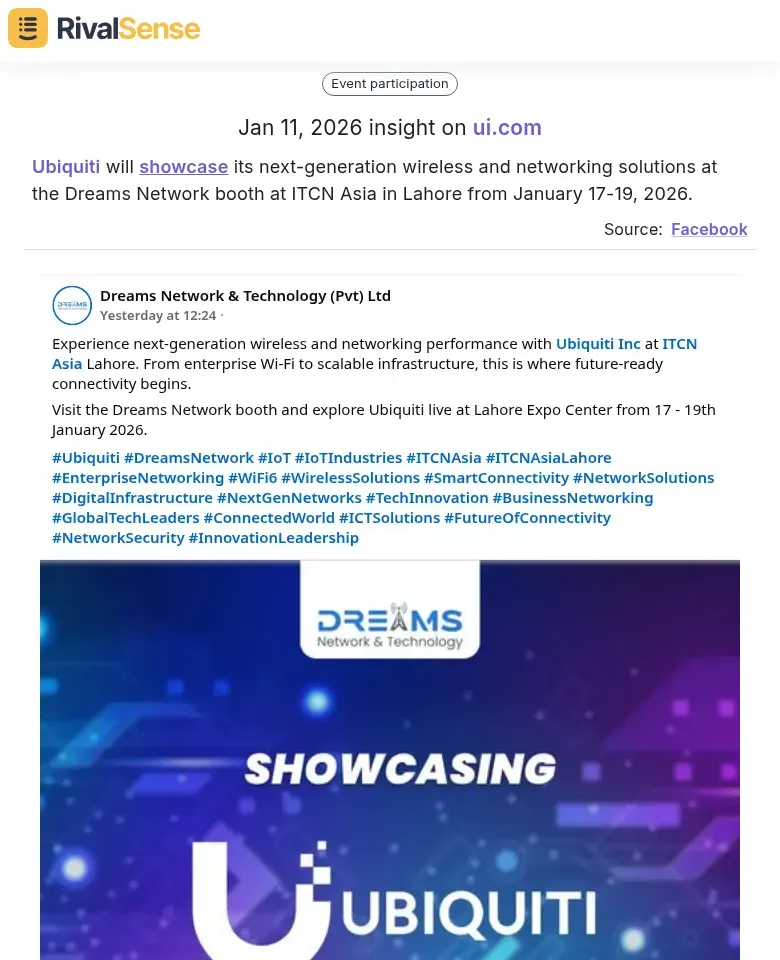
Event Participation Insights: Consider Ubiquiti's showcase at ITCN Asia. This insight from RivalSense shows how tracking event participations can help you anticipate competitor product launches and regional market entries. By knowing when and where competitors are active, you can plan your own marketing campaigns or product releases to counter their moves.
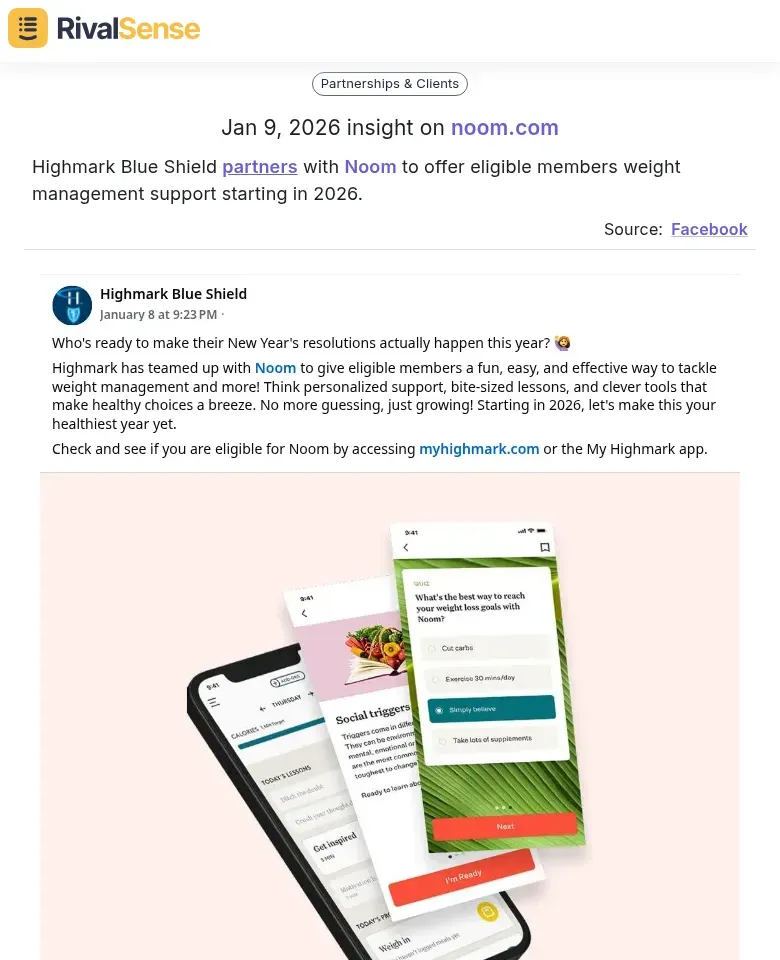
Partnership Announcements: Partnerships like Highmark Blue Shield's collaboration with Noom demonstrate how competitors expand their offerings through strategic alliances. Monitoring such partnerships reveals go-to-market strategies and target audience segments. For B2B companies, similar insights can uncover integration opportunities or competitive threats.
Content release patterns uncover audience engagement tactics. Analyze frequency, format (whitepapers vs. webinars), and topic clusters. Competitors releasing weekly case studies may be focusing on social proof, while monthly deep-dive reports suggest thought leadership positioning.
Practical checklist:
- Create a competitor announcement calendar tracking product launches, partnerships, and content releases
- Categorize announcements by strategic intent (market entry, feature parity, expansion)
- Note timing relative to industry events and competitor moves
- Analyze partnership depth - strategic alliances vs. superficial integrations
- Track content engagement metrics (shares, comments) to gauge audience resonance
- Identify patterns in announcement cadence - are they aggressive or conservative?
Tip: Use announcement analysis to anticipate competitor resource allocation. Heavy partnership activity often precedes market expansion, while frequent product updates may indicate defensive positioning against new entrants.
Methodology: Conducting Effective Facebook Competitor Research
Effective Facebook competitor research requires a structured methodology. Without a clear process, data collection can be chaotic and insights superficial. Start by identifying three competitor categories: direct (similar products/services), indirect (different solutions for same needs), and aspirational (market leaders). Create a spreadsheet tracking 5-10 key competitors across these categories.
For data collection, combine manual observation with automated tools. Manually review competitors' Facebook pages weekly for content strategy, engagement patterns, and ad creative. Use automated tools like RivalSense to track metrics changes, ad frequency, and audience growth trends over time.
Apply both qualitative and quantitative analysis. Quantitatively, measure engagement rates, follower growth, post frequency, and ad spend indicators. Qualitatively, analyze content themes, brand voice, customer interactions, and value propositions. Create a competitive matrix comparing your performance against each competitor across key metrics.
Practical checklist:
- Identify 3-5 direct, 2-3 indirect, and 1-2 aspirational competitors
- Set up automated tracking for key metrics
- Schedule weekly manual reviews
- Document content themes and engagement patterns
- Compare performance monthly using standardized metrics
- Identify gaps and opportunities in your strategy
Tip: Focus on understanding why certain content performs well rather than just what performs well. Look for patterns in timing, content format, and messaging that drive engagement.
Actionable Applications: Turning Insights into Competitive Advantage
Transform Facebook competitor analysis into tangible business advantages with these actionable applications. The real value lies in applying insights to drive decisions and outperform competitors.
1. Identify Content Gaps & Differentiation Opportunities
Analyze competitors' top-performing posts, engagement patterns, and audience sentiment. Look for underserved topics, formats (e.g., Reels vs. Carousels), or audience segments. Create a checklist: Track content themes, posting frequency, engagement rates, and comment sentiment. Example: If competitors focus on product features, differentiate with educational content or customer success stories.
2. Benchmark Performance for Realistic & Ambitious KPIs
Establish baseline metrics from competitors' Facebook pages: follower growth rate, engagement rate (likes, comments, shares), and reach. Use these benchmarks to set realistic targets and stretch goals. Tip: Segment benchmarks by competitor size (direct vs. aspirational) and industry averages.
3. Develop Strategic Responses Based on Competitor Analysis
Map competitor strengths (e.g., high video engagement) and weaknesses (e.g., poor customer response times). Create response strategies: Counter strengths by innovating in those areas (e.g., enhance your video content), and exploit weaknesses by filling gaps (e.g., offer superior customer engagement). Practical step: Conduct a SWOT analysis quarterly to adapt strategies.
Implement these insights through a structured plan: audit monthly, adjust content calendars, and measure impact against benchmarks to sustain competitive advantage.
Tools and Implementation: Building a Sustainable Analysis System
Building a sustainable competitor analysis system requires strategic tool selection and structured implementation. Consistency in tracking and analysis ensures you stay ahead of market changes. For Facebook analysis, start by matching tools to your business scale: small teams can use social listening tools, while enterprise organizations need comprehensive platforms like RivalSense that track Facebook's algorithm changes, ad strategies, and content performance across multiple competitors.
Create a structured reporting framework with these components:
- Weekly dashboard: Track key metrics (engagement rates, follower growth, content frequency)
- Monthly deep-dive: Analyze competitor campaign strategies and ad spend patterns
- Quarterly strategic review: Identify market positioning shifts and emerging threats
Practical implementation checklist:
- Set up automated alerts for competitor announcements and major content launches
- Create standardized templates for competitor profile documentation
- Establish clear ownership: assign team members to monitor specific competitor categories
- Schedule regular review meetings to discuss insights and adjust strategies
Integrate findings into business planning by:
- Using competitor content gaps to inform your content calendar
- Benchmarking your Facebook ad performance against industry leaders
- Identifying competitor weaknesses to position your unique value proposition
- Adjusting posting schedules based on when competitors achieve peak engagement
Pro tip: Don't just track what competitors are doing—analyze why certain strategies work for them and how you can adapt those insights to your brand's context while maintaining differentiation.
Conclusion: Leverage Competitor Insights for Growth
To sustain competitive advantage, regularly integrate Facebook competitor analysis into your strategy. For comprehensive tracking that includes product launches, pricing updates, event participations, partnerships, and more across company websites, social media, and registries, consider automated tools like RivalSense. It delivers all insights in a weekly email report, saving you time and providing actionable intelligence.
Ready to gain actionable insights? Try RivalSense for free at https://rivalsense.co/ and get your first competitor report today.
📚 Read more
👉 2026 Sports Retail Trends: Automating Key Account Intelligence for Competitive Edge
👉 Regulatory Intelligence Workflow: Uncover Competitor Technology Stack Advantages
👉 Competitor Analysis in Action: Decoding WeightWatchers' Strategic Event
👉 The Strategic Benefits of Tracking Industry Leaders: Your 2026 Guide to Competitive Advantage
👉 2026 Warehousing Financial Trends: Competitor Analysis for Distribution Leaders