
LinkedIn Competitor Insights Case Study: A Practical Key Account Tracking Workflow
LinkedIn has transformed from a professional networking platform into a real-time competitive intelligence hub where strategic insights flow daily. For B2B leaders tracking key accounts, LinkedIn now offers unparalleled visibility into competitor movements, organizational changes, and strategic shifts happening in real-time.
This evolution directly connects to proactive key account management: by monitoring competitor LinkedIn activity, you can anticipate account vulnerabilities, identify decision-maker changes, and spot emerging threats before they impact your pipeline. The platform reveals who competitors are hiring, what content they're sharing, which accounts they're celebrating wins with, and how their leadership teams are evolving.
In this case study, we'll demonstrate how to transform LinkedIn's raw data into actionable competitive advantage through a systematic tracking workflow. You'll learn practical steps including:
- Setting up competitor company page monitoring
- Tracking key decision-maker movements and role changes
- Analyzing competitor content strategy and engagement patterns
- Identifying new hires and organizational expansions
- Creating alerts for competitor announcements and account wins
By implementing this structured approach, you'll move from reactive account management to proactive competitive positioning, turning LinkedIn insights into tangible business outcomes.
Tracking Executive Movements: Anticipating Competitor Strategy Shifts
Executive movements are strategic chess moves that reveal competitor priorities before they're publicly announced. These changes often provide early warnings about market entries, product developments, or organizational restructuring that can impact your key accounts. For instance, tracking such movements can help you anticipate where competitors are investing resources.
Let's look at a real-world example from RivalSense:
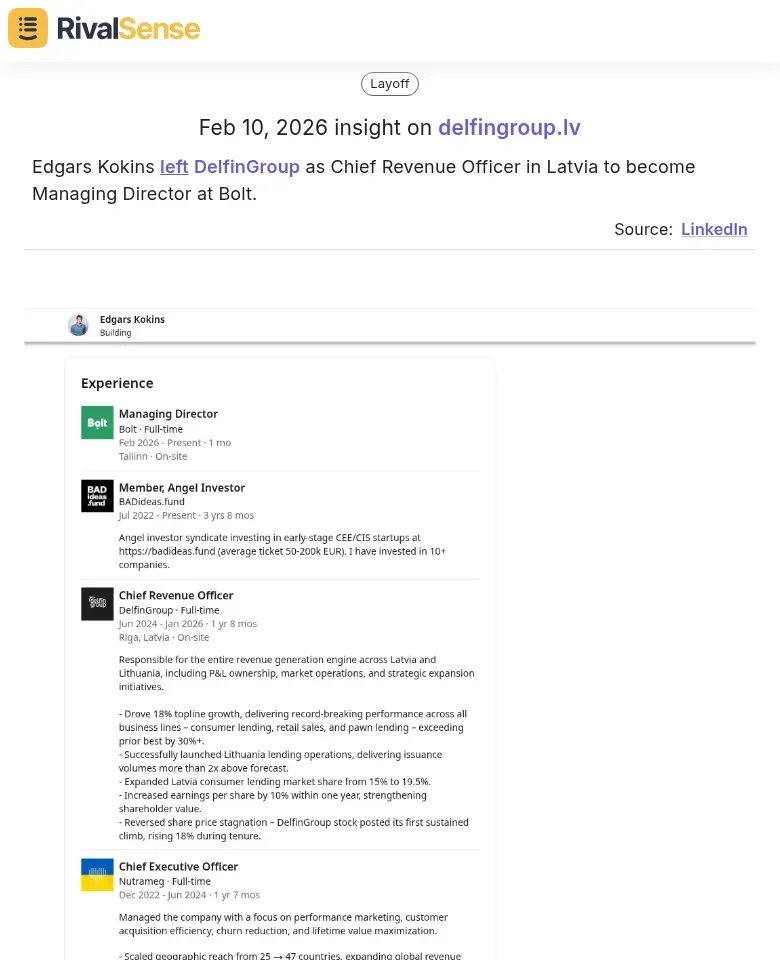
Edgars Kokins left DelfinGroup as Chief Revenue Officer in Latvia to become Managing Director at Bolt. This type of insight is valuable for business strategy because it reveals talent flow between industries—from financial services to mobility—signaling Bolt's potential expansion or strengthening in certain markets. By monitoring these changes, you can adjust your own strategy to counter new competitive threats or exploit gaps.
Track these patterns systematically:
- Monitor LinkedIn for C-suite, VP, and director-level changes at target competitors
- Analyze where talent is coming from (which industries/companies) and going to
- Look for clusters of hires in specific functions (e.g., 3 new AI engineers)
Practical workflow: Set up alerts for key personnel at your top 5 competitors. When a strategic hire occurs, immediately review their background and previous company's focus areas. This gives you 3-6 month lead time before new initiatives launch.
For key account engagement: If a competitor hires an executive with healthcare experience, proactively reach out to your healthcare clients with tailored messaging about your healthcare-specific capabilities before the competitor can position themselves. Talent flow patterns between competitors often reveal emerging industry trends before market reports do.
Monitoring Industry Thought Leadership and Strategic Positioning
Executive interviews and thought leadership content provide invaluable windows into competitor strategy. When tracking key accounts, monitor C-suite interviews for subtle shifts in language about market priorities, technology investments, or partnership strategies. This content often hints at future directions and regulatory adaptations that could impact your business.
For example, if a competitor's CEO suddenly emphasizes "sustainability partnerships" in multiple interviews, this signals a strategic pivot you should anticipate. Here's an insight from RivalSense that illustrates this:
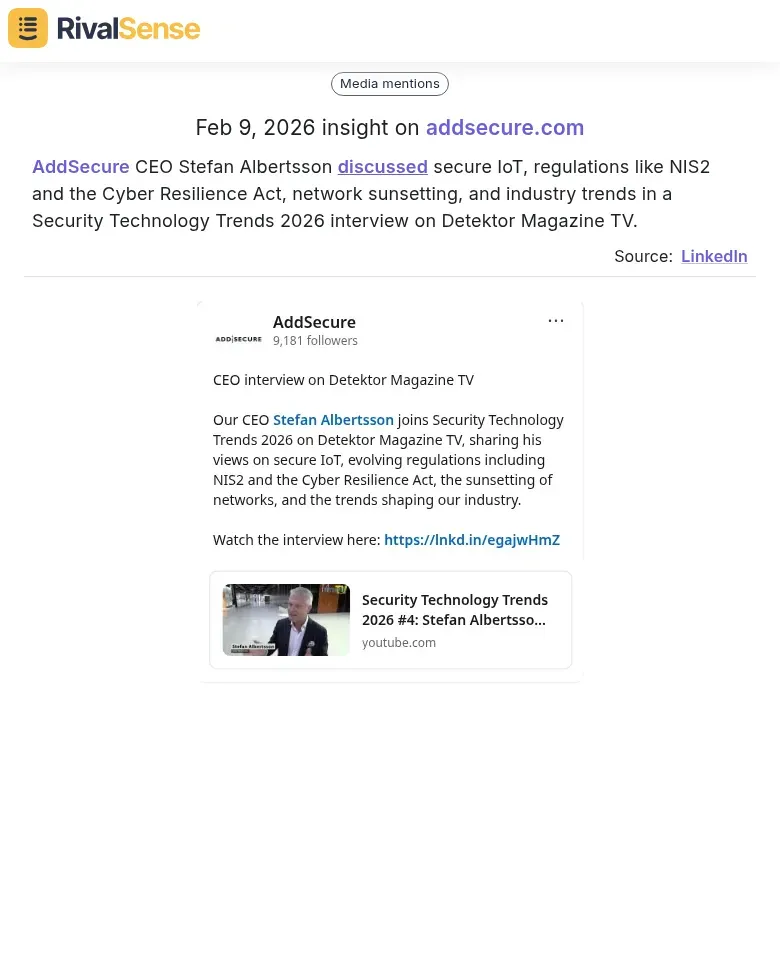
AddSecure CEO Stefan Albertsson discussed secure IoT, regulations like NIS2 and the Cyber Resilience Act, network sunsetting, and industry trends in a Security Technology Trends 2026 interview on Detektor Magazine TV. This type of insight is valuable for business strategy because it reveals how competitors are positioning around upcoming regulatory changes and industry trends, allowing you to align your own messaging and compliance strategies proactively.
Practical steps:
- Create alerts for competitor executives' LinkedIn posts and media interviews
- Track regulatory discussion patterns - are competitors positioning around upcoming compliance changes?
- Analyze content themes quarterly: What problems are they solving? What value propositions dominate?
- Note language evolution: Are they moving from "cost savings" to "revenue acceleration" messaging?
Key insight: Thought leadership reveals not just current positioning but future strategic directions. When competitors consistently discuss specific industry trends (like AI governance or supply chain resilience), they're likely building capabilities in those areas. Monitor the gap between their public messaging and actual product releases to anticipate their next moves.
Checklist:
- ✅ Quarterly content theme analysis
- ✅ Executive interview tracking system
- ✅ Regulatory discussion monitoring
- ✅ Value proposition evolution mapping
- ✅ Competitive messaging gap analysis
Building a Systematic LinkedIn Monitoring Framework for Key Accounts
Building a systematic LinkedIn monitoring framework for key accounts requires a structured approach that transforms raw data into actionable intelligence. Start by establishing automated tracking systems that monitor competitor company pages and key personnel using tools like RivalSense or specialized LinkedIn monitoring platforms. This automation saves time and ensures you don't miss critical changes.
For instance, automated tools can capture executive movements across regions, as shown in this RivalSense insight:
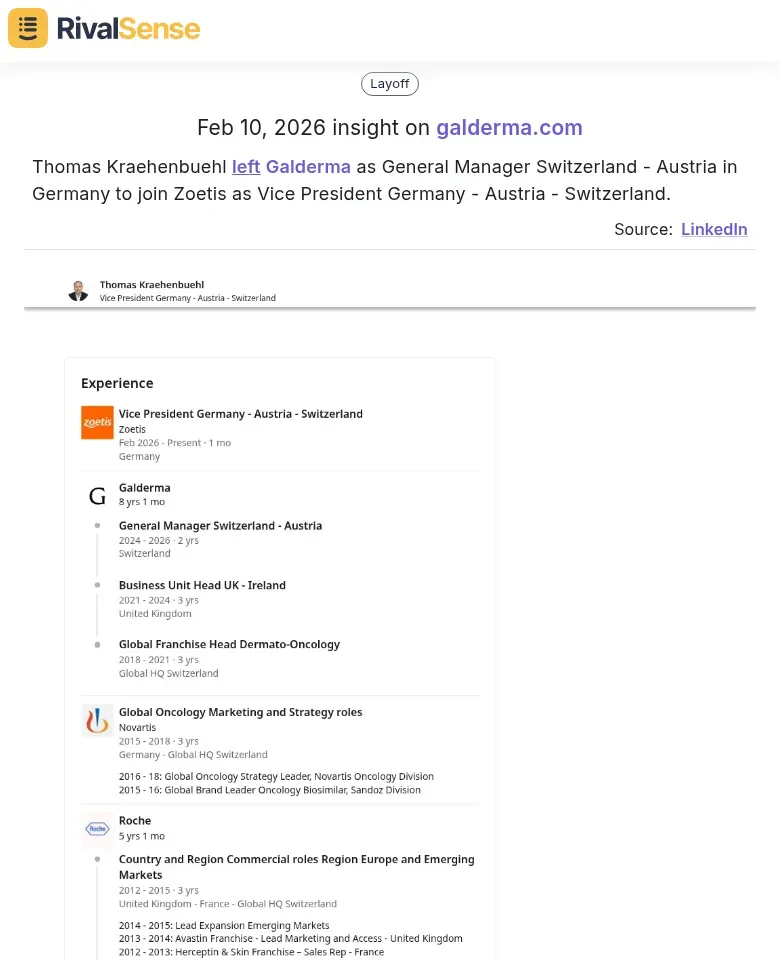
Thomas Kraehenbuehl left Galderma as General Manager Switzerland - Austria in Germany to join Zoetis as Vice President Germany - Austria - Switzerland. This type of insight is valuable for business strategy because it highlights cross-industry talent movements and regional leadership changes, which can indicate market expansions or strategic realignments. Automated tracking helps you stay updated on such changes without manual effort.
Create a competitor matrix identifying 3-5 critical accounts to track, focusing on those with similar offerings or gaining market share.
Practical Checklist:
- ✅ Set up automated alerts for competitor content, engagement metrics, and personnel changes
- ✅ Track key executives' activity patterns and content themes
- ✅ Monitor competitor follower growth and engagement trends
- ✅ Document competitor content strategy patterns and posting frequency
Integrate LinkedIn insights with CRM data and other intelligence sources for holistic analysis. Connect your monitoring platform to Salesforce or HubSpot to enrich account profiles with competitive context. This integration reveals when competitors engage with your key accounts, helping sales teams tailor their approach.
Integration Steps:
- Map LinkedIn monitoring data to CRM account records
- Create automated workflows that trigger alerts when competitors interact with key accounts
- Combine LinkedIn insights with financial data, news monitoring, and market research
- Establish weekly review meetings to discuss integrated intelligence
Develop actionable dashboards that visualize competitor strengths and key account opportunities. Create visualizations showing competitor engagement rates, content performance, and personnel movements. Design dashboards that highlight competitive gaps your team can exploit, such as underserved topics or weak engagement areas.
Dashboard Elements:
- Competitor content performance heatmaps
- Key personnel movement timelines
- Engagement trend comparisons across accounts
- Opportunity identification matrices
- Alert prioritization systems for urgent developments
Pro Tip: Start with a pilot program tracking one key competitor before scaling to your full account list. This allows you to refine your monitoring framework and integration processes before expanding to multiple accounts.
Practical Implementation: The 5-Step Key Account Tracking Workflow
Implementing a structured workflow is crucial for turning insights into action. By following a step-by-step process, you can ensure consistency and effectiveness in your key account tracking efforts. Here's a practical 5-step workflow to get started.
Step 1: Automated Alert Setup
Configure real-time alerts in RivalSense for competitor job postings and content strategy shifts. Set filters for roles like "Head of Sales" or "Product Manager" to detect expansion plans. Monitor content frequency, topics, and engagement spikes—if a rival suddenly posts daily about "AI solutions," it signals a strategic pivot. Tip: Use keyword alerts for new product launches or partnership announcements.
Step 2: Connection Mapping & Outreach
Map competitor connections to your key accounts using LinkedIn Sales Navigator data. Identify shared contacts and decision-makers at target companies. Develop targeted outreach by referencing competitor weaknesses—e.g., if a rival lacks customer support, highlight your 24/7 service. Checklist: Export connection lists, prioritize high-value accounts, and craft personalized messages.
Step 3: Data-Driven Playbooks
Create playbooks with counter-strategies for identified weaknesses. For example, if a competitor's content shows low engagement, launch a competing campaign with interactive formats. Use data on their pricing gaps to adjust your offers. Practical advice: Update playbooks quarterly based on alert trends and connection insights.
Conclusion: Turning LinkedIn Insights into Sustainable Competitive Advantage
To transform LinkedIn insights into sustainable competitive advantage, implement these practical steps:
-
Establish Ongoing Monitoring Cadences: Designate competitive intelligence champions within sales and marketing teams. Set up weekly automated alerts for competitor job postings, content strategy shifts, and leadership changes. Create a monthly review rhythm to analyze engagement patterns and identify emerging threats.
-
Measure Competitive Intelligence ROI: Track specific metrics including account retention rates, competitive displacement wins (accounts won from competitors), and response time to competitor moves. Use tools like RivalSense to quantify hours saved on manual tracking and deals influenced by intelligence.
-
Build Proactive Engagement Systems: Map competitor connections to your key accounts and develop targeted outreach sequences. When you spot competitors engaging with your accounts, respond within 24 hours with value-added content or personalized offers.
-
Create Data-Driven Playbooks: Document competitor weaknesses identified through LinkedIn monitoring and develop specific counter-strategies. For example, if competitors lack case studies in healthcare, prioritize creating those for your healthcare accounts.
-
Implement Continuous Adaptation: Conduct quarterly competitive landscape reviews using LinkedIn data to adjust your positioning. Track competitor messaging evolution and ensure your value proposition remains differentiated.
Practical Checklist:
✅ Designate competitive intelligence champions
✅ Set up automated LinkedIn monitoring alerts
✅ Establish weekly review cadences
✅ Track account retention and displacement metrics
✅ Create quarterly competitive landscape reviews
✅ Develop data-driven counter-strategies
By making LinkedIn competitor insights an integral part of your key account management rhythm, you transform reactive defense into proactive market leadership that drives sustainable growth.
Ready to Streamline Your Competitor Tracking?
Manually monitoring LinkedIn for competitor insights can be time-consuming and prone to misses. Tools like RivalSense automate this process, tracking competitor product launches, pricing updates, event participations, partnerships, regulatory aspects, management changes, and media mentions across company websites, social media, and various registries. All delivered in a weekly email report.
Try RivalSense for free at https://rivalsense.co/ and get your first competitor report today to start turning insights into competitive advantage.
📚 Read more
👉 5 Event Participation Mistakes That Sabotage Your Competitor Intelligence
👉 Competitor Analysis in Action: Learning from Reddit's $1B Share Buyback
👉 The Ultimate 2026 Guide to Key Account Management Certification: Free vs Paid Programs Compared
👉 Custom Key Account Tracking: PR Firm Productivity Techniques