
Leveraging Personnel Changes for Competitor Analysis: A Real-World Example
Competitor analysis is essential for understanding market dynamics and anticipating competitive threats. By regularly monitoring competitors, you can identify opportunities and risks that impact your business strategy. For example, tracking executive appointments can reveal shifts in a company's focus or operational priorities.
Personnel changes often indicate strategic realignments or efforts to address specific business challenges. In this context, insights from tools like RivalSense provide valuable data points for informed decision-making. Here's a recent competitor insight delivered by RivalSense: Alex Dixon, CFA joined Block as Square Financial Services - Chief Business Risk & Controls Officer in the United States, previously Senior Vice President at City National Bank.
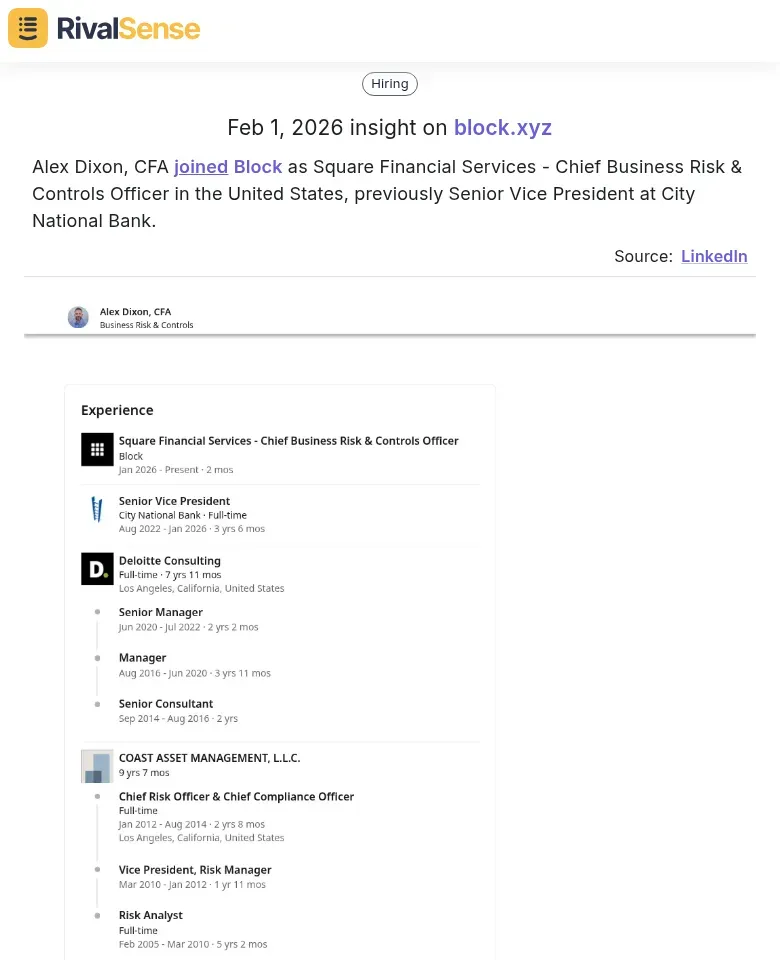
This example shows how a key hire can signal enhanced focus on risk management and compliance within financial services. Analyzing such moves helps you infer competitor strategies, such as potential expansion or regulatory preparedness. To effectively use personnel insights in your competitor analysis, consider these actionable tips:
- Interpret the Role's Significance: Assess how the new position aligns with industry trends or competitor announcements. For instance, a Chief Business Risk Officer might prioritize regulatory adherence or internal controls.
- Cross-Reference with Other Activities: Look for correlations with product launches, partnerships, or media mentions to build a comprehensive view. Use the table below to organize your findings:
| Insight Type | What to Look For | Potential Impact |
|---|---|---|
| Personnel Change | Background of hire, previous roles | Strategic direction shifts |
| Product Updates | New features or pricing changes | Market positioning adjustments |
| Event Participation | Industry conferences or webinars | Networking and visibility efforts |
- Create a Tracking Checklist: Systematically monitor follow-up actions after a key appointment. Here's a simple checklist to get started:
- [ ] Review the competitor's website and social media for related updates.
- [ ] Analyze the hire's expertise for patterns in skills or industry focus.
- [ ] Adjust your competitive strategy based on inferred priorities and gaps.
Integrating these practices into your routine can enhance your competitive intelligence efforts. For ongoing insights, consider leveraging automated tools that streamline data collection and reporting.
To simplify competitor tracking, try out RivalSense for free at https://rivalsense.co/. It delivers regular reports on product launches, pricing updates, event participations, and more, so you can stay informed without manual effort. Get your first report today and gain a strategic advantage!
📚 Read more
👉 Competitor SWOT Analysis: Your Actionable Guide to Strategic Advantage
👉 2026 Trend Analysis: Why Competitor Analysis Drives Digital Marketing Agency Success
👉 How Adidas' CLOT Partnership Served as a Competitive Intelligence Wake-Up Call
👉 Step-by-Step Guide to Facebook Competitor Insights for Key Account Management
👉 Web Scraping for Customer Service Excellence: Benchmarks, Benefits, and Implementation