
Leveraging Management Changes for Competitive Advantage: A Case Study on Safran
The Strategic Importance of Tracking Competitor Management Changes
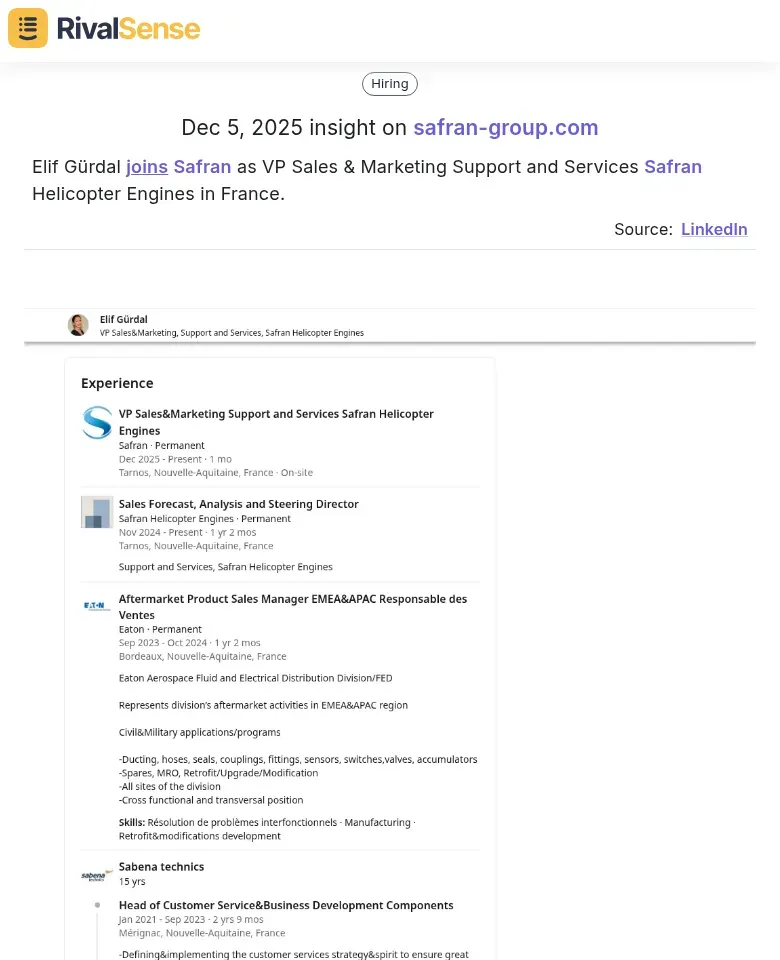
Monitoring competitor management changes is a fundamental aspect of staying competitive in today's dynamic market. When a company like Safran Helicopter Engines appoints a new VP, such as Elif Gürdal, it often indicates a shift in strategy or focus that can impact the entire industry. Understanding these moves allows businesses to anticipate challenges and identify opportunities for differentiation.
Real-World Insight from Automated Competitor Tracking
RivalSense provides timely alerts on key developments, such as the recent news that Elif Gürdal has joined Safran as VP Sales & Marketing Support and Services in France. This specific insight, captured automatically from various sources, exemplifies how automated tools can deliver critical intelligence without manual effort. By integrating such data into your analysis, you can quickly assess the implications for your own business strategy.
Actionable Steps to Analyze and Respond to Management Changes
Once you identify a competitor's management change, the next step is to derive actionable insights that inform your decisions. Start by researching the executive's background, including their previous roles and industry expertise. Here are practical steps to turn this information into a competitive edge:
- Evaluate Strategic Fit: Assess how the new executive's experience might influence the competitor's sales, marketing, or service approaches.
- Update Competitive Intelligence: Revise your competitor profiles and battle cards to reflect new leadership and potential strategic pivots.
- Forecast Market Impact: Consider how this change might affect partnerships, pricing, or product development in your sector.
Pro Tips for Effective Competitor Monitoring
Consistent and comprehensive competitor tracking requires a structured approach to avoid missing key signals. Leveraging tools that aggregate data from company websites, social media, and registries can save time and improve accuracy. Use the following checklist to enhance your monitoring efforts:
🎯 Set Up Alerts: Configure notifications for management changes, product launches, and partnership announcements to stay informed in real-time.
🔍 Cross-Source Verification: Combine insights from multiple channels, such as LinkedIn, press releases, and industry databases, to validate and enrich your understanding.
📊 Identify Patterns: Analyze recurring themes in competitor behavior, like frequent event participation or regulatory filings, to predict future moves.
Streamline Your Competitor Analysis with RivalSense
Manually tracking all competitor activities—from product updates to media mentions—can be resource-intensive and prone to oversights. RivalSense automates this process by delivering regular email reports that consolidate information on launches, pricing, events, partnerships, regulatory aspects, management changes, and more. This allows you to focus on strategic analysis rather than data collection.
To overcome the challenges of manual competitor tracking, try out RivalSense for free at https://rivalsense.co/. Get your first report today and start making data-driven decisions based on comprehensive competitor insights.
📚 Read more
👉 The Complete Guide to Competitor Patent Analysis: How to Decode Your Rivals' Innovation Strategy
👉 Maximizing Warehousing & Distribution Competitor Benchmarking: Best Practices for B2B Leaders
👉 How to Counter Competitor Advances Like Xometry's Formlabs SLA Partnership
👉 Track Key Account Team Changes: Website Monitoring Workflow for Competitor Insights
👉 Beginner's Guide to Strategic Account Tracking in Music Streaming