
How to Track Competitor Podcast Appearances: A Strategic Guide for B2B Leaders
In today's digital landscape, podcasts have become a powerhouse for B2B brand building and authority establishment. Tracking your competitors' podcast appearances is essential for gaining strategic insights and maintaining a competitive edge. Podcast appearances offer a unique window into your competitors' strategic priorities. Unlike written content or social media posts, podcast conversations reveal:
- Authentic messaging: How they position their solutions in casual, unscripted conversations
- Target audience insights: Which podcasts they choose reveals who they're trying to reach
- Strategic partnerships: Guest appearances often signal relationships with influential hosts
- Content gaps: Topics they discuss can highlight market needs you might be missing
Practical Tip: Start by identifying 3-5 key competitors and create a simple tracking spreadsheet with columns for podcast name, episode title, date, key topics discussed, and strategic insights.
Step-by-Step: How to Systematically Track Competitor Podcast Appearances 📊
Systematic tracking transforms random observations into actionable intelligence. By following a structured approach, you can ensure no valuable insight slips through the cracks. Begin with these proven methods to identify where your competitors are appearing.
Step 1: Identify Where Your Competitors Are Appearing
Begin with these proven methods:
- Google Search Operators: Use queries like "[competitor name] podcast guest" or "[competitor name] interview podcast"
- Podcast Platform Searches: Search Apple Podcasts, Spotify, and Google Podcasts for competitor names
- LinkedIn Monitoring: Check competitor executives' profiles for podcast mentions in their activity
- Social Media Listening: Set up alerts for competitor mentions on Twitter/X and LinkedIn
Checklist for Initial Discovery ✅
- Search 5+ podcast platforms
- Review competitor social media for 3 months back
- Check executive LinkedIn profiles
- Use at least 3 different search operators
Step 2: Set Up Your Tracking System
Choosing the right tracking system depends on your resources and needs. Consistency is key to building a reliable intelligence pipeline.
Manual Method (Free):
- Create a Google Sheet with columns for: Podcast Name, Episode Title, Date, Key Topics, Audience Size, Strategic Insights
- Set weekly review reminders
- Subscribe to competitor newsletters for podcast announcements
Tool-Assisted Method:
- Use podcast databases like Podchaser Pro or Rephonic
- Set up Google Alerts for competitor names + "podcast"
- Consider specialized monitoring tools
Pro Tip: Include a "Competitive Intelligence Score" column in your spreadsheet to rate each appearance's strategic importance (1-5 scale).
Step 3: Analyze the Strategic Value of Each Appearance
Not all podcast appearances are created equal. Deep analysis helps you prioritize and respond effectively. Evaluate each one by asking:
- Audience Relevance: Does this podcast reach your target market?
- Host Authority: How influential is the host in your industry?
- Message Consistency: What key messages is your competitor repeating?
- Call-to-Action: What are they asking listeners to do?
Analysis Framework 🔍
- Note recurring themes across multiple appearances
- Track how messaging evolves over time
- Identify gaps in their coverage that you can fill
- Monitor audience engagement (comments, shares, reviews)
Advanced Tracking: Beyond Basic Monitoring 🚀
Moving beyond basic monitoring unlocks deeper strategic insights. Advanced techniques and tools can automate and enhance your tracking efforts.
Leverage Podcast Intelligence Platforms
Tools like Podchaser Pro offer powerful features for competitor tracking:
- Guest Credit Tracking: See all appearances by specific executives
- Topic Analysis: Identify which subjects competitors discuss most frequently
- Audience Demographics: Understand who's listening to these podcasts
- Sponsorship Tracking: Monitor which brands are sponsoring competitor appearances
Integrate with Broader Competitive Intelligence
Podcast tracking should be part of a holistic competitive intelligence strategy. Consider how podcast insights connect with:
- Content Strategy: Are podcast topics aligning with their blog content?
- Product Messaging: How are they positioning new features or updates?
- Partnership Strategy: Which podcasts signal new strategic relationships?
Practical Implementation: Turning Insights into Action 💡
Insights are worthless without action. Implement these steps to translate data into competitive advantage.
Create Your Competitor Podcast Intelligence Dashboard
Build a simple dashboard that includes:
- Appearance Frequency: How often are they appearing?
- Topic Heat Map: What subjects dominate their conversations?
- Audience Reach: Estimated total listeners across appearances
- Strategic Patterns: Emerging themes in their messaging
Develop Counter-Strategies Based on Insights
When you identify patterns, take action:
- If they're dominating a topic: Create superior content on that subject
- If they're reaching a new audience: Consider appearing on those same podcasts
- If they're promoting specific features: Highlight your superior alternatives
- If they're building partnerships: Explore similar relationship opportunities
Action Checklist 🛠️
- Identify 2-3 podcasts where competitors appear that align with your target audience
- Develop counter-messaging for their most frequent talking points
- Create a guest appearance strategy targeting podcasts they haven't reached
- Schedule quarterly reviews of your competitor podcast intelligence
The RivalSense Advantage: Comprehensive Competitor Tracking 🔍
While manual podcast tracking provides valuable insights, truly comprehensive competitive intelligence requires monitoring multiple channels simultaneously. This holistic approach ensures you never miss a strategic move. Tools like RivalSense transform your competitive strategy by tracking competitor activity across 80+ sources, including product launches, pricing changes, event participations, partnerships, regulatory developments, management changes, and media mentions.
How This Complements Podcast Tracking: When you see a competitor appearing on multiple industry podcasts discussing a specific topic, RivalSense can help you understand the broader context. For example, are they preparing for a product launch mentioned in regulatory filings? Is there a pricing change that aligns with their podcast messaging?
Real-World Examples of Competitive Insights
Here are recent examples from RivalSense that show how tracking various competitor activities can inform your business strategy:
-
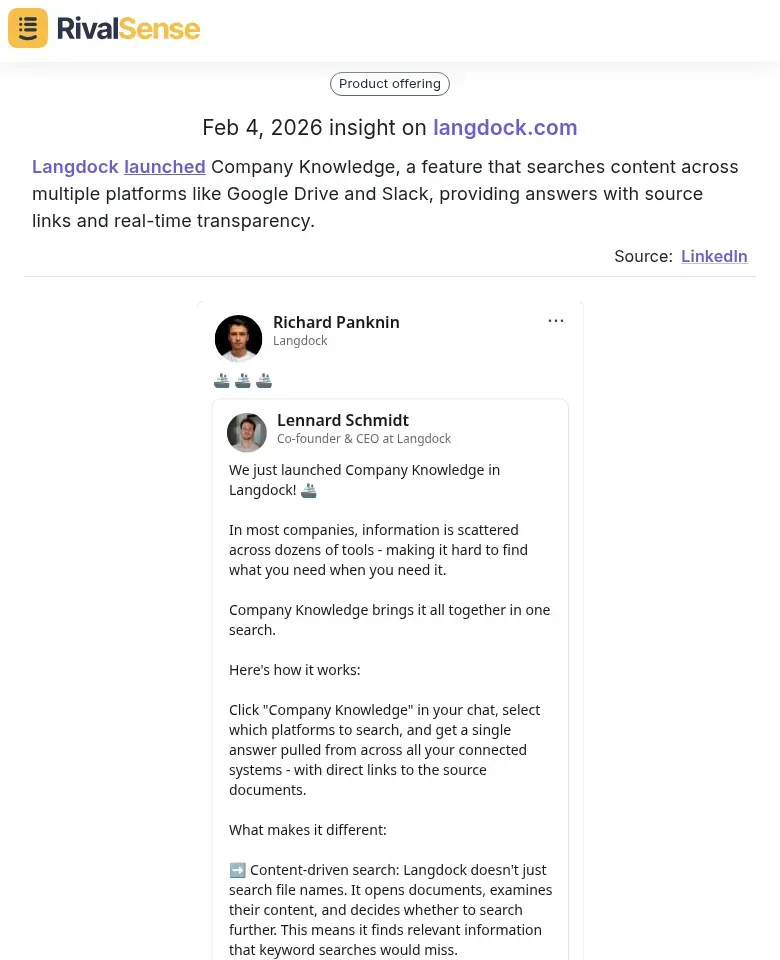
Product Launch Insight: Langdock launched Company Knowledge, a feature that searches content across multiple platforms like Google Drive and Slack, providing answers with source links and real-time transparency.
Why it matters: Tracking product launches helps you anticipate market trends and adjust your own product roadmap to stay competitive. -
Pricing and Cost Feature: Property Meld launched TrueCost, powered by MAX Intelligence, to eliminate cost blindness and billing handoff frictions.

Why it matters: Monitoring pricing updates can reveal competitive positioning and opportunities for differentiation in your offerings. -
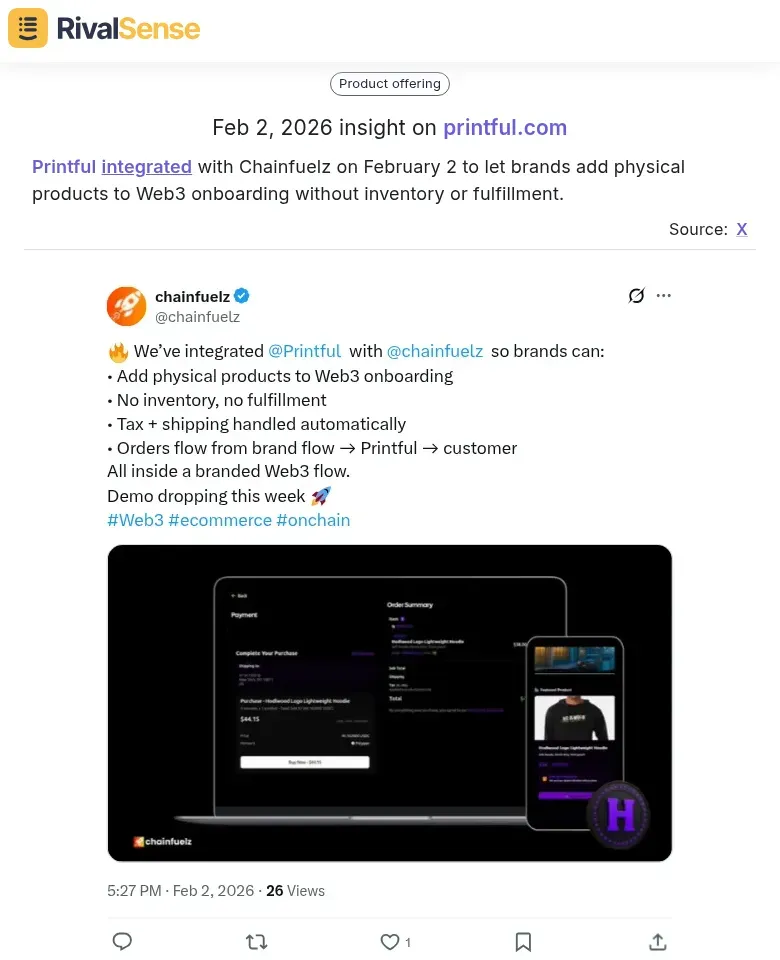
Partnership Announcement: Printful integrated with Chainfuelz on February 2 to let brands add physical products to Web3 onboarding without inventory or fulfillment.
Why it matters: Tracking partnerships signals new market expansions and collaborative strategies that you might emulate or counter in your own growth plans.
This integrated view transforms isolated podcast insights into comprehensive competitive intelligence, enabling smarter business decisions.
Building a Sustainable Tracking Program ⏳
Sustainability ensures your tracking efforts yield long-term benefits. Establish processes that integrate seamlessly into your workflow.
Establish Regular Review Cycles
- Weekly: Quick scan of new appearances
- Monthly: Deep analysis of patterns and insights
- Quarterly: Strategic review and adjustment of tracking priorities
Train Your Team
- Create a simple guide for team members
- Conduct quarterly training on analysis techniques
- Establish clear processes for sharing insights
Integrate with Strategic Planning
- Present podcast intelligence in quarterly strategy meetings
- Use insights to inform content and marketing plans
- Align tracking with business objectives
Key Takeaways and Next Steps ✅
Tracking competitor podcast appearances is no longer optional—it's essential for staying competitive in today's B2B landscape. By implementing a systematic approach, you can gain a strategic edge and respond proactively to market shifts.
Your Action Plan:
- Start Simple: Pick 3 competitors and begin manual tracking
- Build Systems: Create your tracking spreadsheet and processes
- Analyze Patterns: Look for strategic insights in their appearances
- Take Action: Develop counter-strategies based on your findings
- Scale Up: Consider tools for comprehensive monitoring
Remember: The goal isn't just to track what your competitors are doing—it's to understand why they're doing it and how you can respond strategically.
Ready to elevate your competitor tracking? While podcast monitoring provides valuable audio insights, true competitive advantage comes from understanding the complete picture. Try RivalSense for free to get comprehensive competitor intelligence across 80+ sources in a weekly email report, helping you stay ahead of market shifts and strategic moves. Get your first competitor report today and take your strategy to the next level!
📚 Read more
👉 Predictive Analysis: Decoding Competitor Advertising Strategies for Insurance Brokers in 2026
👉 How TrustDecision's Soneri Bank Win Prompted Rivals to Accelerate Pakistan Market Entry
👉 Mastering Facebook Competitor Insights: A Cheat Sheet for Key Account Management
👉 Biotech Key Account Tracking Automation Checklist for Precision Medicine
👉 Decoding Competitor Hiring and Layoffs: A Strategic Guide for Business Leaders