
How to Decode Competitor Moves from Event Announcements: A DataDome Case Study
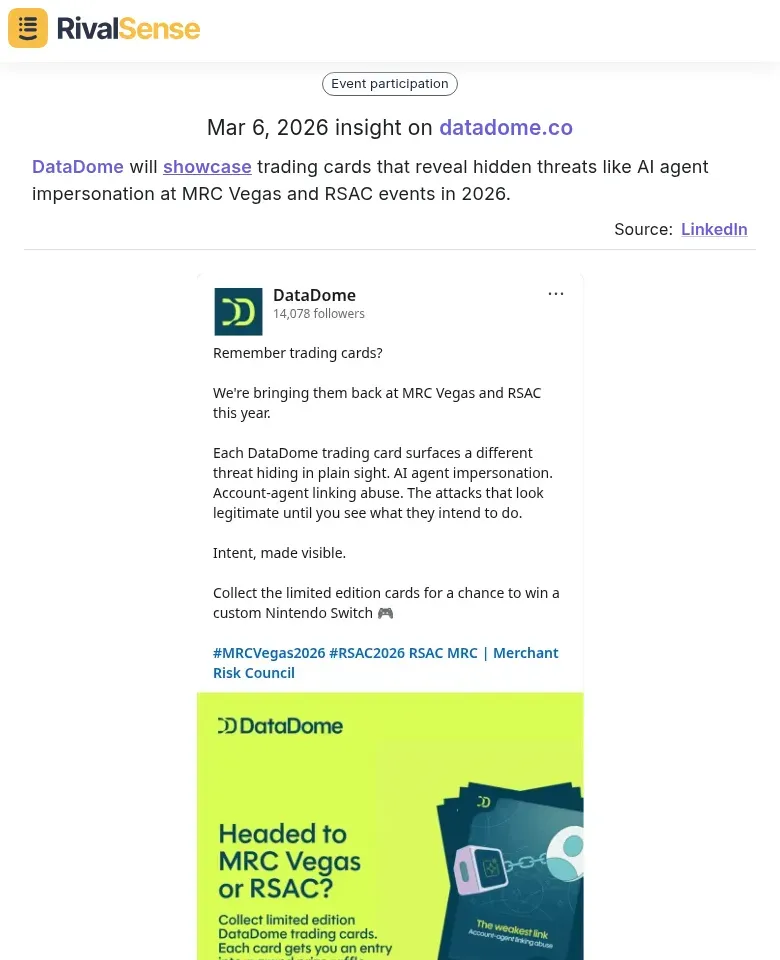
Competitor analysis is essential for staying ahead in the market. By monitoring what your rivals are doing, you can anticipate their strategies and adjust your own. Let's look at a real-world example from RivalSense insights: DataDome will showcase trading cards that reveal hidden threats like AI agent impersonation at MRC Vegas and RSAC events in 2026.
Analyzing Competitor Event Participation
Event participation is a key indicator of a company's focus areas and upcoming initiatives. When competitors announce their presence at major conferences, it reveals their marketing and product priorities. For instance, DataDome's plan to showcase at MRC Vegas and RSAC suggests they are targeting cybersecurity professionals and emphasizing AI-related threats.
- Tip: Always note the themes and topics competitors highlight at events. This can signal new product features or market directions.
- Checklist for Event Analysis:
- [ ] Identify the events your competitors are attending.
- [ ] Review the sessions or booths they are participating in.
- [ ] Analyze the messaging and materials they share.
- [ ] Assess how this aligns with your own event strategy.
Extracting Strategic Insights from Product Showcases
Product showcases at events often preview innovations that competitors plan to launch. By dissecting these showcases, you can gain early warnings about competitive threats. DataDome's trading cards that reveal hidden threats like AI agent impersonation indicate a focus on educational and engaging content to demonstrate their expertise.
- Actionable Advice: Use such insights to brainstorm counter-strategies. For example, if a competitor is highlighting AI threats, consider how your products address similar issues or where you can differentiate.
- Table: Key Elements to Track from Competitor Event Activities
| Element | Why It Matters | How to Use It |
|---------|----------------|---------------|
| Product Demos | Shows new features or improvements | Update your product roadmap accordingly |
| Marketing Messaging | Reveals target audience and value propositions | Refine your own messaging to compete effectively |
| Partnerships Announced | Indicates strategic alliances | Explore similar partnerships or strengthen existing ones |
Turning Insights into Action
Once you've gathered competitor insights from events, the next step is to integrate them into your business strategy. Regular monitoring helps you stay agile and responsive. For example, knowing that DataDome is focusing on AI agent impersonation, you might prioritize related security features in your development.
- Hint: Set up alerts for competitor announcements, especially around major events. Tools like RivalSense can automate this process, saving you time and ensuring you don't miss critical updates.
To efficiently track competitor activities like product launches, pricing updates, event participations, and more, consider using RivalSense. It delivers regular email reports with insights from company websites, social media, and various registries. Try out RivalSense for free at https://rivalsense.co/ to assist with the challenges described in this post, and get your first report today!
📚 Read more
👉 The Strategic Guide to Tracking Key Account Milestones for B2B Leaders
👉 Mastering Key Account Management with Commercial Banks for B2B Companies
👉 How RivalSense Alerted Competitors to CrowdStrike's Browser Extension Control
👉 Instagram Competitor Insights: Actionable Strategies for Key Account Growth
👉 Predictive Cybersecurity Analysis: Key Account Tracking for Competitive Edge