
How to Conduct Fleet Management Competitor Analysis for Strategic Advantage
In today's rapidly evolving fleet management landscape, competitor analysis has become non-negotiable for maintaining a strategic edge. With rising costs and technological advancements, understanding your competitors is key to proactive operations. The 2026 Fleet Benchmark Report reveals a widening performance gap where top performers convert surprises into planned work 53.7% of the time versus 40.1% reactive maintenance for average fleets. This isn't about having the newest technology—it's about disciplined processes that transform reactive operations into proactive strategy.
Practical Tip: Start by benchmarking against three key metrics: maintenance scheduling ratios (aim for 60%+ scheduled), time-to-start work (top performers average 31 minutes vs. 6.7 days industry average), and true total cost of ownership tracking.
Competitive intelligence directly connects to tangible ROI: fleets that implement data-driven competitor insights achieve 250-400% ROI within 18 months, with most seeing payback within 3-6 months from prevented breakdowns alone. By analyzing how competitors handle EV transitions (81% of fleets still have no EVs), AI adoption patterns, and compliance strategies, you can identify gaps in your own operations and implement proven solutions that deliver measurable business outcomes.
Identifying Your Fleet Management Competitors: Direct, Indirect, and Emerging Players
Effectively mapping your competitive landscape is the first step toward strategic advantage. By categorizing competitors, you can anticipate threats and identify opportunities for differentiation. Start by mapping direct competitors offering similar solutions. Use tools like RivalSense to track companies with comparable GPS tracking, telematics, maintenance scheduling, and fuel management features. Create a spreadsheet listing their pricing, features, target markets, and customer reviews.
Next, identify indirect competitors providing alternative transportation solutions. These include ride-sharing platforms, logistics-as-a-service providers, and mobility management tools that could replace fleet ownership. Monitor their adoption rates and value propositions that might appeal to your customers.
Finally, track emerging players and disruptive technologies. Watch for startups in electric vehicle fleets, autonomous driving integration, AI-powered route optimization, and blockchain-based logistics. Set up Google Alerts for keywords like 'fleet tech innovation' and attend industry conferences to spot trends early.
Practical Checklist:
✅ List 5-10 direct competitors with similar fleet sizes served
✅ Identify 3-5 indirect competitors in adjacent transportation markets
✅ Monitor 2-3 emerging technologies that could disrupt your business model
✅ Update your analysis quarterly using competitive intelligence tools
Tip: Focus on competitors' weaknesses you can exploit and emerging technologies you can adopt before they become mainstream threats.
Key Metrics and Data Sources for Fleet Competitor Analysis
To derive actionable insights from competitor analysis, you need to focus on the right metrics and data sources. Tracking key performance indicators (KPIs) and leveraging diverse data streams will give you a comprehensive view of the competitive landscape. Here are essential elements to consider:
Essential KPIs to Track:
- Total Cost of Ownership (TCO) - Compare acquisition, fuel, insurance, and depreciation costs
- Utilization Rates - Analyze vehicle uptime vs. idle time (target: 85%+ utilization)
- Maintenance Costs - Track per-mile repair expenses and preventive maintenance frequency
- Safety Metrics - Monitor accident rates, driver safety scores, and compliance violations
Primary Data Sources:
- Industry Reports (e.g., Frost & Sullivan, ACT Research) for market share and trends
- Earnings Calls - Listen for fleet expansion plans and operational efficiencies
- Regulatory Filings (FMCSA, DOT) for safety records and compliance data
- Expert Insights - Interview fleet managers and industry consultants
Secondary Intelligence:
- Customer Reviews (G2, Capterra) to identify competitor strengths/weaknesses
- Case Studies - Analyze implementation timelines and ROI claims
- Market Positioning - Map competitors by price point vs. service quality
Practical Checklist:
✓ Create a competitor scorecard with weighted KPIs
✓ Set up Google Alerts for competitor news and announcements
✓ Join fleet management forums and LinkedIn groups
✓ Benchmark your metrics against top 3 competitors quarterly
✓ Validate findings through multiple data sources for accuracy
Applying Competitive Analysis Frameworks to Fleet Management
Applying structured frameworks to your competitive analysis can transform raw data into strategic insights. These tools help you systematically evaluate competitors and industry dynamics. Here’s how to implement three essential frameworks in fleet management:
SWOT Analysis for Fleet Competitors
Assess each competitor’s:
- Strengths: Advanced telematics, strong maintenance networks, fuel efficiency programs
- Weaknesses: High driver turnover, outdated fleet, poor customer service response times
- Opportunities: EV adoption, new geographic markets, regulatory compliance services
- Threats: Rising fuel costs, driver shortages, disruptive technology entrants
Practical tip: Create a SWOT matrix for your top 3 competitors and compare against your own position.
Porter’s Five Forces in Fleet Management
Analyze industry dynamics:
- Competitive rivalry: Number of fleet management providers, price competition intensity
- Supplier power: Vehicle manufacturers, fuel suppliers, technology vendors
- Buyer power: Large corporate clients vs. small businesses
- Threat of substitutes: Ride-sharing, public transport, logistics outsourcing
- Threat of new entrants: Tech startups, automotive OEMs expanding services
Checklist: Rate each force (1-5) to quantify competitive pressure.
Perceptual Mapping for Market Positioning
Create 2x2 maps using key attributes:
- X-axis: Cost vs. Premium services
- Y-axis: Technology sophistication vs. Traditional solutions
- Plot competitors to identify gaps and differentiation opportunities
Example: If competitors cluster in high-cost/high-tech quadrant, consider targeting cost-conscious mid-market with simplified solutions.
Combine these frameworks to develop targeted strategies: exploit competitor weaknesses identified in SWOT, navigate industry pressures from Five Forces analysis, and position your fleet services in underserved market spaces revealed by perceptual mapping.
Real-World Competitive Insights: Examples from RivalSense
Competitive intelligence tools like RivalSense provide real-time insights that can inform your business strategy. Here are examples of how different types of insights can be valuable:
-
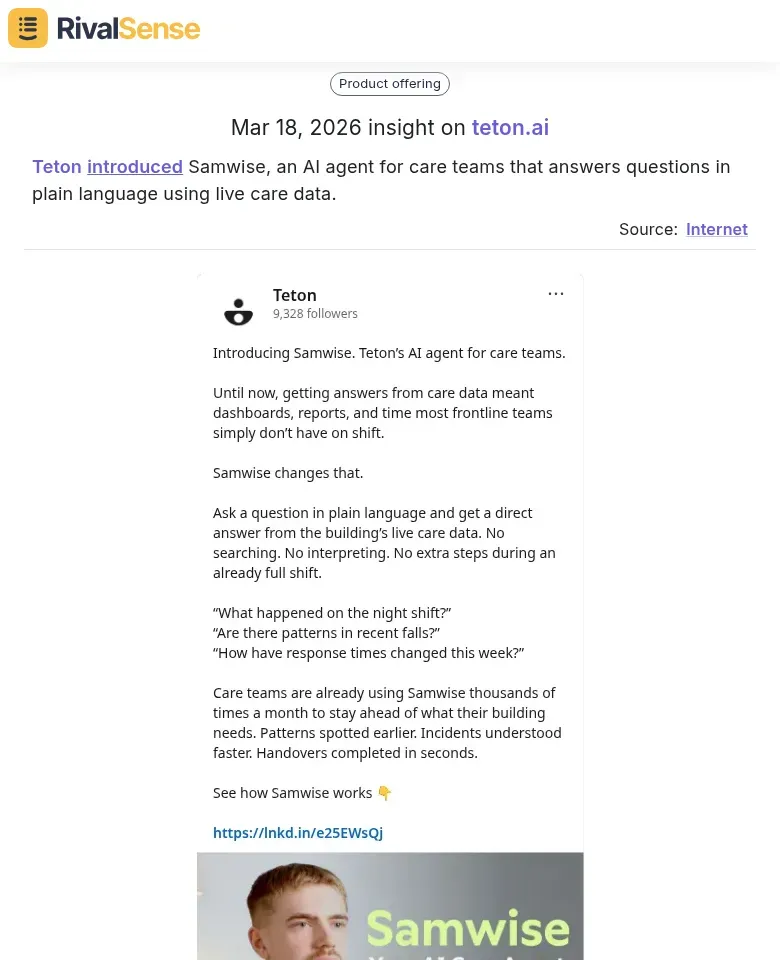
Product Launch Insight: Teton introduced Samwise, an AI agent for care teams that answers questions in plain language using live care data. This type of insight reveals competitor innovation in AI and customer service, helping you anticipate market trends and adjust your product roadmap.
-
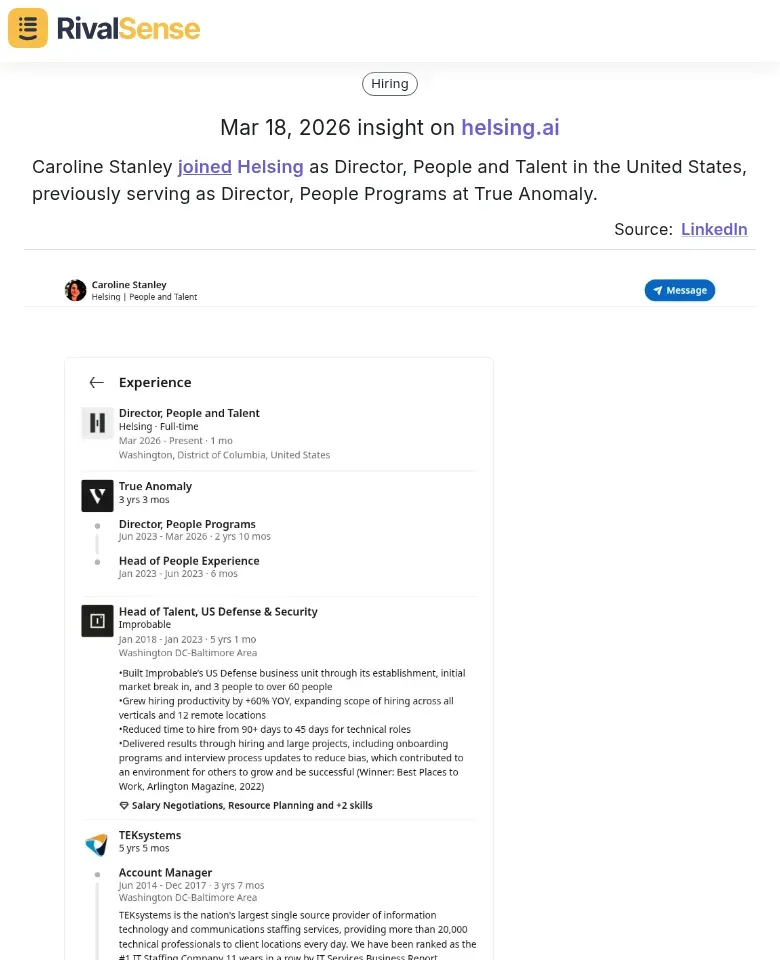
Management Change Insight: Caroline Stanley joined Helsing as Director, People and Talent in the United States, previously serving as Director, People Programs at True Anomaly. Tracking management changes can indicate strategic shifts, such as expansion into new regions or focus on talent acquisition, allowing you to prepare competitive responses.
-
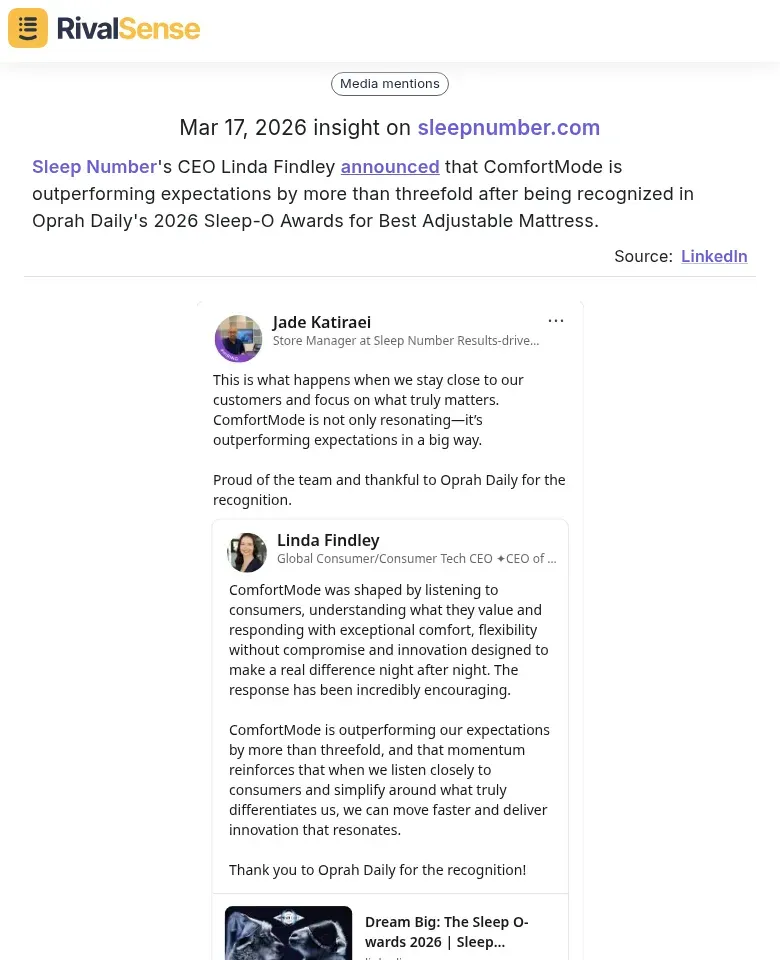
Media Mention and Performance Insight: Sleep Number's CEO Linda Findley announced that ComfortMode is outperforming expectations by more than threefold after being recognized in Oprah Daily's 2026 Sleep-O Awards for Best Adjustable Mattress. Such insights highlight competitor success and market validation, enabling you to benchmark performance and refine your marketing strategies.
By monitoring these types of insights, you can stay ahead of competitor moves and make informed strategic decisions.
Turning Competitive Insights into Strategic Fleet Management Actions
Turning insights into actions requires a systematic approach to ensure competitive advantages are realized. Start by developing competitive battlecards for your sales and marketing teams. These should include: 1) Competitor's key features and pricing, 2) Your competitive advantages, 3) Common objections and how to counter them, 4) Specific questions to ask prospects to identify competitor involvement early. For example, if a competitor emphasizes "predictive maintenance AI" while you focus on "real-time fuel optimization," train your team to highlight your unique strengths.
Identify gaps in competitor offerings for product development opportunities by analyzing customer reviews, feature comparisons, and market feedback. Create a gap analysis matrix comparing your solution against competitors across key fleet management dimensions: vehicle tracking, maintenance scheduling, compliance reporting, driver safety features, and fuel management. Look for underserved needs like specialized EV fleet support or integrated insurance solutions.
Create proactive response strategies for competitor pricing and feature changes. Establish a monitoring system for competitor announcements and price adjustments. Develop pre-approved response playbooks: 1) For price drops - emphasize your superior ROI and additional features, 2) For new features - highlight your existing capabilities or accelerate your roadmap, 3) For market expansions - reinforce your specialized expertise. Implement a quarterly competitive review process where cross-functional teams assess market changes and adjust strategies accordingly.
Implementing Continuous Competitive Intelligence for Fleet Operations
To maintain a competitive edge, continuous intelligence gathering must be integrated into your operations. Establishing real-time monitoring and cross-functional collaboration ensures you're always prepared. Start by setting up automated alerts for competitor fleet expansions, new vehicle acquisitions, route changes, and pricing adjustments. Use tools like RivalSense to track competitor announcements, job postings, and regulatory filings that reveal strategic moves.
Leverage AI-powered analytics to process vast amounts of competitive data efficiently. Implement automated dashboards that flag anomalies in competitor behavior, such as sudden route optimizations or unusual maintenance patterns. AI can identify emerging trends from unstructured data like social media posts and industry forums.
Build cross-functional collaboration through regular intelligence-sharing sessions. Create a monthly competitive intelligence report distributed to operations, sales, and strategy teams. Establish clear protocols for how each department should use competitor insights: operations for benchmarking efficiency metrics, sales for competitive positioning, and strategy for long-term planning.
Practical Checklist:
✅ Identify 3-5 key competitors to monitor
✅ Set up automated alerts for fleet-related keywords
✅ Create a centralized dashboard accessible to all teams
✅ Schedule bi-weekly cross-departmental review meetings
✅ Document competitor response patterns and adjust monitoring accordingly
Tip: Focus on actionable intelligence - track metrics that directly impact your operational decisions, like competitor fuel efficiency improvements or maintenance cost reductions.
Conclusion: Take Action with Competitive Intelligence
Competitor analysis in fleet management is not a one-time task but an ongoing strategic process. By systematically identifying competitors, tracking key metrics, applying frameworks, and turning insights into actions, you can achieve significant operational advantages. To streamline this process, consider using dedicated tools that provide real-time insights.
Ready to enhance your competitive strategy? Try RivalSense for free at https://rivalsense.co/ and get your first competitor report today. Stay ahead of the curve by monitoring product launches, management changes, media mentions, and more—all delivered in a weekly email report.
📚 Read more
👉 How RivalSense Alerted Competitors to BoursoBank’s Rate Hike for Strategic Response
👉 Competitor Website Changes Cheat Sheet for Key Account Managers
👉 Step-by-Step Guide to Tracking Competitor Partnerships in Public Transportation
👉 How to Conduct a Regulatory Competitor SWOT Analysis for Strategic Insights
👉 Decoding Competitor Moves: Lessons from Sennheiser's Audio Update