
How Media Mentions Unlock Competitor Insights: A Real-World Case
In today's fast-paced business environment, competitor analysis goes beyond just tracking products and prices. Public media appearances and statements can reveal hidden strategies and future market moves that are crucial for staying ahead. For example, a recent CNBC Squawk Box Europe segment featured AlbionVC Partner Dave Grimm highlighting Oriole Networks as a company poised to leverage government procurement to become a global leader.
This kind of insight is invaluable for understanding competitor positioning and investor sentiment. It shows how media mentions can signal growth avenues and strategic focus areas that might otherwise go unnoticed.
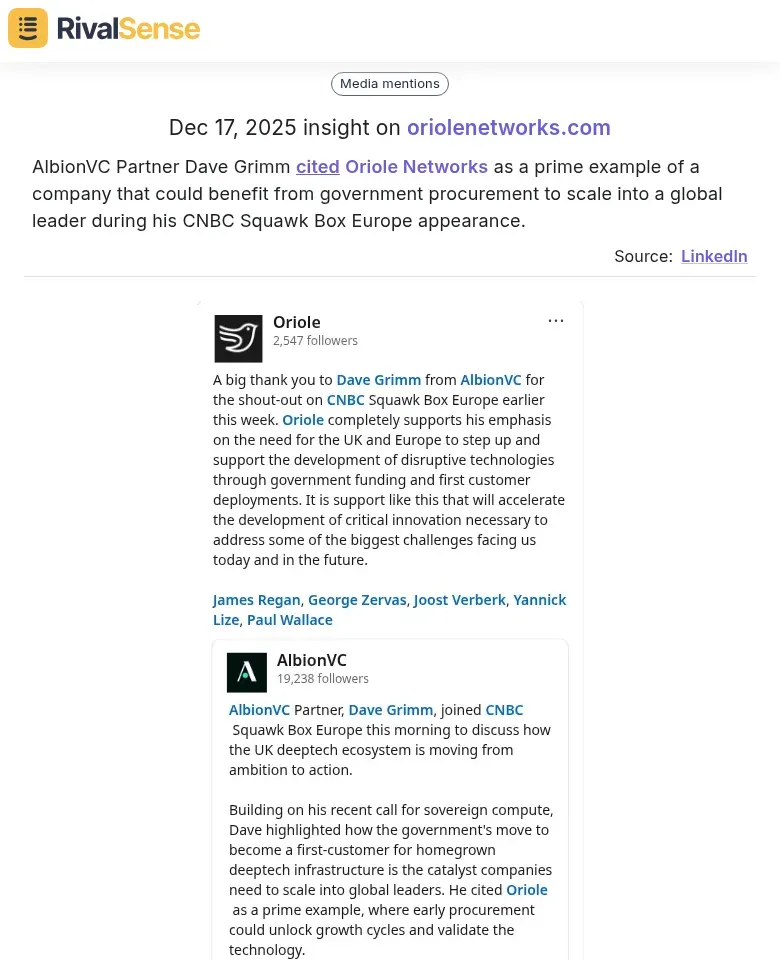
To effectively leverage media mentions in your competitor analysis, here are practical, actionable steps you can implement. Start by systematically monitoring industry influencers and executives, as their public comments often preview strategic shifts or partnerships. For instance, Grimm's mention suggests Oriole Networks may be targeting public-sector contracts, which could influence your own key account or partnership strategies.
🔍 Actionable Tips for Competitor Media Monitoring:
| Tip | Why It Matters |
|---|---|
| Set up Google Alerts or similar tools for competitors' names and key personnel. | Catch real-time mentions across news and social media to stay updated. |
| Analyze the context of each mention—like the CNBC segment—for underlying themes such as scaling plans or funding trends. | Uncover strategic intentions and market opportunities you can anticipate or counter. |
| Cross-reference media appearances with other data points, such as product launches or regulatory filings, for a holistic view. | Connect dots to form a complete picture of competitor movements and priorities. |
Integrating these practices helps you move from reactive to proactive competitor analysis. Media insights can reveal not just what competitors are doing, but where they're heading, enabling better strategic decisions in account management and business partnerships. For example, if a rival is emphasized in investor discussions, it might signal upcoming market expansions or resource allocations.
However, manually tracking these signals across websites, social media, and registries can be time-consuming and error-prone. That's where automated solutions like RivalSense come in, delivering consolidated reports on product launches, pricing updates, event participations, partnerships, regulatory aspects, management changes, and media mentions—all in one place.
Ready to enhance your competitor analysis with streamlined insights? Try out RivalSense for free at https://rivalsense.co/ to assist with these challenges and get your first report today!
📚 Read more
👉 Key Account Management Best Practices 2024: The Strategic Playbook for B2B Growth
👉 Actionable Strategies: Analyze Competitor Laundry Equipment Features to Win
👉 How Roblox's The Block Launch Prompted Rivals' Immersive Strategy Shift
👉 How Top Brands Use Twitter to Analyze Competitor Customer Support
👉 Airbnb vs Hotels: Real-World Content Marketing Advantages Revealed