
How Fleet Management Leaders Monitor Competitor Regulatory Filings for Strategic Advantage
In the highly regulated fleet management industry, competitor regulatory filings offer a unique window into strategic planning. These documents—from FMCSA compliance reports to DOT filings and state transportation authority submissions—reveal expansion plans, technology investments, and compliance strategies before they become public knowledge. Fleet leaders who systematically monitor these filings gain early warnings about competitor moves into new geographic markets, adoption of emerging technologies like EV infrastructure, or shifts in compliance approaches.
Practical Tip: Start by creating a quarterly monitoring checklist that includes:
- 🚚 FMCSA registration and authority filings for expansion indicators
- 📍 State DOT permit applications for geographic growth patterns
- 🔌 EPA emissions compliance reports for technology adoption signals
- ⚠️ OSHA safety program filings for operational strategy insights
- 🏢 Local municipality permits for facility expansion clues
Set up automated alerts for key competitors in regulatory databases to catch strategic moves 3-6 months before public announcements. This systematic approach transforms compliance monitoring from a defensive necessity into an offensive strategic advantage, allowing fleet leaders to anticipate market shifts, adjust their own compliance strategies proactively, and identify underserved market opportunities before competitors can establish dominance.
Key Regulatory Filings to Monitor and What They Reveal About Competitors
Understanding what regulatory filings to monitor is crucial for extracting actionable insights. By systematically tracking these documents, fleet leaders can anticipate competitor moves and adjust strategies accordingly. Here's what to track and how to extract strategic intelligence:
SEC Filings (U.S. Companies):
• 10-K Annual Reports: Reveal financial health, long-term strategy, and risk factors. Look for fleet expansion plans, technology investments, and market positioning.
• 10-Q Quarterly Reports: Track operational performance, revenue trends, and fleet utilization metrics between annual filings.
• 8-K Current Reports: Signal major events like acquisitions, leadership changes, or new technology partnerships that impact competitive positioning.
International Regulatory Submissions:
• Monitor filings with EU, UK, and Asian regulators to identify geographic expansion patterns.
• Look for vehicle registration data, environmental compliance reports, and market entry applications that reveal international growth strategies.
Compliance Documentation:
• Safety compliance reports show operational capabilities and maintenance standards.
• Environmental filings reveal technology investments in electric vehicles and sustainability initiatives.
• Transportation authority submissions indicate fleet size, route expansions, and service capabilities.
📋 Practical Checklist:
- Set up automated alerts for competitor SEC filings
- Create a tracking spreadsheet with key metrics from each filing type
- Analyze year-over-year changes in fleet size, technology investments, and geographic coverage
- Monitor international regulatory databases for expansion signals
- Cross-reference compliance filings with market intelligence for complete competitive picture
Pro Tip: Focus on the 'Management Discussion & Analysis' sections of SEC filings for strategic insights beyond raw financial data.
Extracting Strategic Insights from Competitor Expansion Signals
Competitor expansion signals provide early warnings about market entry and growth strategies. By focusing on key data sources, you can decode strategic intent before official announcements. Here are three data sources to monitor closely:
1. Job Postings: Look for patterns in new roles—especially those requiring language skills, international experience, or regulatory knowledge in specific regions. For example, a surge in hiring for German-speaking compliance officers may signal EU market entry. This type of insight is valuable because it signals geographic expansion and hiring strategies, allowing you to prepare for increased competition in new markets.
For instance, RivalSense recently tracked that Webfleet posted a job opening for a Business Development Representative in Santiago, Chile to drive new business acquisition in the fleet management industry. 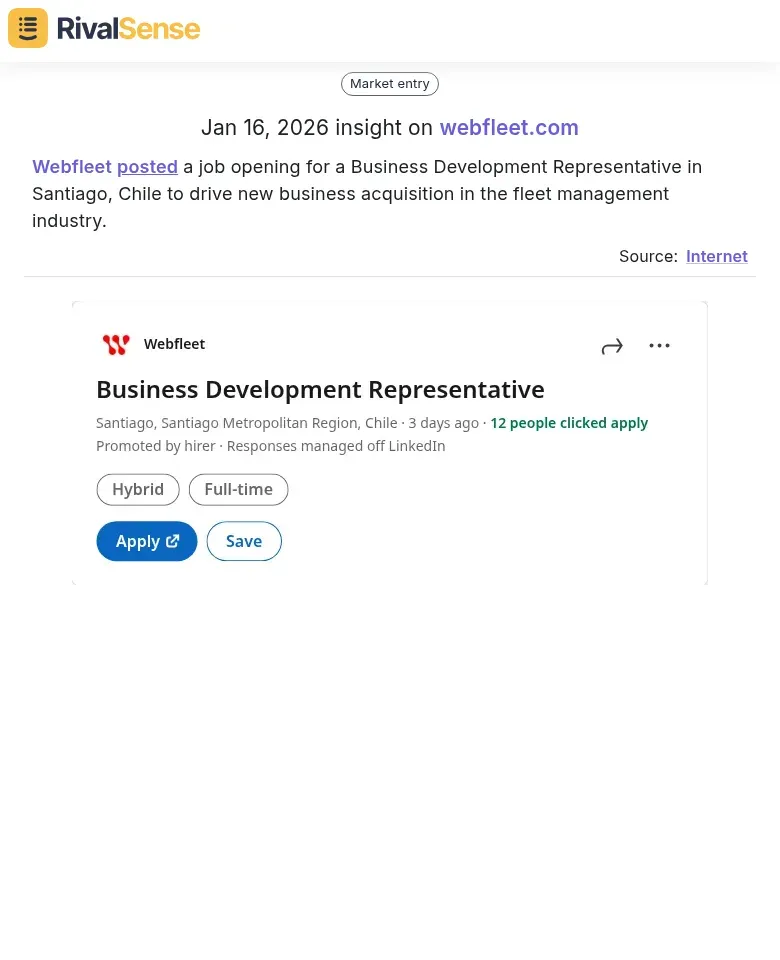
2. Sponsorship Activities: Analyze sponsorship at industry conferences and events to gauge market focus. Document sponsorship levels, event themes, and attendee demographics. Monitoring sponsorship activities is valuable as it reveals market focus and regional priorities, helping you anticipate where competitors are investing in brand presence and networking.
A RivalSense insight identified that Webfleet will sponsor C12 Bajio in Bajio, Mexico on October 21, 2025. 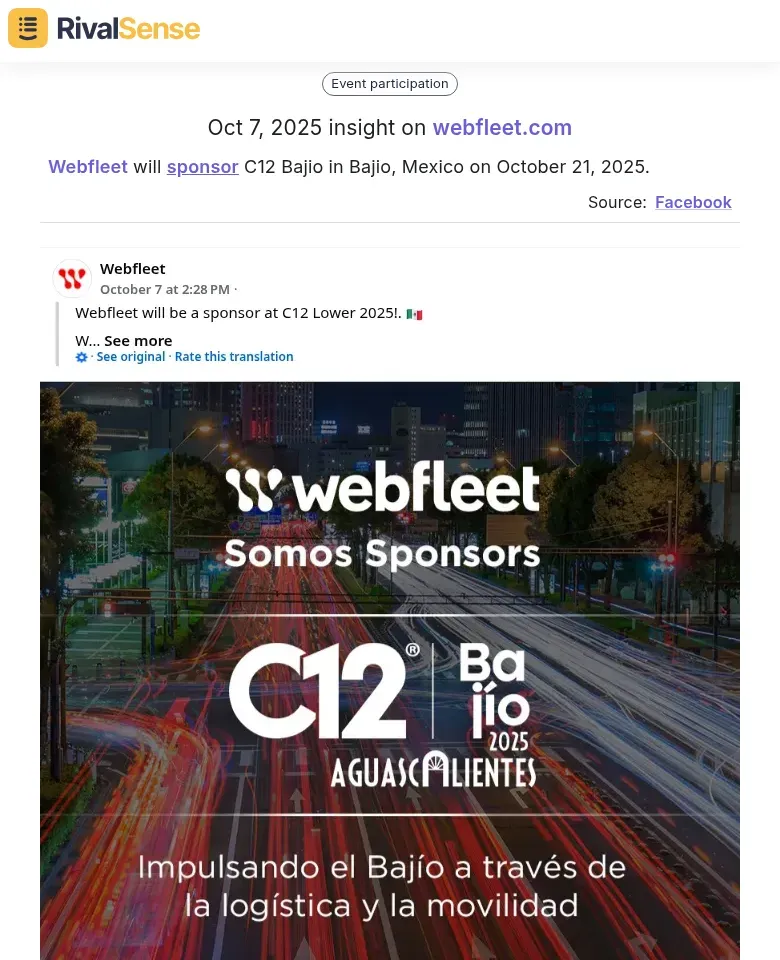
3. International Regulatory Approvals: Track approvals through databases like FDA filings or EU regulatory bodies for concrete expansion timelines. Set up alerts for competitor names in regulatory portals to anticipate market launches.
✅ Checklist for Expansion Signals:
- Track role types, required qualifications, and location mentions in job postings
- Note which geographic regions or vertical segments competitors prioritize in sponsorships
- Set up alerts for competitor names in regulatory portals and note approval dates
- Combine insights to predict market entry within 6-12 months
Learning from Competitor Performance and Market Positioning
Regulatory filings are not just about compliance; they offer deep insights into competitor performance and positioning. By analyzing awards, financial disclosures, and market share data, you can benchmark your own company against industry leaders. Here's how to extract strategic insights:
1. Benchmark Service Quality via Industry Awards
Track competitors' J.D. Power awards, Frost & Sullivan recognitions, and industry association accolades mentioned in SEC filings. These validate customer satisfaction levels and service excellence. Tracking such accolades helps validate customer satisfaction trends and identifies competitors who are excelling in service quality, informing your own customer success initiatives.
For example, RivalSense showed that Webfleet was named Top Performer in the Summer 2025 Fleet Management Software Customer Success Report. 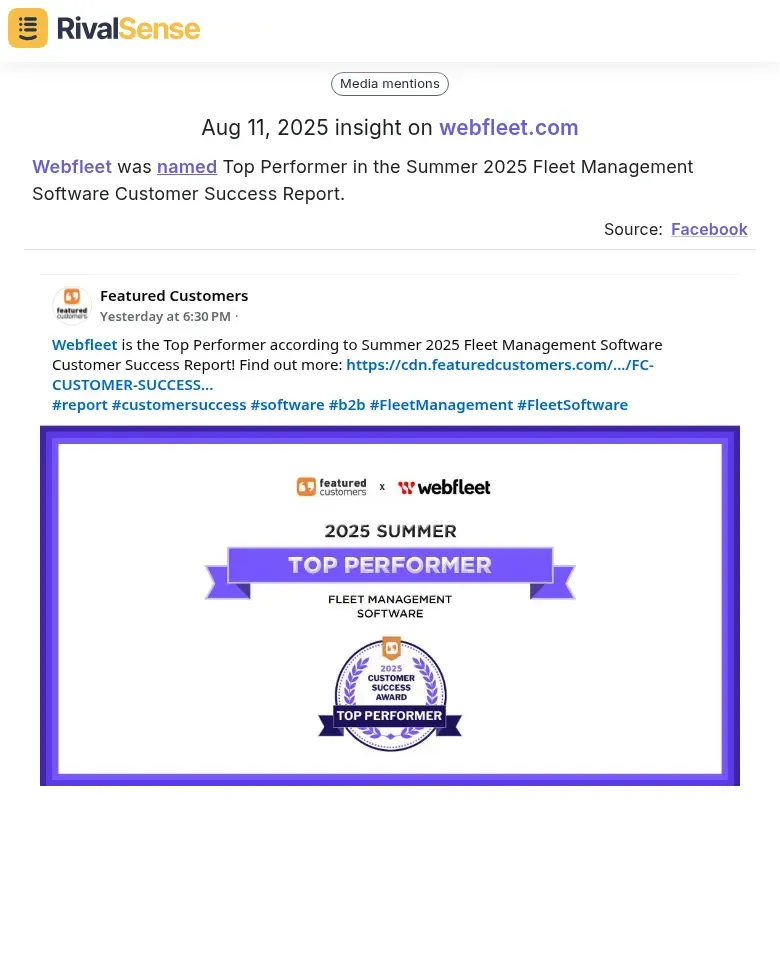
2. Analyze Financial Disclosures for Investment Patterns
Scrutinize 10-K filings for capital expenditure breakdowns, R&D allocations, and M&A activity. When a competitor reports increased R&D spending in electric vehicle integration, it signals strategic focus areas.
3. Interpret Market Share Data for Positioning Insights
Regulatory filings often contain market share disclosures in competitive analysis sections. Look for phrases like "maintained/gained/lost market share" and geographic breakdowns.
📊 Actionable Step: Create a quarterly tracker of competitor awards and financial changes to identify emerging trends. Review competitor filings for shifts in R&D as percentage of revenue, geographic expansion investments, and technology acquisition patterns.
Building a Systematic Competitor Regulatory Monitoring Framework
To effectively monitor competitor regulatory filings, you need a structured framework. This involves setting up automated alerts, creating a centralized repository, and developing analysis templates. Here are the three core components:
1. Automated Alerts: Use tools like RivalSense to track competitor filings across SEC, EU regulatory bodies, and industry-specific agencies. Set up keyword alerts for Form 10-K, 8-K, prospectuses, and regulatory submissions. Pro tip: Include competitor subsidiaries and international entities for comprehensive coverage.
2. Centralized Repository: Create a cloud-based platform accessible to legal, strategy, and product teams. Implement version control, tagging capabilities, and a standardized naming convention (e.g., Competitor_Date_DocumentType_Jurisdiction).
3. Analysis Templates: Develop templates for consistent insight extraction. Include sections for strategic implications, market positioning changes, and recommended actions. Example: When analyzing a competitor's regulatory submission, track therapeutic areas, clinical trial outcomes, and projected launch timelines to anticipate market entry strategies.
🔧 Practical Step: Conduct quarterly reviews to refine alert parameters and template effectiveness based on actionable intelligence generated.
Turning Regulatory Intelligence into Competitive Action
Once you have gathered regulatory intelligence, the next step is to turn it into actionable strategies. This involves proactive planning, compliance alignment, and creating early warning systems. Here's how fleet management leaders operationalize competitor regulatory filings:
1. Proactive Strategy Development: When competitors file for new service area expansions or vehicle type approvals, use these signals to anticipate market shifts. Example: If a rival files for electric truck permits in a region you haven't entered, consider accelerating your own EV fleet deployment or forming local partnerships.
2. Compliance Investment Alignment: Analyze competitor safety certifications, emissions compliance filings, and technology approvals to benchmark your own capabilities. Create a compliance gap analysis matrix comparing your filings against top 3 competitors to prioritize investments.
3. Early Warning System Creation: Set up automated alerts for competitor regulatory submissions in key jurisdictions. Track filing patterns—sudden increases in permit applications often signal aggressive expansion plans.
📝 Actionable Checklist:
- ✅ Weekly review of competitor DOT/FTA filings
- ✅ Quarterly competitive compliance capability assessment
- ✅ Monthly regulatory intelligence briefing for leadership
- ✅ Automated alerts for competitor permit applications
- ✅ Competitor regulatory timeline tracking dashboard
By transforming regulatory data into actionable insights, you can anticipate competitor moves, optimize compliance spending, and maintain strategic advantage in the rapidly evolving fleet management landscape.
Ready to streamline your competitor monitoring? Try RivalSense for free at https://rivalsense.co/ to track competitor product launches, pricing updates, event participations, and more—delivered in a weekly email report. Get your first competitor report today and gain the strategic edge you need!
📚 Read more
👉 Predictive Analysis: Forecast Competitor Event Participation for B2B Success
👉 Leveraging Executive Moves for Competitive Edge: A Real-World Example
👉 The Ultimate Key Account Management Playbook for 2026: A Strategic Guide for Business Leaders
👉 Advanced Tactics: Monitor Key Account Growth for Commercial Insurance Brokers
👉 How Salesforce's Hoa Sen Partnership Enabled Competitors to Target CRM Gaps