
How Executive Moves Like Rebecca Kaplan's Reveal Competitive Strategies
In today's dynamic business environment, staying ahead of competitors requires constant vigilance. One often overlooked aspect is tracking executive movements, which can reveal strategic shifts and new opportunities.
For instance, when key personnel leave or join companies, it signals changes in priorities, potential market entries, or innovations in the pipeline. By monitoring these moves, you can anticipate competitive threats and identify potential partnerships or talent acquisitions.
Recently, RivalSense captured a significant personnel change: Rebecca Kaplan left Uber as Global Head of Ad Sales Operations in the United States to become Director of Revenue Operations at Sam’s Club Member Access Platform (MAP). This insight highlights how executive transitions can impact competitive landscapes.
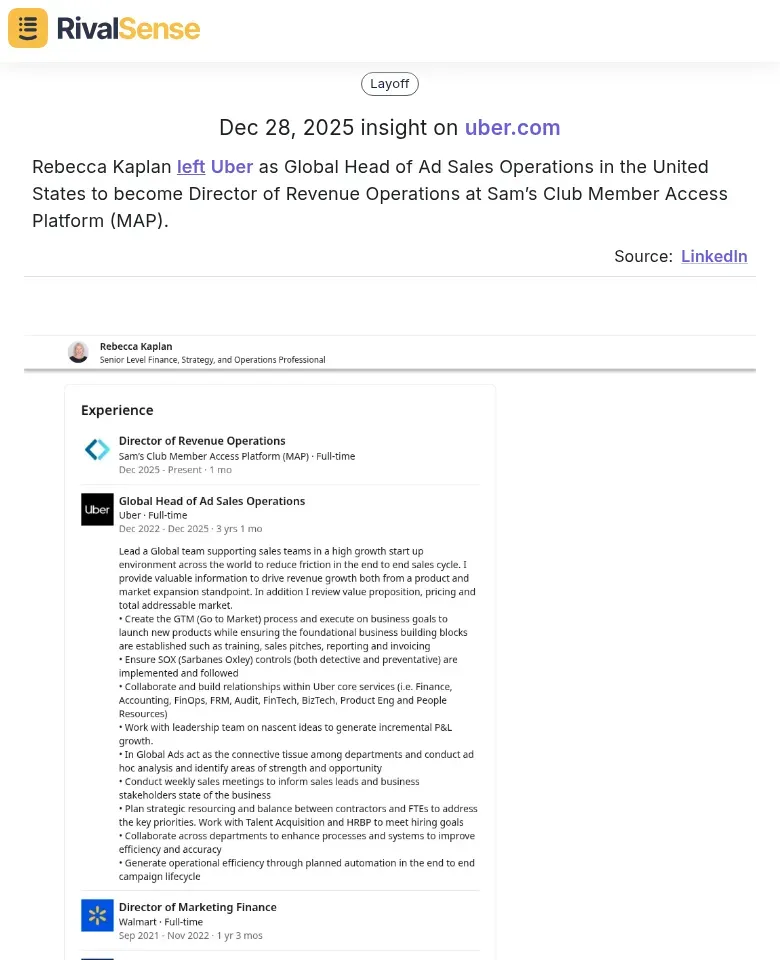
This move suggests that Sam's Club is bolstering its revenue operations, possibly indicating a focus on enhancing their membership platform. For competitors in the retail or ad sales space, this could signal new strategies or increased competition for talent.
To effectively use insights from executive movements, here are some practical steps you can take. First, identify key roles in critical positions such as sales, marketing, product development, and operations. Second, analyze the impact on both the losing and gaining companies to understand strategic implications.
Actionable Checklist for Executive Move Tracking:
- [ ] Set up alerts for key competitors' executive teams using tools like RivalSense.
- [ ] Review the backgrounds of new hires to predict strategic directions and potential innovations.
- [ ] Cross-reference executive moves with other data points, such as product launches or partnerships, for a holistic view.
Leveraging Insights for Key Account Management:
Executive changes can directly influence key account management strategies. When a decision-maker moves to a competitor, it may affect your relationship with that account. Proactively engaging with new executives can help maintain partnerships and uncover new needs.
For example, if Rebecca Kaplan's move to Sam's Club signals a push in revenue operations, competitors might adjust their account approaches to address potential shifts in Sam's Club's priorities. Regularly updating account plans based on such insights ensures you stay aligned with client evolution.
Using Insights for Business Partnership Management:
Tracking executive moves can also uncover opportunities for business partnerships. When an executive with a strong network or expertise joins a company, it might open doors for collaborations or alliances that were previously unexplored.
Consider how Sam's Club's hire of Rebecca Kaplan could indicate a focus on ad sales or revenue optimization, making them a potential partner for tech or service providers in that space. By monitoring these changes, you can initiate conversations at the right time with relevant stakeholders.
Incorporating executive move tracking into your competitive intelligence strategy provides a proactive edge. By understanding personnel changes, you can anticipate market shifts and adapt your strategies accordingly.
To streamline this process, consider using tools like RivalSense. RivalSense tracks company updates, including product launches, pricing changes, event participations, partnerships, regulatory aspects, management changes, and media mentions, delivering regular email reports.
Try out RivalSense for free at https://rivalsense.co/ to assist with the challenges of competitor analysis. Get your first report today and stay informed about your competitors' moves.
📚 Read more
👉 The Strategic Guide to Tracking Key Account Milestones: A B2B Leader's Playbook
👉 Case Study: How Project Governance Unlocks Competitor Pricing Advantages
👉 How Import.io's Managed Web Scraping Service Enables Competitor Innovation
👉 Uncover Competitor Innovation Advantages Through Twitter Intelligence
👉 VPN Key Account Management: A Process Optimization Guide for Cybersecurity Leaders