
Decoding Competitor Moves: Lessons from Sennheiser's Audio Update
In the dynamic world of automotive and audio technology, competitor analysis is essential for staying relevant and competitive. Small updates from rivals can reveal strategic directions, such as partnerships or tech integrations that shape market trends. For instance, RivalSense recently tracked that Sennheiser says its Signature Sound System in the Smart #5 can now deliver Dolby Atmos playback via an OTA update, enabling immersive audio through a 20-speaker in-car system and Amazon Music.
Effective competitor analysis involves monitoring various channels to capture insights like Sennheiser's announcement. By systematically reviewing product launches and updates, businesses can anticipate shifts in consumer preferences and adjust their own offerings. This proactive approach helps in identifying opportunities for innovation or differentiation in crowded markets.
Here are practical, actionable tips to enhance your competitor analysis efforts:
- Focus on Product Evolution: Track how competitors enhance existing products through updates. Sennheiser's OTA update for Dolby Atmos shows a move towards software-defined audio, which could influence industry standards.
- Evaluate Partnership Synergies: Analyze collaborations, such as with Amazon Music, to understand how they expand service ecosystems or improve user experience.
- Assess Technological Integration: Note how technologies like Dolby Atmos are leveraged to create unique selling points, which can inform your own R&D priorities.
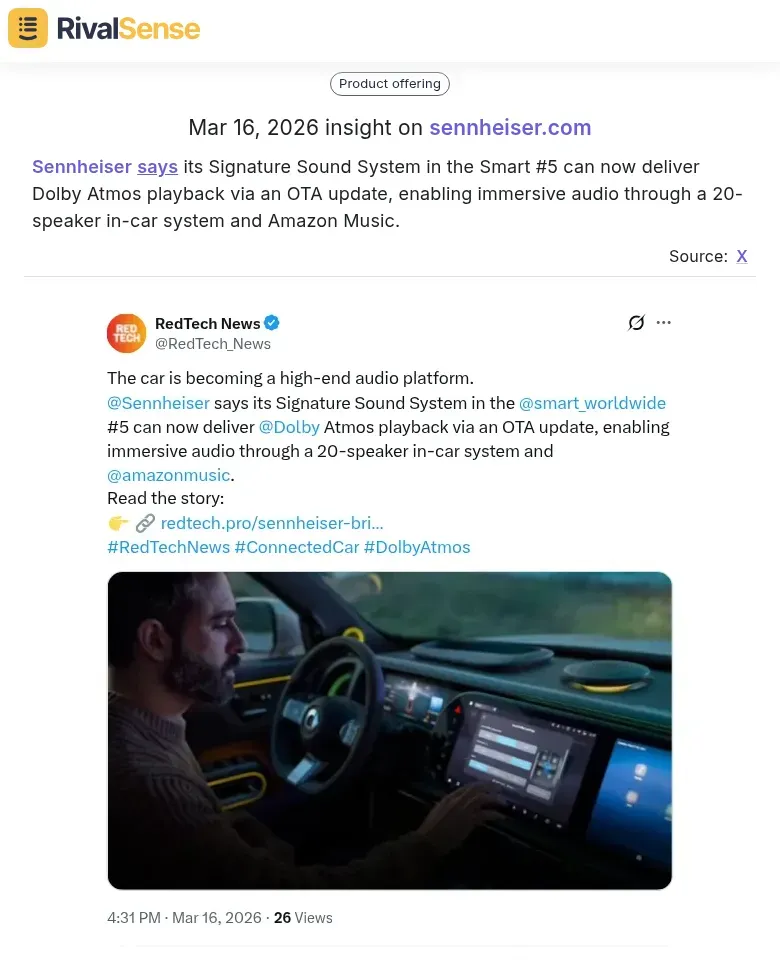
Image: Depiction of Sennheiser's in-car audio system, highlighting the 20-speaker setup for immersive sound.
To integrate competitor insights into your strategy, start by documenting findings and comparing them with your current products. This process helps pinpoint strengths, weaknesses, and potential areas for improvement. Use the following checklist to streamline your analysis workflow:
- [ ] Identify key competitors in your industry segment.
- [ ] Set up alerts for product updates, pricing changes, and event participations.
- [ ] Analyze the impact of competitor updates on market positioning.
- [ ] Benchmark your features against competitor offerings regularly.
- [ ] Develop actionable response plans based on collected insights.
Manual tracking of competitor activities can be overwhelming and often leads to missed opportunities. Tools like RivalSense automate this by monitoring company websites, social media, and various registries for updates such as Sennheiser's Dolby Atmos enablement. With regular email reports, you gain timely insights without constant manual effort.
To effectively address the challenges of competitor analysis, try out RivalSense for free at https://rivalsense.co/ and get your first report today!
📚 Read more
👉 The Ultimate Guide to Tracking Key Client Activity: Software Solutions & Strategic Insights for 2026
👉 Advanced Tactics: Track Competitor Sales for Supply Chain Optimization
👉 How LinkedIn's Product Shift Revealed a $2B Market Gap for Competitors
👉 Data-Driven Competitor Intelligence: Key Account Success Strategies
👉 AI-Driven Productivity for Digital Identity Companies: A Guide for Business Leaders