
Competitor Ad Analysis: Transforming Regulatory Compliance into Strategic Advantage
In today's hyper-regulated business landscape, competitor advertising monitoring transforms compliance from a reactive cost center into a proactive strategic advantage. By systematically analyzing competitors' ad campaigns, messaging, and creative assets, companies gain early warning signals for emerging regulatory risks before they become costly violations. This data-driven approach is particularly crucial in highly-regulated industries like finance, healthcare, and pharmaceuticals, where regulatory missteps can result in multimillion-dollar penalties and reputational damage.
Real-world examples demonstrate the strategic value: when a fintech competitor faced regulatory action for misleading interest rate claims, savvy firms immediately reviewed their own marketing materials for similar language. When a pharmaceutical company received warnings about unsubstantiated health claims, competitors gained months of lead time to adjust their messaging strategies.
Practical steps to implement:
✅ Monitor competitors' digital ad campaigns across platforms
✅ Track regulatory enforcement actions against industry players
✅ Analyze competitor messaging for compliance red flags
✅ Set up automated alerts for competitor regulatory issues
✅ Conduct quarterly compliance audits of competitor advertising
By transforming competitor intelligence into proactive compliance measures, businesses can anticipate regulatory shifts, avoid costly violations, and maintain competitive advantage in regulated markets.
Methodology: Building a Systematic Framework for Competitor Ad Compliance Analysis
Establishing a robust methodology is crucial for effective competitor ad compliance analysis. This involves deploying the right tools, setting up monitoring protocols, and creating automated alert systems. To build a systematic framework, start with these practical steps:
Essential Tools & Setup:
- Deploy ad intelligence platforms (like RivalSense) that track competitor ads across Google, Meta, LinkedIn, and programmatic networks
- Use web scraping tools for regulatory filings (SEC EDGAR, FTC databases) and enforcement action databases
- Implement social listening tools for public disclosures and consumer complaints
Monitoring Protocols:
- Create a compliance dashboard with key metrics: ad frequency, messaging claims, target audiences, and geographic reach
- Establish weekly review cycles for competitor regulatory filings and quarterly deep-dives into enforcement patterns
- Document competitor compliance histories with timestamped evidence for trend analysis
Automated Alert System:
- Set up keyword triggers for regulatory changes ("FTC guidelines update," "FDA warning letter")
- Configure violation alerts when competitors make unsubstantiated claims or target restricted demographics
- Create escalation workflows: automated flagging → compliance team review → strategic response planning
Pro Tips:
- Cross-reference ad claims with actual product documentation
- Monitor competitor responses to enforcement actions for strategic insights
- Build a compliance violation library to predict future regulatory hotspots
Learning from Competitor Regulatory Engagements and Lobbying Activities
Competitor regulatory engagements reveal strategic insights beyond compliance, offering a window into how industry leaders shape policy and anticipate market shifts. Tracking these activities can help you identify priority issues and align your own strategies accordingly. Monitor how competitors engage through lobbying, public comments, and regulatory relationships.
-
Lobbying Analysis: Monitor competitor lobbying disclosures (SEC filings, LDA reports) to identify priority regulatory issues. Example: If a rival consistently lobbies on data privacy regulations, they're likely anticipating market shifts.
-
Public Comment Tracking: Analyze competitor submissions to regulatory agencies (FCC, FTC, SEC). These reveal strategic positions on emerging rules before they're finalized.
-
Regulatory Relationship Mapping: Identify which agencies competitors engage with most frequently and through which channels (formal comments, meetings, advisory roles).
Example Insight: Tracking lobbying activities like Lyft's efforts in Canada can provide valuable intelligence on regulatory trends. For instance, Lyft lobbied for ridesharing benefits, gig worker status, and EV transitions with officials such as the Transport and Labour Ministers.
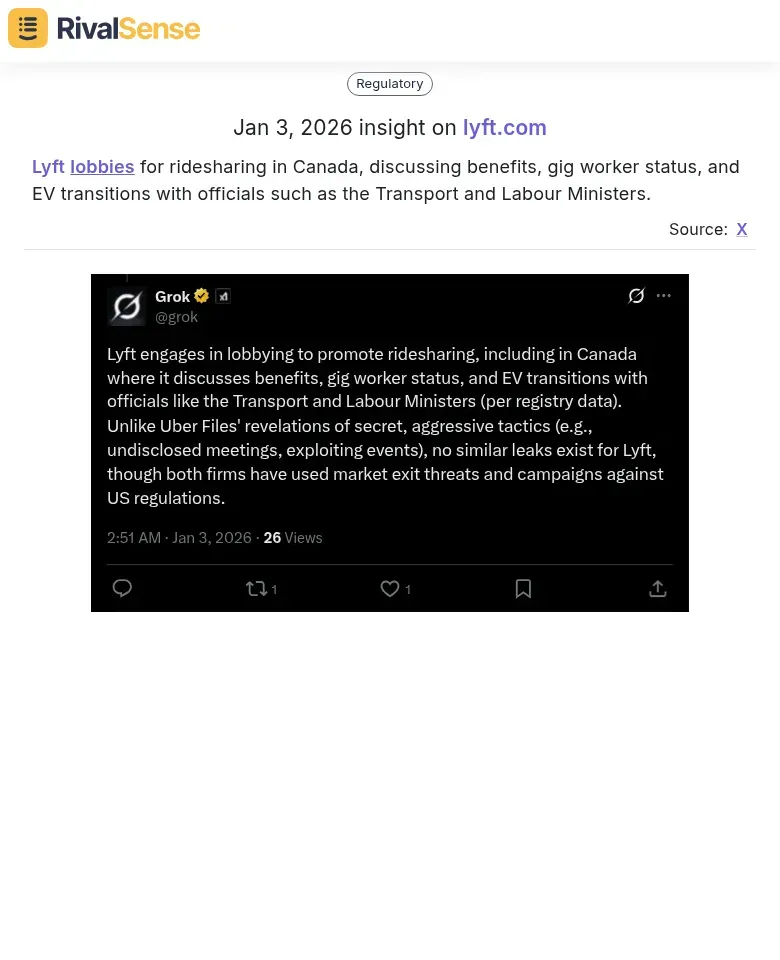
Why it's valuable: Such insights help you understand emerging regulatory discussions and competitor priorities, allowing you to proactively adjust your business strategy and engage in similar advocacy if needed.
Practical Checklist:
- Set up alerts for competitor regulatory filings
- Create a dashboard tracking lobbying expenditures by issue area
- Benchmark your comment frequency against top competitors
- Map competitor executives' regulatory board participation
Pro Tip: Look beyond direct competitors - analyze adjacent industry leaders to spot cross-sector regulatory trends before they impact your market.
By reverse-engineering successful regulatory strategies, you can anticipate policy shifts and position your company advantageously in evolving compliance landscapes.
Extracting Insights from Competitor Compliance Violations and Enforcement Actions
When competitors face regulatory violations, they provide invaluable case studies for identifying industry-wide compliance risks. Analyzing their missteps helps you spot patterns that trigger enforcement and avoid similar pitfalls in your own operations. This proactive approach can save significant costs and protect your reputation.
Track enforcement patterns across your industry to anticipate regulatory priorities. Monitor which agencies are most active, what types of violations draw the heaviest penalties, and whether enforcement is trending toward specific channels (social media, search ads, etc.). Create a compliance dashboard that tracks competitor enforcement actions, penalty amounts, and corrective timelines.
Example Insight: Monitoring incidents like Air India's pilot violation highlights the importance of tracking compliance failures. Canada told Air India on December 24, 2025, that one of its pilots was found tipsy before a flight, violating laws, and requested an investigation by January 26, 2026.
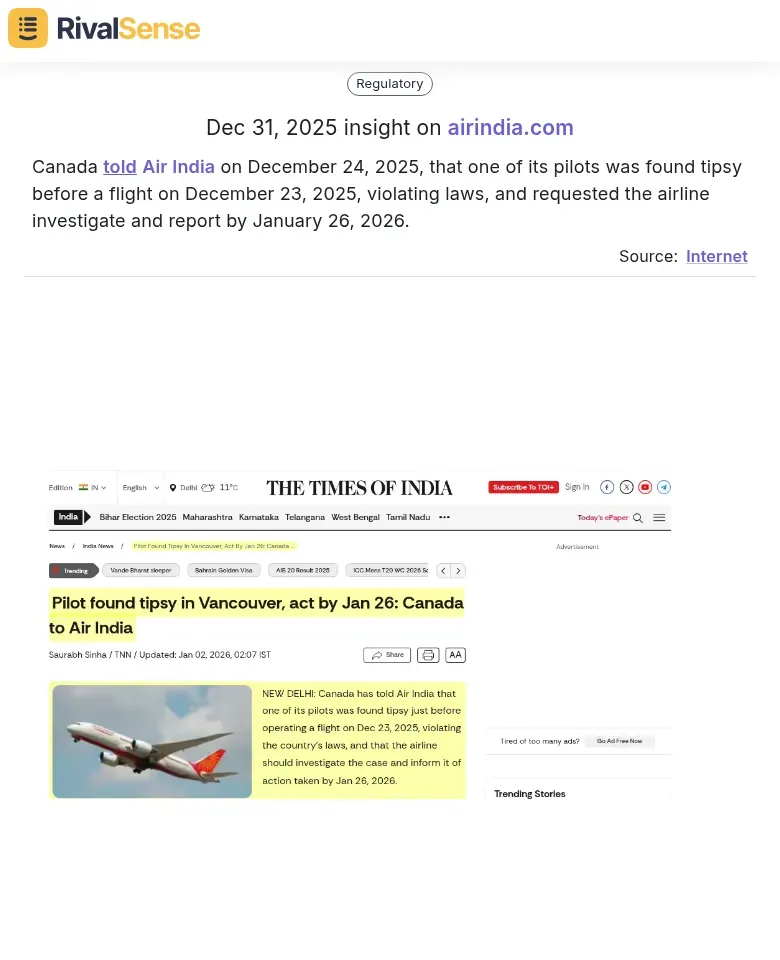
Why it's valuable: Insights into competitor violations alert you to specific regulatory scrutiny areas, enabling you to audit your own practices and implement preventive measures before issues arise.
Practical steps:
- Set up alerts for competitor regulatory actions using tools like RivalSense
- Document each violation's specifics: what was claimed, where it ran, penalty amount
- Map violations to your own marketing materials to identify similar risks
- Develop preventive checklists based on competitor corrective actions
- Schedule quarterly compliance reviews using competitor case studies as benchmarks
Use competitor failures to build stronger preventive measures. If a competitor had to retrain their marketing team after violations, implement similar training before issues arise. Their corrective actions often reveal the exact standards regulators expect.
Monitoring Competitor Responses to Regulatory Directives and Mandates
Tracking how competitors implement regulatory requirements reveals their strategic priorities and operational agility. This monitoring helps you benchmark your own compliance speed and identify best practices for adapting to new rules. By observing competitor responses, you can gain a competitive edge in compliance execution.
When new regulations like GDPR updates or advertising transparency rules emerge, analyze how quickly competitors update their ad disclosures, privacy policies, and compliance messaging. For example, when the Digital Markets Act took effect, early adopters gained market trust by implementing required changes 30-60 days before deadlines.
Example Insight: Following regulatory directives like the FAA's airworthiness rule demonstrates how tracking such updates can inform your strategy. The Federal Aviation Administration issued a final rule on January 2 for an airworthiness directive affecting certain General Electric Company GE90 model engines due to manufacturing issues.
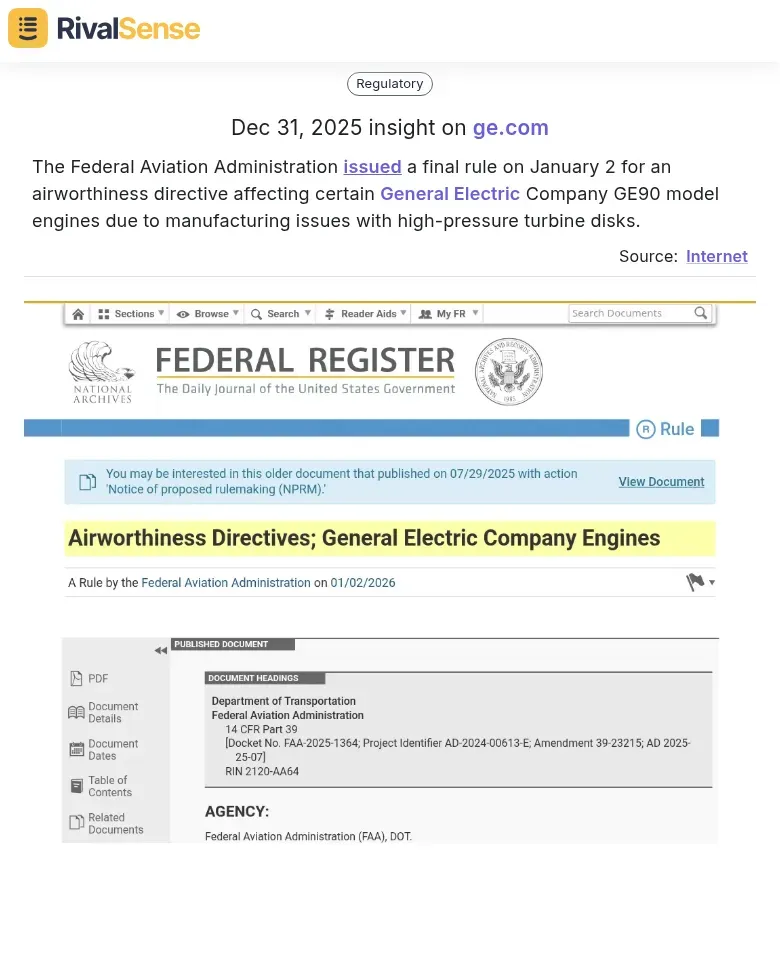
Why it's valuable: Insights into regulatory directives help you anticipate impacts on your industry, assess competitor vulnerabilities, and plan proactive compliance measures to avoid disruptions.
Practical monitoring checklist:
✅ Track competitor ad copy changes for new compliance language
✅ Monitor privacy policy updates and cookie consent implementations
✅ Analyze timing of compliance announcements vs. regulatory deadlines
✅ Document resource allocation in earnings calls and investor presentations
✅ Set up alerts for competitor regulatory filings and disclosures
Analyze compliance timelines to benchmark your own implementation speed. Companies that complete regulatory adaptations 20% faster than industry averages typically capture 15-30% market share gains from compliance laggards. Monitor quarterly earnings calls for mentions of compliance spending—industry leaders allocate 3-5% of marketing budgets to proactive regulatory adaptation.
Proactive compliance creates competitive advantages: Early adopters of California's CCPA amendments saw 40% higher customer trust scores and 25% lower customer acquisition costs. Implement automated monitoring of competitor regulatory responses using tools like RivalSense to track ad changes, policy updates, and compliance communications in real-time. This transforms regulatory compliance from a cost center into a strategic differentiator that builds market credibility and customer loyalty.
Implementation: Turning Competitor Insights into Proactive Compliance Strategy
To implement a proactive compliance strategy using competitor intelligence, start by integrating competitor ad data into your existing compliance risk assessment framework. This integration ensures that insights are actionable and directly inform your decision-making processes. Create a centralized dashboard that tracks competitor messaging, claims, and regulatory patterns across platforms to benchmark your own compliance posture against industry standards.
Develop early warning systems by monitoring competitor regulatory violations and enforcement actions. Set up alerts for specific keywords, claims, or product categories that have triggered regulatory scrutiny. For example, if competitors receive warnings about "clinically proven" claims, immediately audit your own marketing materials for similar language.
Practical steps:
- Map competitor ad content against regulatory guidelines
- Identify patterns in competitor violations (timing, platforms, messaging)
- Create compliance checklists based on competitor missteps
- Establish quarterly competitor compliance reviews
Measure ROI by tracking:
- Reduction in compliance incidents and associated costs
- Faster approval cycles for new campaigns
- Competitive advantage from compliant innovation
- Decreased legal consultation fees
Tip: Use competitor violations as a "what not to do" guide while leveraging their compliant successes as innovation templates. This dual approach accelerates both risk mitigation and market opportunity identification.
Take Action with RivalSense
Ready to transform competitor insights into proactive compliance? Try RivalSense for free at https://rivalsense.co/ to start tracking competitor product launches, pricing updates, event participations, partnerships, regulatory aspects, and more—all delivered in a weekly email report. Get your first competitor report today and stay ahead of regulatory risks!
📚 Read more
👉 Decoding Competitor Moves: Scrapingdog's API Enhancements and What They Mean
👉 How to Identify Key Accounts: A Practical Guide for B2B Leaders
👉 2026 Trend Analysis: Tracking Competitor Glassdoor Reviews for Branding Consultancies
👉 How Hubstaff's SCIM Move Forced Competitors to Accelerate Enterprise Security
👉 Advanced Competitor Intelligence: Uncover Why Customers Choose Competitors